

.png)

ams Announces Cost-Saving System Management Reference Design for Electric Bicycle Lithium-Ion Batteries
 Published2014.03.18 16:29
March 18, 2014 – ams AG (SIX: AMS, Country Manager Jong-Deok Lee), a specialist in high-performance analog ICs and sensors, announced a reference design targeting lithium-ion batteries for pedelecs/e-bikes. This reference design enables accurate cell monitoring and balancing functions in the battery management system (BMS) without using a microcontroller.
With the newly announced design, battery pack and electric bicycle manufacturers will be able to realize a more valuable bill of materials (BoM) compared to currently commercialized batteries, thereby benefiting from cost reduction and simpler circuit design.
This reference design from ams is suitable for 48V electric bicycle batteries that can be configured with up to 14 lithium-ion cells. This reference design uses two AS8506 smart cell monitoring ICs with a small amount of support components, each IC monitoring the temperature and voltage of up to seven cells individually and implementing passive balancing of the cells during charging.
In contrast, conventional BMS designs used in electric bicycles utilize dumb voltage monitoring ICs to measure cell voltage and temperature, and report these values to a dedicated battery management microcontroller (MCU) via a serial communication link. The MCU used in this case is necessary to manage safety and protection functions for overvoltage, undervoltage, and overheating shutdowns, as well as to control cell balancing.
However, ams’s AS8506 has built-in logic functions to control the cell’s safety, protection, and balancing processes. These functions are provided with configuration settings stored in the onboard OTP memory, allowing the user to easily configure them. This device incorporates a highly integrated MOSFET for use in passive cell balancing operations. During charging, the voltage of each cell is compared to a user-programmable reference voltage threshold. Up to 100mA can be discharged through the MOSFET from each cell exceeding the threshold until all cells reach the threshold and the battery module is fully charged.
This architecture, which operates battery monitoring and cell balancing, is implemented within the AS8506 voltage monitoring device and does not require a dedicated MCU, which is required in conventional electric bicycle battery designs. The moment the AS8506 detects overvoltage, undervoltage, or overheating conditions, it transmits an interrupt signal to the motor controller IC so that the required safe shutdown can be completed.
Bernd Gessner, Vice President and General Manager of the Automotive Business Unit at ams, stated, “Battery life, safety, and operating time have a tremendous impact on consumers when choosing an electric bicycle. Through ams’ controller-free reference design, electric bicycle manufacturers can meet consumer demands by providing superior safety and battery performance, while utilizing a simpler and more cost-effective architecture compared to existing commercial products.”
The reference design can be used in any electric bicycle battery using up to 14 lithium-ion cells. This design can expand and supervise more than 14 cells by daisy-chaining additional AS8506 ICs as needed.
Reference design files are available via ams upon request.

관련뉴스

Intel Unveils Next-Generation 'Core Ultra Series 3' and vPro Platform for Enterprise PCs
Intel has officially unveiled the "Intel Core Ultra Series 3" for next-generation enterprise PCs and the latest vPro platform, addressing a wide range of demands from enterprise notebooks to high-performance workstations.
2026.03.26by 배종인 기자
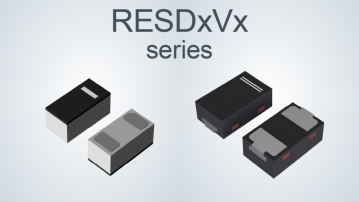
ROHM Launches ESD Protection Diode Compatible with High-Speed Interfaces of 10Gbps or Higher
반도체 전문 기업 로옴(ROHM)이 10Gbps를 넘어서는 차세대 고속 데이터 통신 환경에 대응할 수 있는 ESD(정전기 방전) 보호 다이오드 ‘RESDxVx 시리즈’를 개발하며, 고속 인터페이스에서 요구되는 신호 품질 유지와 IC 보호 성능을 동시에 끌어올렸다.
2026.03.26by 배종인 기자
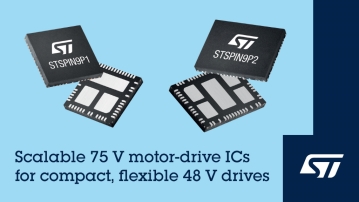
ST Launches 75V Drive IC Targeting 48V Industrial Motor Driving
ST마이크로일렉트로닉스가 48V급 산업용 구동 시스템 설계에 맞춘 75V 모터 드라이브 IC ‘STSPIN9P’ 시리즈를 공개했다. 새 제품군은 하프 브리지와 풀 브리지 구조로 구성돼 모터 종류와 출력 조건에 따라 설계를 확장할 수 있도록 한 것이 특징이다. 전원 회로와 보호 기능, 전류 감지 회로를 칩에 통합해 시스템 구성을 단순화했으며, 최대 500W급 애플리케이션까지 대응하도록 설계됐다. 회사는 레퍼런스 디자인과 데모 보드도 함께 제공해 산업 자동화, 로보틱스, 펌프, 팬, 조명, 섬유 기계 등에서 개발과 평가를 지원할 계획이다.
2026.03.26by 배종인 기자

Nordic supports security updates for the entire lifecycle of IoT devices at a single fixed cost
Nordic Semiconductor, a global leader in low-power wireless connectivity solutions, has unveiled a single fixed-cost licensing model that delivers FOTA (Firmware Over-the-Air) and device management capabilities throughout the device lifecycle via nRF Cloud, and introduced a new firmware update solution to prepare for the enforcement of the European Union's Cyber Resilience Act (CRA).
2026.03.26by 배종인 기자

Practical Training in Low-Noise, Low-Power Circuit Design All in One Place… Training Fee Support
고감도 아날로그 회로와 센서 기반 시스템 설계 역량을 강화할 수 있는 ‘2026 고급 엔지니어 실무 마스터 클래스’가 오는 4월16일 서울 가산동 e4ds 컨퍼런스 센터에서 열린다. 이번 과정은 온라인이 아닌 오프라인 유료 실습 교육으로 진행되며, 현장 중심의 심화 학습을 원하는 엔지니어를 대상으로 한다. 이번 교육은 텍사스 인스트루먼트(Texas Instruments)가 교육비를 지원해 정가 25만원에서 10만원 할인 된 15만원에 참가할 수 있다.
2026.03.26by 배종인 기자











