


Korea Institute of Machinery and Materials (KIMM) is leading the way in supporting the commercialization of eco-friendly hydrogen ships.
 Published2023.06.08 10:10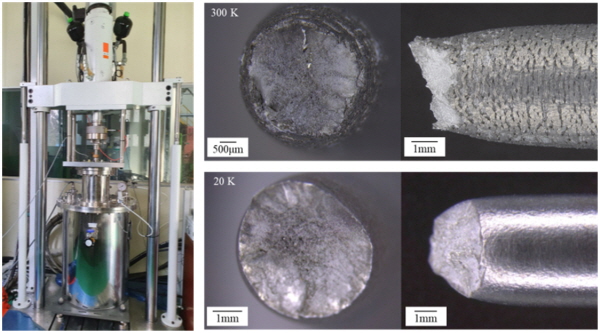
▲Left: Cryogenic material testing and evaluation equipment. Right: Comparison of room temperature and cryogenic test results of hydrogen-filled test specimens.
A guide to selecting suitable materials for liquid hydrogen storage on ships.
With climate change necessitating the urgent need for carbon-neutral technologies, infrastructure has been established to contribute to the development and commercialization of eco-friendly ship technologies in the domestic shipbuilding industry.
The Korea Institute of Machinery and Materials (KIMM, President Park Sang-jin) under the Ministry of Science and ICT announced on the 8th that it has established infrastructure, including equipment for evaluating the suitability of liquid hydrogen storage materials used in ships, together with the Korean Register of Shipping (CEO Lee Hyeong-cheol) and Pusan National University (President Cha Jeong-in), and proposed the evaluation procedure for the first time.
The research team of Director Park Jong-won and Senior Researcher Kim Yong-jin of the Reliability Assessment Laboratory of the Mechanical System Safety Research Division of the Korea Institute of Machinery and Materials, in collaboration with the 3D Printing Equipment Laboratory of the Korea Institute of Machinery and Materials and Pusan National University, established ultra-low temperature (-253℃) hydrogen embrittlement test evaluation and analysis equipment to build infrastructure, and published a report on the selection of liquid hydrogen storage materials for ships that analyzed safety standards and material suitability evaluation methods in various hydrogen storage fields.
Liquid hydrogen storage systems for ships must be able to withstand ultra-low temperatures and hydrogen embrittlement. The system environment varies depending on the purpose of use and operation of the hydrogen to be stored, and the category of materials that meet the environmental conditions also varies accordingly. Therefore, it is important to establish standards that reflect the risks of ultra-low temperatures and the special characteristics of ships.
On the other hand, Korea and the world have had difficulties in developing the eco-friendly ship market due to the lack of safety regulations for various conditions such as ultra-low temperatures and special ship characteristics. This newly published report proposes materials and requirements applicable to liquid hydrogen environments based on the latest research results, and compares and analyzes the differences with materials and requirements applicable to domestic LNG storage systems. This is expected to contribute to the development of eco-friendly ship technology by presenting standards for various environments.
In addition, only a very small number of research institutes, even in advanced countries, have testing facilities for ultra-low temperature and hydrogen environment material suitability, requiring significant costs for testing and evaluation, making it difficult for domestic equipment companies to enter the hydrogen industry.
To address these challenges, the Korea Institute of Machinery and Materials (KIMM) will support domestic shipbuilding industry companies with services such as "ultra-low temperature material performance testing," "hydrogen environment suitability assessment of material components," and "various extreme environment tests and durability assessments," based on the ultra-low temperature and hydrogen embrittlement testing, evaluation, and analysis infrastructure it has recently established.
Until now, companies had to spend tens of millions to hundreds of millions of won on material testing and evaluation alone to develop eco-friendly ship equipment using new materials, but now, various testing and evaluations, analysis, and technical support will be provided domestically at a relatively low cost.
Senior Researcher Kim Yong-jin said, “By establishing material suitability evaluation standards, we can expand the range of applicable materials and accelerate the commercialization of hydrogen ships.” He added, “We will strive to ensure that the domestic shipbuilding industry secures a unique position in the eco-friendly ship market by providing testing and evaluation services in the future.”
This ultra-low temperature material testing and evaluation infrastructure was built with support from the Ministry of Oceans and Fisheries' 'Development of Safety Standards for Ship Hydrogen Storage and Fuel Supply Systems' project.

관련뉴스
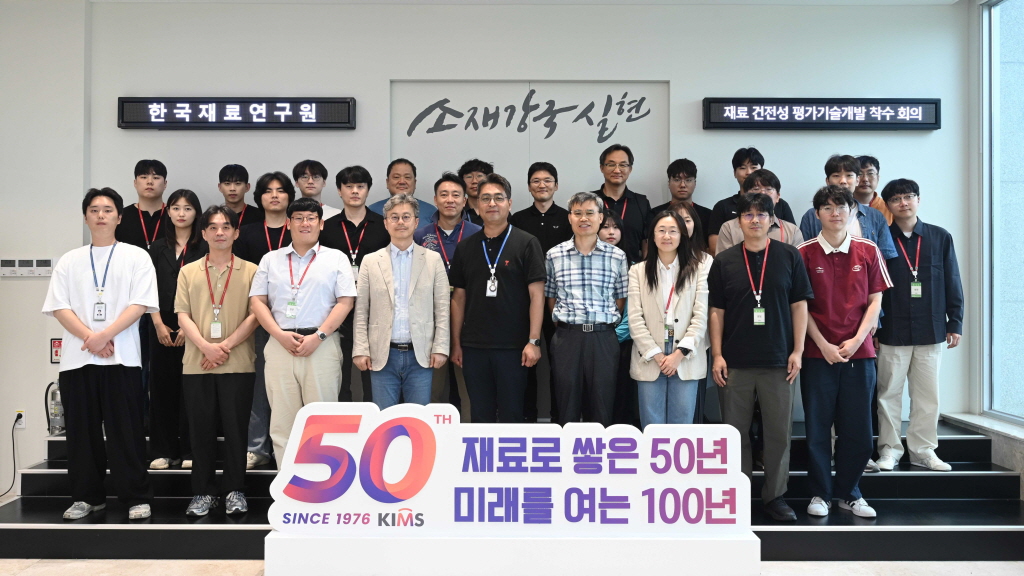
재료연구원, 무수 암모니아 SCC 통합평가 플랫폼 개발 착수
한국재료연구원이 암모니아 추진·운반선용 고강도 강재의 응력부식균열(SCC) 통합평가 플랫폼을 개발하기 시작했다. 국내 기술로 무수 암모니아 환경에서 강재의 안전성을 검증하는 시스템을 구축함으로써 조선·철강 산업의 국제 경쟁력을 강화하고, 국제해사기구(IMO) 등의 규제·표준 개정에 국내 기술을 반영할 기반을 마련한다.
2026.08.05by 배종인 기자
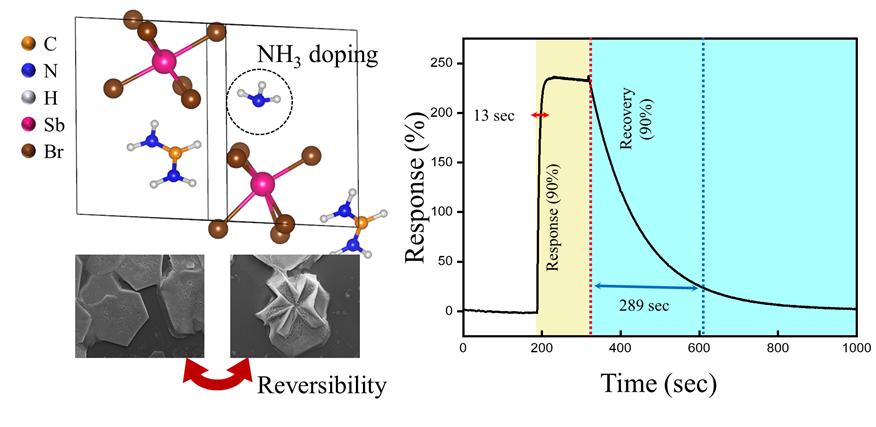
재료연구원, 무연 페로브스카이트 기반 암모니아 가스센서 개발
한국재료연구원이 납 기반 소재 대신 무연 페로브스카이트를 적용한 초고감도 암모니아 가스센서를 개발했다. 이 센서는 1ppm 수준의 미세 누출까지 감지할 수 있으며, 새롭게 규명된 작동 원리는 가스센서 분야 연구에 새로운 방향을 제시한다. 수소·암모니아 에너지 인프라의 안전성 강화에 활용될 것으로 기대된다.
2026.08.05by 배종인 기자
“Long-term stability of supply equipment is key for molybdenum deposition”… Merck addresses next-generation processes with CHEMKEEPER®
During a webinar jointly conducted by SEMI and Merck, Dr. Benjamin Garrett of Merck presented on "Game Changers in Deposition Processes: Molybdenum Next-Generation Process Materials and Advanced Supply Systems," arguing that molybdenum dioxydichloride precursor (MoO₂Cl₂) and the CHEMKEEPER® supply system will become "game changers" in deposition processes. As molybdenum (Mo) gains attention as a next-generation material in semiconductor deposition processes, the importance of precursor purity and delivery systems for stable supply in production environments is increasing.
2026.07.24by 배종인 기자
Merck Participates in K-Display 2026 and Unveils OLED, Optical, and Semiconductor Material Technologies
Merck will unveil display solutions combining optical and semiconductor technologies at K-Display 2026 and IMID. Based on over 120 years of accumulated material technology expertise, the company will present next-generation OLED material strategies and optical technology directions, showcasing cutting-edge technologies to industry and academia through industry-academia collaboration tours and the "Merck Science Connect" session.
2026.07.22by 배종인 기자
Will Helium Supply Instability Become an 'Invisible Bottleneck' for Korean Semiconductors?
Supply chain risks in the semiconductor industry are spreading from wafers and equipment, advanced materials to 'helium (He)'. In particular, as demand for AI semiconductors such as high-bandwidth memory (HBM) grows, the strategic importance of helium is increasing further.
2026.07.21by 배종인 기자











