


Analog Devices Launches Industry-Leading 2GSPS Data Converter
 Published2014.05.15 10:56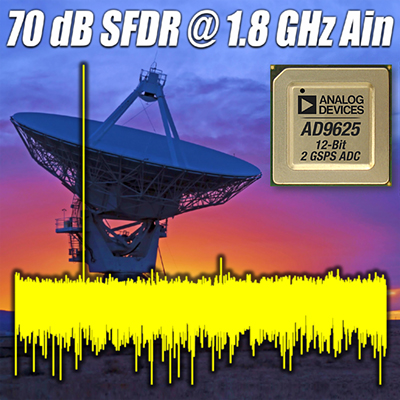
May 14, 2014 – Analog Devices ( www.analog.com , NASDAQ: ADI), a global leader in high-performance semiconductors for signal processing applications, announced the 12-bit, 2GSPS AD9625 A/D converter. The AD9625 provides the industry's lowest noise and best-in-class dynamic range for improved receive sensitivity, and can capture weak signals even in the presence of noise, clutter, blockers, and interference sources. This groundbreaking performance, combining 2GSPS bandwidth with integrated signal processing capabilities, enables direct RF sampling in communications, instrumentation, and defense/aerospace applications. The newly released converter offers high input bandwidth and an outstanding noise spectral density of 149.5 dBFS/Hz, allowing designers to utilize undersampling system architectures in the second Nyquist domain, thereby reducing frequency downconversion steps.
The AD9625 is the latest addition to ADI’s broadband RF data acquisition technology family. This technology provides previously impossible dynamic performance for enhanced signal extraction in complex RF environments with wider bandwidths than existing products. The AD9625 interoperates with FPGA products from major manufacturers, and the chip configuration is also not special. The AD9625 contributes to enabling direct RF sampling, which clearly demonstrates ADI's innovative approach to providing cutting-edge products.
John Forinash, Vice President of Integrated Solutions Technology at Rincon Research Corporation, a leading provider of advanced digital signal processing solutions and technologies to governments, stated, “While the sampling rate is important in high-speed conversion, it should not be the sole consideration during design, nor is the sampling rate always the most critical performance metric.” He further noted, “Wide analog input bandwidth, enhanced dynamic range, and noise-to-power ratio performance are also important considerations, as they allow users to collect and process a wider range of RF signal bandwidths within the system.” He assessed, “The AD9625 is a next-generation 2+GSPS A/D converter that combines outstanding wideband dynamic performance with integrated functionality to configure the RF sampling architecture desired by users.”
ADI's AD9625 A/D converter provides a wide input bandwidth, enabling an enhanced RF sampling architecture that allows designers to reduce not only the analog frequency downconversion process but also associated noise and cost factors. Thanks to its simplified system architecture, there is no need to cross-position multiple A/D converters to achieve required performance, enabling the development of reconfigurable platforms. This product is sold with an evaluation board design environment and reference designs to streamline system prototyping, board-level design, and layout.
The AD9625 provides a spurious-free dynamic range (SFDR) of 80 dBc with a 1 GHz input, allowing designers to improve measurement accuracy and achieve a wider dynamic range than any competing product currently on the market. The AD9625 is the only commercially available 12-bit, 2GSPS A/D converter that simplifies complex digital interfaces by integrating two digital-down converters (DDCs), two numerically controlled oscillators (NCOs), and a single JESD204B serial link for configurable output data. This industry-first capability improves usability and functionality by lowering the required output data rate and simplifying board-level design and layout. Key applications include ultra-wideband radar, digital storage oscilloscopes, and data acquisition platforms.
Each GSPS A/D converter is supported by an evaluation board equipped with an FPGA Mezzanine Card (FMC) connection, software, tools, an SPI controller, and a reference design. ADI’s VisualAnalog™ software package combines powerful simulation and data analysis tools with a user-friendly graphical interface, enabling designers to analyze input signals and data as desired. Using the high-speed A/D converter SPI controller tool, users can control enhanced functions through SPI performance. Data capture cards are essential for prototyping.

관련뉴스
Intel Unveils Next-Generation 'Core Ultra Series 3' and vPro Platform for Enterprise PCs
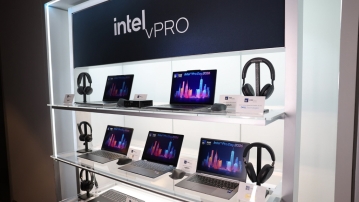
Intel has officially unveiled the "Intel Core Ultra Series 3" for next-generation enterprise PCs and the latest vPro platform, addressing a wide range of demands from enterprise notebooks to high-performance workstations.
2026.03.26by 배종인 기자
ROHM Launches ESD Protection Diode Compatible with High-Speed Interfaces of 10Gbps or Higher
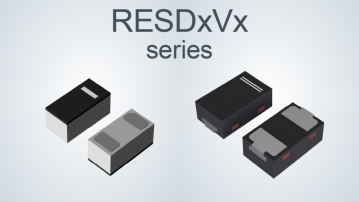
Semiconductor specialist ROHM has developed the 'RESDxVx series' of ESD (electrostatic discharge) protection diodes capable of responding to next-generation high-speed data communication environments exceeding 10Gbps, simultaneously enhancing both signal quality maintenance required in high-speed interfaces and IC protection performance.
2026.03.26by 배종인 기자
ST Launches 75V Drive IC Targeting 48V Industrial Motor Driving
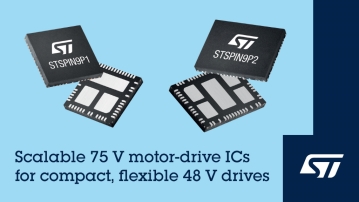
ST Microelectronics has unveiled the 'STSPIN9P' series of 75V motor drive ICs tailored for 48V-class industrial drive system design. The new product family is characterized by half-bridge and full-bridge configurations that enable design scalability according to motor type and output conditions. Power supply circuits, protection functions, and current sensing circuits are integrated on-chip to simplify system configuration, and the devices are designed to support applications up to 500W maximum. The company plans to provide reference designs and demo boards to support development and evaluation in industrial automation, robotics, pumps, fans, lighting, and textile machinery.
2026.03.26by 배종인 기자

Nordic supports security updates for the entire lifecycle of IoT devices at a single fixed cost
Nordic Semiconductor, a global leader in low-power wireless connectivity solutions, has unveiled a single fixed-cost licensing model that delivers FOTA (Firmware Over-the-Air) and device management capabilities throughout the device lifecycle via nRF Cloud, and introduced a new firmware update solution to prepare for the enforcement of the European Union's Cyber Resilience Act (CRA).
2026.03.26by 배종인 기자

Practical Training in Low-Noise, Low-Power Circuit Design All in One Place… Training Fee Support
The "2026 Advanced Engineer Practical Masterclass" to strengthen competencies in high-sensitivity analog circuit and sensor-based system design will be held on April 16 at the e4ds Conference Center in Gasan-dong, Seoul. This program will be conducted as an offline paid hands-on training session, not online, and is targeted at engineers seeking on-site intensive learning. Texas Instruments will provide educational support for this training, allowing participation at 150,000 won, a 100,000 won discount from the original price of 250,000 won.
2026.03.26by 배종인 기자











