



SolarMagic Chipset and Firmware Released to Detect Dangerous Arc Faults in Solar Cell Systems
 Published2011.06.21 16:19
SolarMagic Chipset and Firmware Released to Detect Dangerous Arc Faults in Solar Cell Systems
NEC-compliant analog front-end IC and multi-band dynamic filtering firmware
June 20, 2011 – National Semiconductor Korea (CEO: Choi Chung-won) announced today the release of the SolarMagic™ Arc Detection Reference Design, a commercial chipset that detects dangerous DC arc faults in photovoltaic (PV) systems, consisting of the industry's first analog front-end integrated circuit (IC) and multi-band dynamic filtering firmware.
National exhibited the SolarMagic arc detection reference design at the Intersolar Europe Conference (Hall A1.151 Booth), held in Munich, Germany from June 8 to 10.
In modern PV systems, DC circuits can generate arcs of significant energy due to intermittent connections or insulation failures and damage. These arcs, reaching temperatures of 3,000 degrees Celsius, pose a threat to the safety of surrounding infrastructure and personnel. Due to these risks, the 2011 US National Electrical Code (NEC) 690.11 mandated that all newly installed PV systems must include arc fault circuit detection and protection systems. National's new SolarMagic arc detection reference design includes an analog front-end IC and Multi-Band Dynamic Filtering (MBDF) firmware. It also detects arc fault conditions and warns to cut off system power to eliminate the arc.

"The launch of National's SolarMagic arc detection reference design is the result of years of effort to understand and resolve PV module overvoltage issues in the solar industry, based on National's diverse portfolio of signal processing and power management products," said Patrick Quinn, General Manager of National's Solar IC business unit. "Along with the new integrated circuit, our arc detection reference design is one of many systems National is developing for the entire solar PV industry."
National's SolarMagic Arc Detection Firmware Information
Arcs in PV arrays are very difficult to detect. Electric arcs do not leave uniquely identifiable electronic traces. Furthermore, the power lines of a PV array act as highly effective antennas, causing various electromagnetic interferences around the array. In addition, inverters generate additional noise on the power lines. Therefore, a precise signal processing method is required to reliably detect the entire dangerous arc without fault alarms when the PV array is operating under safe conditions. MBDF firmware utilizes an advanced summary pattern recognition method to process arc traces without comparing them to fixed absolute shapes.

관련뉴스

Intel Unveils Next-Generation 'Core Ultra Series 3' and vPro Platform for Enterprise PCs
인텔이 차세대 기업용 PC를 위한 ‘인텔 코어 Ultra 시리즈 3’와 최신 vPro 플랫폼을 공식 발표하며, 기업용 노트북부터 고성능 워크스테이션까지 폭넓은 수요 충족에 나섰다.
2026.03.26by 배종인 기자
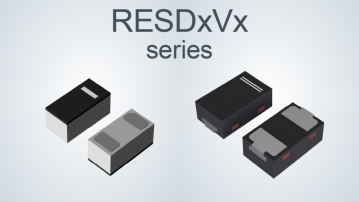
ROHM Launches ESD Protection Diode Compatible with High-Speed Interfaces of 10Gbps or Higher
반도체 전문 기업 로옴(ROHM)이 10Gbps를 넘어서는 차세대 고속 데이터 통신 환경에 대응할 수 있는 ESD(정전기 방전) 보호 다이오드 ‘RESDxVx 시리즈’를 개발하며, 고속 인터페이스에서 요구되는 신호 품질 유지와 IC 보호 성능을 동시에 끌어올렸다.
2026.03.26by 배종인 기자
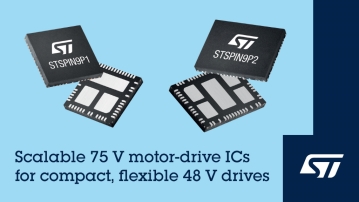
ST Launches 75V Drive IC Targeting 48V Industrial Motor Driving
ST마이크로일렉트로닉스가 48V급 산업용 구동 시스템 설계에 맞춘 75V 모터 드라이브 IC ‘STSPIN9P’ 시리즈를 공개했다. 새 제품군은 하프 브리지와 풀 브리지 구조로 구성돼 모터 종류와 출력 조건에 따라 설계를 확장할 수 있도록 한 것이 특징이다. 전원 회로와 보호 기능, 전류 감지 회로를 칩에 통합해 시스템 구성을 단순화했으며, 최대 500W급 애플리케이션까지 대응하도록 설계됐다. 회사는 레퍼런스 디자인과 데모 보드도 함께 제공해 산업 자동화, 로보틱스, 펌프, 팬, 조명, 섬유 기계 등에서 개발과 평가를 지원할 계획이다.
2026.03.26by 배종인 기자

Nordic supports security updates for the entire lifecycle of IoT devices at a single fixed cost
Nordic Semiconductor, a global leader in low-power wireless connectivity solutions, has unveiled a single fixed-cost licensing model that delivers FOTA (Firmware Over-the-Air) and device management capabilities throughout the device lifecycle via nRF Cloud, and introduced a new firmware update solution to prepare for the enforcement of the European Union's Cyber Resilience Act (CRA).
2026.03.26by 배종인 기자

Practical Training in Low-Noise, Low-Power Circuit Design All in One Place… Training Fee Support
고감도 아날로그 회로와 센서 기반 시스템 설계 역량을 강화할 수 있는 ‘2026 고급 엔지니어 실무 마스터 클래스’가 오는 4월16일 서울 가산동 e4ds 컨퍼런스 센터에서 열린다. 이번 과정은 온라인이 아닌 오프라인 유료 실습 교육으로 진행되며, 현장 중심의 심화 학습을 원하는 엔지니어를 대상으로 한다. 이번 교육은 텍사스 인스트루먼트(Texas Instruments)가 교육비를 지원해 정가 25만원에서 10만원 할인 된 15만원에 참가할 수 있다.
2026.03.26by 배종인 기자











