


Altera Programmable Logic, Core DNA of Software-Defined Data Centers
 Published2014.06.23 10:44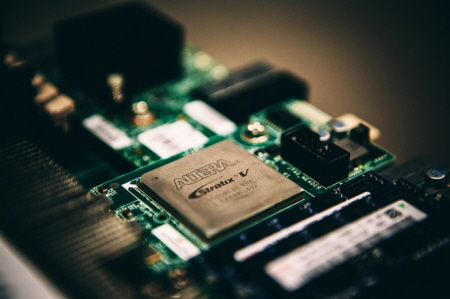
Hong Kong - June 19, 2014 - Altera Corporation (NASDAQ: ALTR) announced today that its FPGAs are at the center of software-defined data center (SSDC) development, with Altera, Microsoft Research, and Bing jointly advancing acceleration for the web search engine portion. Altera's FPGA (field programmable gate array) accelerates vast amounts of data processing in servers, helping to handle big data challenges and large-scale distributed workloads.
Microsoft shared key developments in the research paper "Reconfigurable Fabric for Large-Scale Data Center Service Acceleration," presented today at the 41st International Symposium on Computer Architecture (ISCA) held in Minneapolis. The paper details how Altera technology is applied to enhance performance.
Doug Burger, Technical Lead for Client and Cloud Applications at Microsoft Research, stated, "Today's performance requirements for large-scale data center workloads exceed what general-purpose servers can deliver. As a result, we ran a pilot using Altera technology that provides faster acceleration than running software alone on servers," and added, "We set performance targets that could deliver significant processing performance gains while allowing more advanced search ranking models to run simultaneously. Compared to pure software implementation, our configurable acceleration fabric delivered 90% improved processing performance on each ranking server while demonstrating significant system stability. It was a satisfactory positive result."
As server performance growth has stalled, distributed reconfigurable fabric has the potential to be a viable approach, as server performance will play a decisive role at the end of Moore's Law for sustained cost and performance improvements.
Based on these results, Bing plans to deploy FPGA-accelerated servers in one of its data centers in early 2015 to handle customer searches.
Altera believes that programmable logic, particularly FPGAs, in software-defined data centers can be the driving force for transforming today's data centers. Data centers are handling increasingly demanding big data analytics and HPC requirements through tight integration and sharing of computing, networking, and storage resources. Data center infrastructure can be virtualized and delivered as a service through general-purpose servers. This type of data center provides more agile response while managing complexity that grows with scale. Software-defined data centers provide software-defined allocation and prioritization of virtualized computing, networking, and storage resources. Altera is bringing silicon technology to market to address these challenges both independently and through partnerships.
Altera's software-defined data center technology offerings are based on its high-performance Stratix® V and Arria® 10 FPGAs, as well as the next-generation Stratix 10 FPGA and SoC that employ Intel's 14nm TriGate process and adopt Altera's high-performance HyperFlex™ architecture. Altera FPGAs combine reconfigurable logic, on-chip memory, and DSP blocks like never before, delivering the high performance and flexibility required in demanding data center environments.
Michael Strickland, Director of Altera's Computing and Storage Business, stated, "Altera FPGAs help Microsoft meet high workload requirements for high-performance computing while keeping data centers within the necessary cost, power efficiency, and space constraints," and added, "By implementing granular FPGA acceleration in the computing fabric, data center performance can exceed what general-purpose server designs can deliver."

Related news

Intel Unveils Next-Generation 'Core Ultra Series 3' and vPro Platform for Enterprise PCs
Intel has officially unveiled the "Intel Core Ultra Series 3" for next-generation enterprise PCs and the latest vPro platform, addressing a wide range of demands from enterprise notebooks to high-performance workstations.
2026.03.26by 배종인 기자
ROHM Launches ESD Protection Diode Compatible with High-Speed Interfaces of 10Gbps or Higher
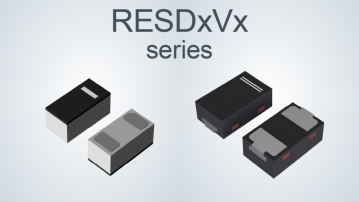
Semiconductor specialist ROHM has developed the 'RESDxVx series' of ESD (electrostatic discharge) protection diodes capable of responding to next-generation high-speed data communication environments exceeding 10Gbps, simultaneously enhancing both signal quality maintenance required in high-speed interfaces and IC protection performance.
2026.03.26by 배종인 기자
ST Launches 75V Drive IC Targeting 48V Industrial Motor Driving
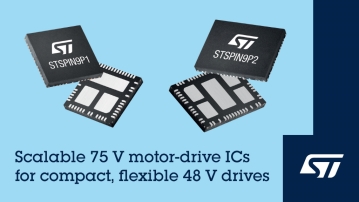
ST Microelectronics has unveiled the 'STSPIN9P' series of 75V motor drive ICs tailored for 48V-class industrial drive system design. The new product family is characterized by half-bridge and full-bridge configurations that enable design scalability according to motor type and output conditions. Power supply circuits, protection functions, and current sensing circuits are integrated on-chip to simplify system configuration, and the devices are designed to support applications up to 500W maximum. The company plans to provide reference designs and demo boards to support development and evaluation in industrial automation, robotics, pumps, fans, lighting, and textile machinery.
2026.03.26by 배종인 기자

Nordic supports security updates for the entire lifecycle of IoT devices at a single fixed cost
Nordic Semiconductor, a global leader in low-power wireless connectivity solutions, has unveiled a single fixed-cost licensing model that delivers FOTA (Firmware Over-the-Air) and device management capabilities throughout the device lifecycle via nRF Cloud, and introduced a new firmware update solution to prepare for the enforcement of the European Union's Cyber Resilience Act (CRA).
2026.03.26by 배종인 기자

Practical Training in Low-Noise, Low-Power Circuit Design All in One Place… Training Fee Support
The "2026 Advanced Engineer Practical Masterclass" to strengthen competencies in high-sensitivity analog circuit and sensor-based system design will be held on April 16 at the e4ds Conference Center in Gasan-dong, Seoul. This program will be conducted as an offline paid hands-on training session, not online, and is targeted at engineers seeking on-site intensive learning. Texas Instruments will provide educational support for this training, allowing participation at 150,000 won, a 100,000 won discount from the original price of 250,000 won.
2026.03.26by 배종인 기자











