



The Korea Institute of Materials Science (KIMS) has solved corrosion and contamination problems during semiconductor etching processes.
 Published2025.01.15 10:56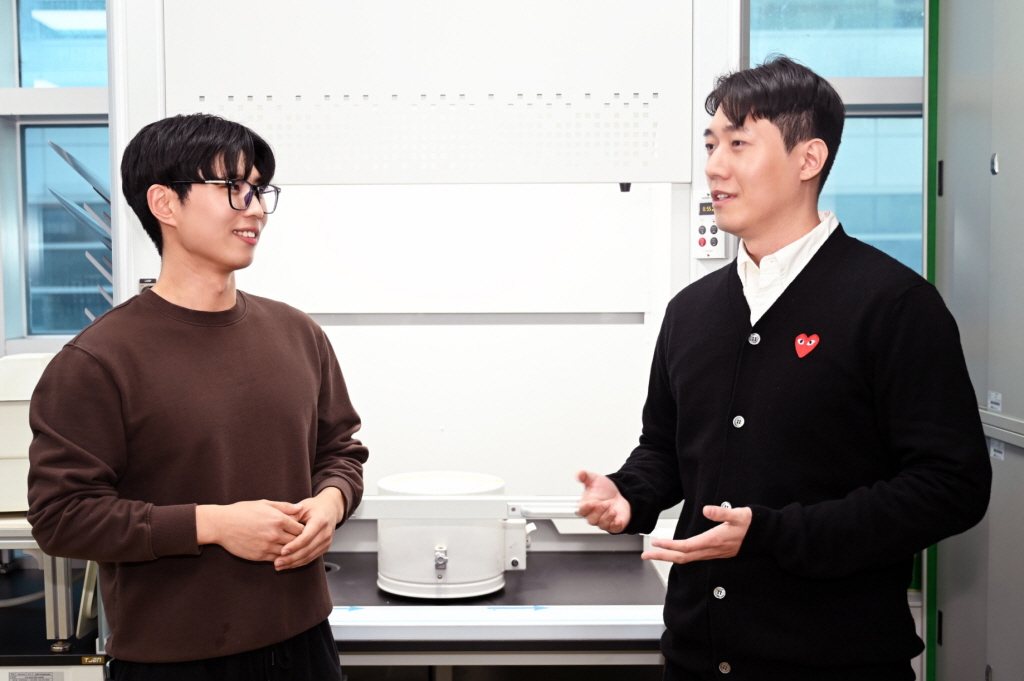
▲(From left) Shin Yu-bin, a master's student researcher, and Ma Ho-jin, a senior researcher, and other members of the Materials Research Team
The Korea Institute of Materials Science (KIMS, President Choi Cheol-jin) has developed the world's first transparent, plasma-resistant high-entropy ceramic, raising expectations that it will solve the problems of corrosion and contamination caused by plasma during semiconductor etching processes.
The Korea Materials Research Institute announced on the 15th that the research team led by Dr. Ma Ho-jin of the Nanomaterials Research Center, in collaboration with the research team led by Professor Lee Jeong-woo of Pusan National University, succeeded in developing a new composition and process technology for transparent, plasma-resistant, high-entropy ceramics that extend the lifespan of internal components of etching equipment during the semiconductor manufacturing process and reduce contaminant particles for the first time in the world.
Ceramics account for over 90% of the materials used in semiconductor etching equipment. One reason for this is their higher plasma resistance (ability to withstand plasma) than other materials. Just as a ship rusts when exposed to seawater, the plasma used in the etching process continuously reacts with internal equipment components, causing corrosion and contamination. Therefore, ceramics are used as a material to reduce such problems.
On the other hand, as the etching process is performed in increasingly harsh environments due to the high integration of semiconductors, the frequency of replacement of commonly used ceramic components is increasing, hindering semiconductor productivity.
The research team designed a new high-entropy ceramic composition that overcomes the limitations of the existing ceramic materials mainly used, such as yttria (Y2O3), alumina (Al2O3), and YAG, and developed a transparent ceramic with a density of 99.9% through a sintering process technology for a dense solid material with no porosity.
Such dense bodies are used in etching process equipment that requires plasma resistance.
Additionally, the research team confirmed the change in the crystal structure of the elements that make up the high-entropy ceramic and developed a transparent ceramic that can transmit visible light and infrared rays using a technology that controls pores.
High-entropy ceramics, unlike general materials, are ceramics that form a single phase (uniform structure) by mixing five or more elements without forming impurities. High-entropy ceramics are known to exhibit new properties, such as high heat resistance, excellent wear resistance, and low thermal conductivity, unlike existing materials, and are attracting attention as heat shielding materials, catalysts, and energy storage materials.
On the other hand, research on plasma resistance had not been conducted until now, so our research team focused on this and conducted research, successfully conducting research and development for the first time in the world.
In semiconductor processes, materials with low etch rates mean fewer contaminants and greater durability.
The high-entropy transparent ceramic developed by the research team showed a low etching rate of 1.13% compared to sapphire.
In addition, compared to yttria (Y2O3), which is known to have excellent plasma resistance, the etching rate was only 8.25%, demonstrating excellent durability.
Ma Ho-jin, a senior researcher at the Korea Materials Research Institute, said, “In the plasma etching process of the semiconductor process, materials, parts, and equipment from the United States and Japan account for more than 90%, so the domestic industry is severely dependent on foreign countries.” He added, “This research result is a representative example of developing a high-entropy ceramic that has never been studied before, and developing a world-class plasma-resistant material with domestic technology. At the same time, we expect it to become the cornerstone for achieving local production of parts through material independence.”
This research was conducted with support from the Korea Institute of Materials Science (KIM). The results were published online on January 13th in the Journal of Advanced Ceramics (IF: 18.6), a globally influential academic journal in the field of ceramic materials.

Comments
Related news
.jpg)
Materials Research Institute, contributing to strengthening the growth of materials companies
The Korea Institute of Materials Science (KIMS, President Choi Chul-jin) has played a core role in supporting national materials industry enterprises over the past three years, contributing significantly to strengthening the growth foundation of materials companies.
2024.08.08by 배종인 기자
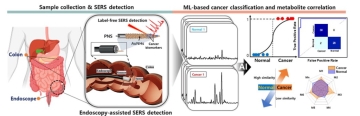
Materials Research Institute Develops Body Fluid-Based Cancer Diagnosis Sensor Material
A research team led by Dr. Jung Ho-sang from the Bio & Health Materials Research Division at the Korea Institute of Materials Science (KIMS, President Choi Chul-jin) has developed an innovative sensor material that amplifies optical signals of cancer metabolites in body fluids such as saliva, mucus, and urine, and diagnoses cancer by analyzing these signals with artificial intelligence.
2024.08.12by 배종인 기자
Materials Research Institute to Hold KIMS TECHFAIR 2024
The Korea Institute of Materials Science (KIMS, Director Choi Chul-jin) will hold 'KIMS TECHFAIR 2024' at the Changwon Convention Center (CECO) from October 10 to 11, targeting domestic materials and components industry professionals.
2024.10.07by 배종인 기자
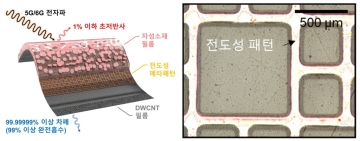
Perfect absorption of all types of electromagnetic waves with a single thin film
Researchers Dr. Park Byung-jin and Dr. Lee Sang-bok at the Composite Materials Research Division of the Korea Institute of Materials Science (KIMS, Director Choi Chul-jin) have developed an ultra-thin film-type composite material technology that can simultaneously absorb over 99% of communication electromagnetic waves across various frequency bands (5G/6G, WiFi, autonomous driving radar, etc.) using a single material—a world-first achievement.
2024.10.09by 배종인 기자
Material Yeon, communication with the public was successful
The Korea Institute of Materials Science (KIMS, Director Choi Chul-jin) received the Excellence Award in the Research Institute category at the "14th 2024 Korea SNS Awards" hosted by the Korea Social Content Promotion Association, receiving recognition for effectively conducting public communication through SNS platforms including Instagram, YouTube, and blogs.
2024.10.21by 배종인 기자











