



Analog Devices Unveils Development Platform for Direct Conversion Receivers for Radar Systems
 Published2014.12.15 14:46
– AD-FMCOMMS6-EBZ, supports radar bands in major L and S frequency ranges
December 11, 2014 – Analog Devices ( www.analog.com , NASDAQ: ADI), a global leader in high-performance semiconductors for signal processing applications, has launched an integrated direct conversion receiver development platform for radar systems where minimizing size, weight, and power (SWaP) is essential. The new AD-FMCOMMS6-EBZ platform supports radar bands in the major L and S frequency bands with a 400 MHz to 4.4 GHz receiver (equipped with a 1,350 MHz to 1,650 MHz filter). The VITA57-compliant platform is fully compatible with FPGA mezzanine card (FMC) platforms. The AD-FMCOMMS6-EBZ is suitable for defense, communications, and instrumentation radar systems that require high levels of integration and performance within a small board area. These include early warning detection, weather monitoring, and air traffic control systems.
The AD-FMCOMMS6-EBZ receiver platform integrates the AD9652 dual 16-bit A/D converter, the ADL5566 dual differential amplifier with a wide dynamic range RF/IF, and the ADL5380 quadrature demodulator, all of which are COTS (commercial-off-the-shelf) components. AD-FMCOMMS6-EBZ is a complete design support package and includes schematics, layout files, noise analysis worksheets, FPGA HDL (Hardware Description Language) code, and software drivers.
AD-FMCOMMS6-EBZ Receiver Development Platform
The AD-FMCOMMS6-EBZ is implemented using an I/Q demodulator with a direct conversion or zero IF architecture, resulting in only a single frequency conversion. This contrasts with superheterodyne receivers, which require multiple frequency conversions. The single frequency conversion offers the advantage of reducing receiver complexity and the necessary conversion steps, while simultaneously improving performance and lowering power consumption. The architecture also avoids image rejection issues and unwanted mixing by adding an amplification stage to maintain full-scale input to the A/D converter. Furthermore, the inherent image rejection of the I/Q modulation scheme eliminates the need for expensive anti-aliasing filters. The on-board local oscillator and converter clock share the same reference signal to prevent smearing.
The AD-FMCOMMS6-EBZ receiver development platform includes a full direct receive signal chain path and supports a 220 MHz bandwidth with +/-1.0 dB passband flatness. The RF input range of the ADL5380 demodulator is 400 MHz to 6 GHz, and it is powered by a single 5 V. The ADL5566 4.5 GHz dual differential amplifier is optimized for IF and DC applications and provides 16 dB of gain. The AD9652 dual 16-bit, 310 MSPS A/D converter delivers the lowest noise levels at industry-leading speeds. These performance levels enable target identification over much longer ranges. The SNR and SFDR measured at 145MHz IF are 64dB and 78dBc, respectively. Additionally, it includes clock distribution features through power management and fan-out.
Price and Mass Production Supply Status
product | Mass production supply status | 20%" style="background: rgb(217, 217, 217); border-width: 1pt medium; border-style: solid none; border-color: black currentColor; padding: 3.75pt; width: 20.14%;"> Package | |
mp;utm_medium=PR" target="_blank"> AD-FMCOMMS6-EBZ | Supplying | $650 | t-align: center;"> FMC |
More detailed information can be found via the link below .
- AD-FMCOMMS6-EBZ Check Details and Order :
line;"> http://www.analog.com/AD-FMCOMMS6-EBZ
http://wiki.analog.com/resources/eval/user-guides/ad-fmcomms6-ebz/hardware
- Engineers and A at ADI 's online technical support community , EngineerZone ™Exchange information with DI product experts

관련뉴스

Intel Unveils Next-Generation 'Core Ultra Series 3' and vPro Platform for Enterprise PCs
인텔이 차세대 기업용 PC를 위한 ‘인텔 코어 Ultra 시리즈 3’와 최신 vPro 플랫폼을 공식 발표하며, 기업용 노트북부터 고성능 워크스테이션까지 폭넓은 수요 충족에 나섰다.
2026.03.26by 배종인 기자
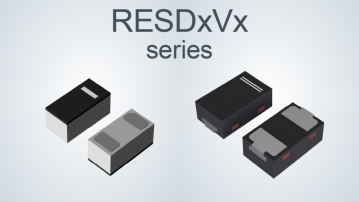
ROHM Launches ESD Protection Diode Compatible with High-Speed Interfaces of 10Gbps or Higher
반도체 전문 기업 로옴(ROHM)이 10Gbps를 넘어서는 차세대 고속 데이터 통신 환경에 대응할 수 있는 ESD(정전기 방전) 보호 다이오드 ‘RESDxVx 시리즈’를 개발하며, 고속 인터페이스에서 요구되는 신호 품질 유지와 IC 보호 성능을 동시에 끌어올렸다.
2026.03.26by 배종인 기자
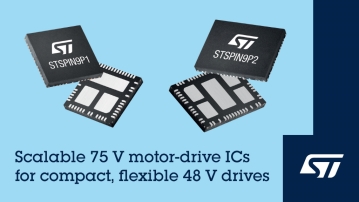
ST Launches 75V Drive IC Targeting 48V Industrial Motor Driving
ST마이크로일렉트로닉스가 48V급 산업용 구동 시스템 설계에 맞춘 75V 모터 드라이브 IC ‘STSPIN9P’ 시리즈를 공개했다. 새 제품군은 하프 브리지와 풀 브리지 구조로 구성돼 모터 종류와 출력 조건에 따라 설계를 확장할 수 있도록 한 것이 특징이다. 전원 회로와 보호 기능, 전류 감지 회로를 칩에 통합해 시스템 구성을 단순화했으며, 최대 500W급 애플리케이션까지 대응하도록 설계됐다. 회사는 레퍼런스 디자인과 데모 보드도 함께 제공해 산업 자동화, 로보틱스, 펌프, 팬, 조명, 섬유 기계 등에서 개발과 평가를 지원할 계획이다.
2026.03.26by 배종인 기자

Nordic supports security updates for the entire lifecycle of IoT devices at a single fixed cost
Nordic Semiconductor, a global leader in low-power wireless connectivity solutions, has unveiled a single fixed-cost licensing model that delivers FOTA (Firmware Over-the-Air) and device management capabilities throughout the device lifecycle via nRF Cloud, and introduced a new firmware update solution to prepare for the enforcement of the European Union's Cyber Resilience Act (CRA).
2026.03.26by 배종인 기자

Practical Training in Low-Noise, Low-Power Circuit Design All in One Place… Training Fee Support
고감도 아날로그 회로와 센서 기반 시스템 설계 역량을 강화할 수 있는 ‘2026 고급 엔지니어 실무 마스터 클래스’가 오는 4월16일 서울 가산동 e4ds 컨퍼런스 센터에서 열린다. 이번 과정은 온라인이 아닌 오프라인 유료 실습 교육으로 진행되며, 현장 중심의 심화 학습을 원하는 엔지니어를 대상으로 한다. 이번 교육은 텍사스 인스트루먼트(Texas Instruments)가 교육비를 지원해 정가 25만원에서 10만원 할인 된 15만원에 참가할 수 있다.
2026.03.26by 배종인 기자











