



Axis: "Edge, Hybrid, and Mobile Surveillance Will Drive the Market"
 Published2026.01.05 13:24
Axis Communications (CEO Ray Morritson), a global company specializing in network camera-based intelligent security solutions, predicts that edge, hybrid, and mobile surveillance will dominate the security market by 2026.
On the 5th, Axis announced the five technology trends that will lead the security industry in 2026.
Axis has been forecasting the trends in security technology every year, and this year, it analyzed that the market will change in a direction where existing trends such as advanced AI, advancements in image processing technology, enhanced device computing performance, and evolution of communication technology will deepen.
A particularly notable change in recent years has been the growing influence of IT departments in introducing physical security technologies.
As collaboration between physical security teams and IT departments becomes increasingly essential, the criteria for selecting security technologies has also changed significantly.
The '5 Security Technology Trends for 2026' presented by Axis include: △Strengthening ecosystem-centered decision-making, △Evolution of hybrid architecture, △Increasing importance of edge computing, △Explosive growth in the mobile surveillance market, and △Need to secure technological autonomy.
In 2026, the key criterion for security technology adoption will likely be not individual products, but rather which ecosystem they will join.
As the influence of IT departments grows, they choose the operating system first and then configure compatible software and hardware.The IT method is also spreading to the security industry.
An ecosystem-centric approach facilitates the integration of various devices, such as cameras, sensors, and analytics, and ensures integrated configuration, management, and scalability.
Additionally, long-term software updates and product lifecycle management can be reliably supported on a single platform, so platforms from vendors with a broad partner ecosystem are expected to determine market competitiveness.
Axis predicts that hybrid architecture will find a new balance by 2026.
The combination of edge, cloud, and on-premises will remain, but the roles of edge and cloud will be strengthened, and reliance on on-premises will gradually decrease.
Cameras with enhanced edge AI capabilities can perform traditional server-based tasks like video analysis and metadata generation on their own, while the cloud is being optimized for large-scale data analysis and improved operational efficiency.
However, on-premises-based systems are likely to remain important due to regulations and corporate policies.
The security industry has been leveraging edge computing as a core technology for years, and its importance is expected to grow even further by 2026.
As device performance improves and more functions can be processed at the edge, benefits such as generating actionable insights in the field, producing sophisticated metadata, and enabling system scalability without adding servers are emerging.
Additionally, the emergence of the latest edge devices equipped with enhanced IoT security features such as secure boot and signed operating systems is accelerating the trend of enterprises embracing the edge as a core element of their overall security systems.
The market for mobile surveillance solutions, including mobile trailers and mobile cameras, is expected to grow by 202It is expected to grow rapidly over the next six years.
This is because improved network connectivity and the combination of edge AI have made high-performance surveillance possible even in mobile environments.
Mobile surveillance is rapidly being adopted in a variety of settings, including public safety, construction sites, festivals and sporting events, and temporary facilities. Advances in green power technologies and low-power cameras have also significantly reduced maintenance and installation costs.
As supply chain uncertainty persists, companies are considering internalizing core technologies.
On the other hand, there are practical limitations to developing all technologies directly, so a strategy to secure technological autonomy through selection and concentration on core areas is becoming increasingly important.
Axis introduced the case of developing its own SoC 'ARTPEC' for over 25 years, and explained that this technological autonomy led to the provision of differentiated functions such as AV1 encoding.
This can contribute to building a stable and sustainable security infrastructure even in the face of future technological changes.
Axis stated, “The future of the security industry is not a simple extension of existing technologies, but a complex evolution that combines various elements such as ecosystems, edge, mobile, and autonomy.” It added, “We will continue to innovate beyond 2026 through close collaboration with customers and partners.”

관련뉴스
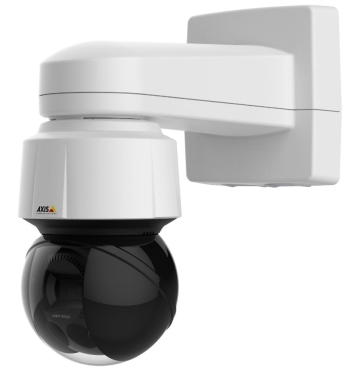
Axis Launches PTZ Camera Suitable for Security and Protection
Axis Communications has launched the AXIS Q6155-E, a PTZ dome network camera equipped with laser focus functionality. Laser focus technology enables fast and accurate automatic focusing even in poor lighting conditions. The laser beam embedded in the AXIS Q6155-E quickly measures the distance between the camera and the object, allowing precise focus adjustment.
2017.01.23by 김지혜 기자
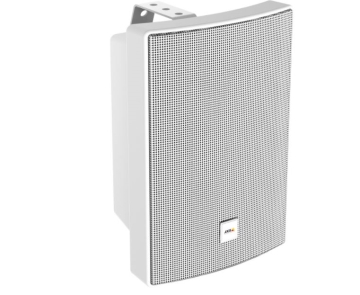
Axis expands from security to network speakers
Axis Communications has unveiled wall-mounted network speaker (model: AXIS C1004-E) and ceiling-recessed network speaker (model: AXIS C2005) for the retail industry, strengthening its strategy to capture the audio system market in the retail sector. The network speakers launched by Axis feature an all-in-one design, combining an amplifier, mixer, digital signal processor, streaming functionality, microphone, power supply, and speaker in a single unit. Supporting PoE technology, power and data can be simultaneously supplied to each speaker through a single network cable. With SIP protocol support, VoIP is also available. Since the units ship fully configured from the factory, installation and operation are possible without specialized technical knowledge, and adding or removing speakers from the audio system is also straightforward.
2017.05.30by 김자영 기자

엑시스, 열상 카메라로 스마트시티 구축한다
엑시스커뮤니케이션즈(www.axis.com)는 엑시스 네트워크 카메라를 사용하여 스마트시티를 구축한 사례를 발표했다. 미국 휴스턴 시는 51회 슈퍼볼 개최지로 선정되며, 많은 관광객과 슈퍼볼 팬이 시를 방문할 것에 대비하여 시의 보안을 강화하기로 결정했다. 슈퍼볼 행사는 휴스턴 시의 중심에 위치한 디스커버리 그린(Discovery Green)과 그 근방에서 주로 개최되었다. 기존에 휴스턴 시에서 사용하던 네트워크 카메라는 시야가 일부 가려지는 문제점이 있어 치안 유지를 위해서 AXIS Q1942-E 열상 카메라와 AXIS Q6155-E PTZ 네트워크 카메라를 시내의 높은 빌딩 꼭대기에 설치했다. PTZ 카메라로 시내 전반을 둘러보고, 필요시 줌 기능을 활용해 상세한 영상 정보도 얻을 수 있었다.
2017.06.27by 김지혜 기자
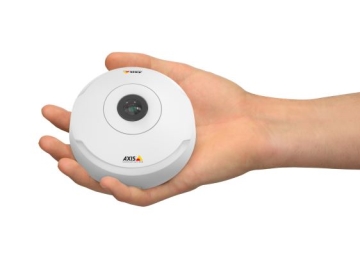
Axis Applyes Zipstream to Panorama and 4K Cameras
엑시스커뮤니케이션즈는 엑시스의 영상 압축 기술 집스트림(Zipstream)의 성능이 향상되어 360도 파노라마 카메라와 4K 카메라를 지원한다고 밝혔다. 엑시스가 선보인 AXIS M3047-P와 AXIS M3048-P 네트워크 카메라는 향상된 집스트림 기술을 적용했다. 360도 뷰를 제공하는 ‘어안렌즈’ 미니 돔 카메라로, 적은 수의 카메라로도 넓은 지역을 감시할 수 있어서 비용 효율적이다.
2017.08.01by 김자영 기자
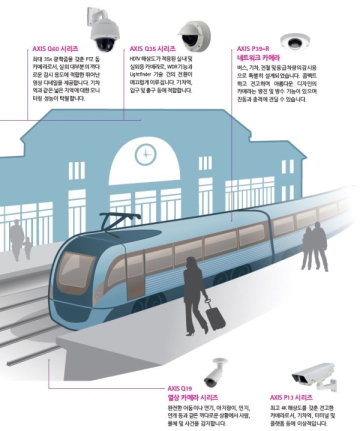
Axis Announces Use of Network Cameras in Railway Industry
Prevention of unauthorized intrusion and damage to facilities through video monitoring, practical case study presentations on maintaining security at railway stations and urban terminals using network cameras
2018.05.31by 명세환 기자











