



Auto and Parts Industries Closely Focus on 'Rules of Origin' Ahead of USMCA Joint Review
 Published2026.02.25 06:00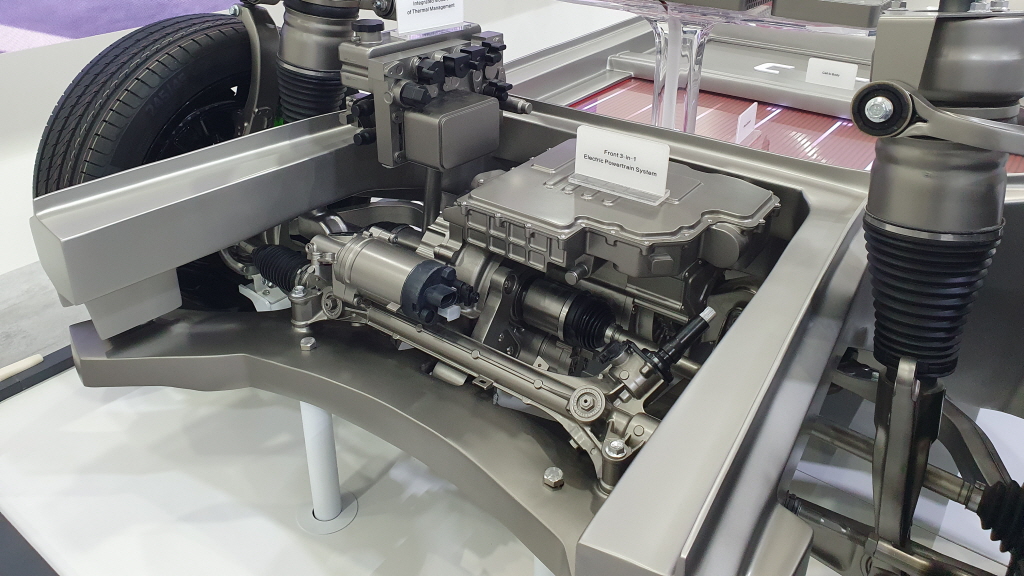
▲ Photo : e4ds news
Scenario evaluation and supply chain databases are important for preparing for changes in rules of origin.
The USMCA (United States-Mexico-Canada Agreement), a North American free trade agreement signed by the United States, Mexico, and Canada, is scheduled for a "joint review" on July 1, 2026. This joint review is a crucial step in determining whether to extend the agreement, and the possibility of strengthening rules of origin, particularly in the automotive and parts sectors, is emerging as a key issue.
On the 25th, the Korea Automotive Research Institute released 'USMCA Joint Review, Trends in the Automotive and Parts Sectors' through Industry Analysis Vol. 162.
According to this, the USMCA entered into force in July 2020 and replaced the existing NAFTA. The agreement includes a 'sunset clause' with a validity period of 16 years, stipulating that a decision on whether to extend it is made through a joint review every six years. If all three countries agree to an extension in this review, the agreement will remain in effect until 2042, but if even one country opposes it, a review will continue every year.
The USMCA significantly strengthened rules of origin in the automotive sector from the time of its entry into force.
Based on passenger cars, the Regional Value Added (RVC) ratio must be gradually raised from NAFTA's 62.5% to meet 75% after 2025.
In addition to this, the Labor Value Added (LVC) requirement and the local steel and aluminum ratio requirement (70%) have been added, so all three conditions must be met to receive duty-free benefits.
Ahead of this joint review, the U.S. automotive and parts industries, as well as the steel and aluminum raw materials industries, are generally in favor of extending the USMCA, but are demanding a revision of the agreement to strengthen U.S.-centric benefits.
In particular, the raw materials industry is advocating for raising the domestic steel ratio to 85% and abolishing the 'Roll-Up' rule, which recognizes non-domestic materials included in core components as domestic.
In a report to Congress, the U.S. Trade Representative (USTR) specified the possibility of revising duty-free trade rules, specifically rules of origin, as a major topic of discussion for the USMCA joint review.
This is analyzed as an attempt to block Chinese automotive parts companies from entering the U.S. market by using Mexico as a roundabout route.
Even after the USMCA came into effect, disputes arose between the United States, Canada, and Mexico over whether to apply roll-up mechanisms to key components.
At the time, the panel determined that the U.S. interpretation deviated from the intent of the agreement, but there are predictions that the U.S. is highly likely to raise the issue again as an official agenda item in this joint review.
As a result of this joint review, experts [discuss] simple extension of the agreement △the agreement It is believed that various scenarios are possible, such as revision, delay in review, and withdrawal by the United States.
However, given that the Trump administration and the Trade Representative have raised doubts about the effectiveness of the USMCA, the prevailing view is that a simple extension maintaining current regulations is unlikely.
Even if the joint review is delayed, the agreement itself will remain in effect, but uncertainty for companies is expected to increase as the review is repeated every year.
In particular, there are also observations that it will not be easy to reach an agreement among the three countries, as Canada and Mexico have different policy stances regarding Chinese automobiles and parts.
The Korea Automotive Research Institute emphasized the importance of scenario evaluation and the establishment and management of supply chain databases in preparation for changes in rules of origin through a report.
It is pointed out that the origin, processes, and ownership structures of the entire supply chain, from raw materials to parts and finished vehicles, must be systematically managed in preparation for various potential changes, such as the abolition of roll-up regulations, the raising of labor value-added requirements, and stricter regulations for steel and aluminum.
In particular, if the proportion of North American-produced steel and aluminum used increases, local procurement capabilities are highly likely to determine corporate competitiveness.
An official from the Korea Association of Automotive Engineers stated, “The joint review of the USMCA is not merely a matter of extending the agreement, but will be a watershed moment for the restructuring of the North American automotive supply chain,” adding that “preemptive response strategies at the corporate level are required.”

관련뉴스
Domestic auto parts industry in the midst of global shocks must respond to structural advancement
한국자동차연구원(한자연)이 최근 발간한 산업분석 Vol. 149 ‘부품산업의 환경 변화와 대응 방향’에 따르면, 국내 주요 자동차 부품기업들이 경영성과 및 기술투자 측면에서 개선 흐름을 보이고 있으나, 글로벌 경쟁 기업 대비로는 여전히 열위에 있는 것으로 분석됐다. 산업 패러다임의 전환과 보호무역주의 심화 등 복합적 요인이 겹치면서 구조적 고도화를 위한 민간·정부의 전략적 대응이 시급하다는 지적이다.
2025.07.24by 배종인 기자
.jpg)
Hanjayeon undertakes organizational restructuring, laying the foundation for a leap forward as a future mobility research hub.
The Korea Automotive Research Institute (Director General Jin Jong-wook, hereinafter KARI) has undertaken a major organizational restructuring to secure leadership in future mobility technologies including AI, autonomous driving, and carbon neutrality.
2025.08.04by 배종인 기자
[Greetings] Korea Automotive Research Institute
The Korea Automotive Research Institute announced a personnel reorganization effective August 1st.
2025.08.05by 명세환 기자
.jpg)
Hanjayeon Shares E2E-Based SDV Innovation Strategy
한국자동차연구원(원장 진종욱)이 16일 서울 강남 코엑스 스타트업 브랜치에서 ‘AI 자율주행 | SDV 혁신의 열쇠, End-to-End AI 기반 자율주행의 현주소’를 주제로 제21회 자산어보 행사를 개최하며, E2E AI 기반 자율주행 기술의 발전과 생태계 강화를 위한 교류의 장을 마련했다.
2025.09.16by 배종인 기자

China's auto industry likely to remain 'domestic' for a long time.
한국자동차연구원이 발표한 ‘(산업분석 Vol.156)중국 자동차 산업의 역설, 내권(內卷)’이라는 산업분석 보고서에 따르면 중국 자동차 산업이 생산량 세계 1위에도 불구하고, 과잉 투자와 출혈 경쟁 속에서 자동차 산업 생태계 전반이 어려움을 겪고 있는 가운데 자동차 산업을 둘러싼 다양한 요인으로 인해 이러한 상황이 장기화될 것으로 전망됐다.
2025.11.10by 명세환 기자











