


Imaginations plans to supply 100 million units in the mobile computing sector in 2011
 Published2011.04.14 18:36
Scheduled to supply 100 million units in the mobile computing sector in 2011
Hello. Thank you very much for attending despite your busy schedule. Today, while some of you may be familiar with Imaginations, it seems there are some who are not, so I will briefly explain our business model. We will then proceed by introducing the new technology mentioned by the General Manager and taking questions.
We are an IP licensing company, and according to Gartner, we rank third in the industry. Our business model is quite simple. It can be broadly divided into three groups: telecommunications and NIM'S Sigma, processors (Meta), and graphics multimedia processors (PowerDVR).
We currently employ over 700 staff members across 10 countries worldwide. With the recent acquisition of HelloSoft in the U.S. and Greece, our total workforce has increased to 750. Furthermore, based on the total shipment volume of converter and semiconductor products incorporating at least one of our IPs, we rank third in the global industry.
Although our number of licensing partners is less than 30, half of the top 20 companies in the semiconductor sector are included among them, most notably Sony, Samsung, and Apple.
There are a total of 98 SOC designs currently under development, and 42 types are currently being shipped.
To be more specific, there are currently 45 designs for mobile phones, 9 for multimedia personal media players, 12 for mobile computing, and 13 for automotive applications. In addition, there are 6 in the fields of healthcare and smart energy, and 23 are currently in progress for TV set-top boxes.
This table is a graph showing the total quantity of products actually shipped to the market. Since 2005, product shipments have increased significantly; a total of 120 million units were shipped in 2009, and 200 million units were recorded this year. To date, a total of 5 billion units have been shipped.
The results for the second half of the year are being announced in the UK this afternoon. The first half was strong, and 107 million units were shipped in the second half, which is 54 million more than last year, appearing to have increased by more than double.
These are photos of various products actually equipped with our technology.
Our superior technology is particularly well-known in the mobile sector, and currently, there are over 75 mobile phones on the market equipped with our PowerVR SGX. Notable examples include the Samsung Galaxy S, Motorola's Droid, other Samsung mobile devices, and many other companies such as Ericsson that have adopted and incorporated our technology.
There are various fields, but the highest growth sector among them is mobile computing. When we first entered this field, the market supply volume was 10 million units, but we plan to supply over 100 million units next year.
Our graphics and video technology in this field is being supplied to the high-end device market, starting with Bell and Acer, then to the premier market, such as the Sony Vaio X, and finally to the recent tablet market, including the Apple iPad and Galaxy Tab.
Of course, the hardware itself is important, but software is also crucial for increasing actual hardware sales. That is why we are showcasing the applications currently being used in relation to our flagship products.
And it is precisely graphics technology that plays the most critical role in these applications. If you look at the top left, you can see a dynamic 3D UI that allows the use of live video wallpapers and an innovative media download service; this requires a UI capable of supporting very rich media support functions. Regarding location-based information and social networks, 3D navigation and 3D HDT can be considered representative features.
We believe there are four main channels for reaching consumers: PC, mobile, automotive, and home. Consumer electronics manufacturers consider it particularly important to retain their customer base even when consumers switch from one device to another. Based on the volume of devices recently supplied to the market, we anticipate that the mobile sector will be the most competitive.
Now, for the presentation, let's take a look at the trends occurring in our IP market. The first trend is the increase in GPUs. In particular, the use of graphics processors in non-graphics applications is on the rise. In our view, there are limitations to the scalability of SMP in the case of CPUs.
In particular, due to the highly parallelized architecture of GPUs and the emergence of OpenGL, the processing power of GPUs can be maximized, and thus the proportion of GPUs in the SOC sector will grow even larger in the future.
The second emerging trend is ubiquitous computing. Basically, it involves keeping all types of devices constantly connected to the internet. To implement this connectivity, it is not possible solely through the connection of hardware; content and services must also be provided. Our technology related to this is called Flow Technology, which acts as a link connecting hardware devices with content databases. And you should view the connectivity material not as existing on this chip, but as being uploaded to this sourcing. So, regarding audio content delivery, you can think of it as technology for purchasing music while listening to the radio, or monitoring video content delivery in the healthcare sector.
I will not go into detail about the four photos you just saw, but they demonstrate how our core technologies are used in their respective fields. PowerVR is used in the graphics and video sectors; Meta is used with Android OS and related applications; and InSigma is utilized in the broadcasting and connectivity industries. Therefore, these same IP building solutions are being used across a wide range of sectors, from portable devices and consumer electronics to mobile computing and automobiles. We are providing multimedia and communication connectivity.
Now, I will present the details of the new technologies. First, I will discuss the Power VR554 in the graphics sector, which is the most well-known area. This represents the newest technology in the Power VR55XT family. In this category, the SGX 520 features one pipe, while the 544 utilizes up to four pipes. With the introduction of the 554, eight pipes are now being used.
And multi-processor configuration is possible. So, 8 pipes can be used on a single core, and up to 128 pipes can be used on the GPU with a maximum of 16 cores.
Furthermore, it supports Direct X 9 feature levels, and the SGX 554 boasts industry-leading performance. We can promise you the best performance per square millimeter and per milliwatt. Since the 5XT family we have previously announced has always proven to deliver the performance we promised, we are confident that this new 554 will also deliver the performance we promised.
<P
관련뉴스

Intel Unveils Next-Generation 'Core Ultra Series 3' and vPro Platform for Enterprise PCs
인텔이 차세대 기업용 PC를 위한 ‘인텔 코어 Ultra 시리즈 3’와 최신 vPro 플랫폼을 공식 발표하며, 기업용 노트북부터 고성능 워크스테이션까지 폭넓은 수요 충족에 나섰다.
2026.03.26by 배종인 기자

ROHM Launches ESD Protection Diode Compatible with High-Speed Interfaces of 10Gbps or Higher
반도체 전문 기업 로옴(ROHM)이 10Gbps를 넘어서는 차세대 고속 데이터 통신 환경에 대응할 수 있는 ESD(정전기 방전) 보호 다이오드 ‘RESDxVx 시리즈’를 개발하며, 고속 인터페이스에서 요구되는 신호 품질 유지와 IC 보호 성능을 동시에 끌어올렸다.
2026.03.26by 배종인 기자
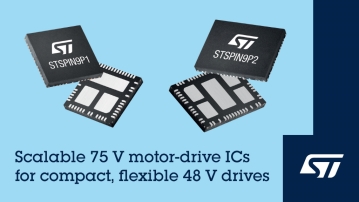
ST Launches 75V Drive IC Targeting 48V Industrial Motor Driving
ST마이크로일렉트로닉스가 48V급 산업용 구동 시스템 설계에 맞춘 75V 모터 드라이브 IC ‘STSPIN9P’ 시리즈를 공개했다. 새 제품군은 하프 브리지와 풀 브리지 구조로 구성돼 모터 종류와 출력 조건에 따라 설계를 확장할 수 있도록 한 것이 특징이다. 전원 회로와 보호 기능, 전류 감지 회로를 칩에 통합해 시스템 구성을 단순화했으며, 최대 500W급 애플리케이션까지 대응하도록 설계됐다. 회사는 레퍼런스 디자인과 데모 보드도 함께 제공해 산업 자동화, 로보틱스, 펌프, 팬, 조명, 섬유 기계 등에서 개발과 평가를 지원할 계획이다.
2026.03.26by 배종인 기자

Nordic supports security updates for the entire lifecycle of IoT devices at a single fixed cost
Nordic Semiconductor, a global leader in low-power wireless connectivity solutions, has unveiled a single fixed-cost licensing model that delivers FOTA (Firmware Over-the-Air) and device management capabilities throughout the device lifecycle via nRF Cloud, and introduced a new firmware update solution to prepare for the enforcement of the European Union's Cyber Resilience Act (CRA).
2026.03.26by 배종인 기자
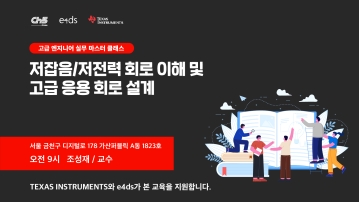
Practical Training in Low-Noise, Low-Power Circuit Design All in One Place… Training Fee Support
고감도 아날로그 회로와 센서 기반 시스템 설계 역량을 강화할 수 있는 ‘2026 고급 엔지니어 실무 마스터 클래스’가 오는 4월16일 서울 가산동 e4ds 컨퍼런스 센터에서 열린다. 이번 과정은 온라인이 아닌 오프라인 유료 실습 교육으로 진행되며, 현장 중심의 심화 학습을 원하는 엔지니어를 대상으로 한다. 이번 교육은 텍사스 인스트루먼트(Texas Instruments)가 교육비를 지원해 정가 25만원에서 10만원 할인 된 15만원에 참가할 수 있다.
2026.03.26by 배종인 기자











