


Korean Electronics Research Institute Pursues 'Space Heritage' for Lunar Rover Drivetrain Components
 Published2026.09.21 11:30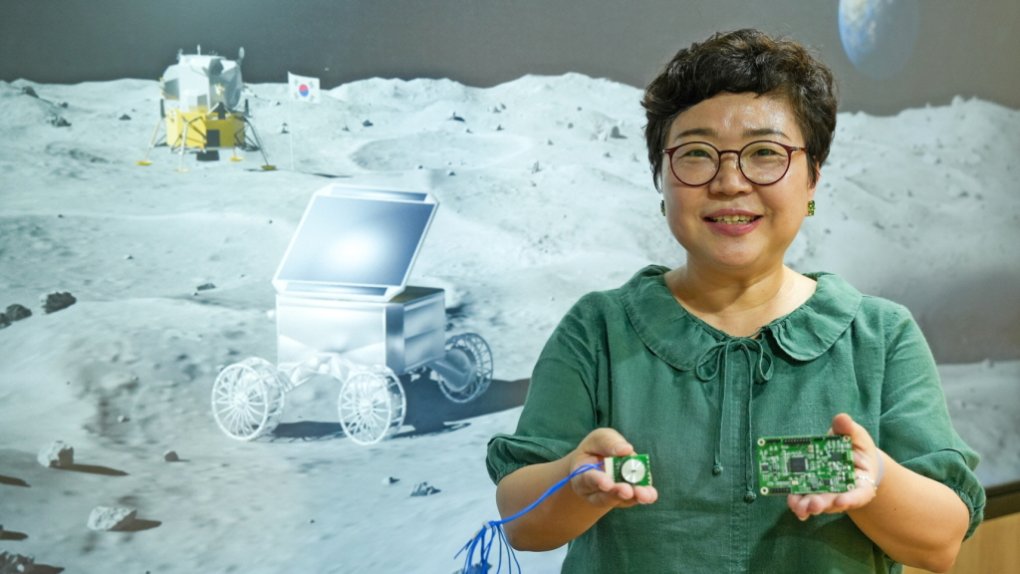
First Space Demonstration Through October Nuri Rocket Fifth Launch, Targeting 2032 Lunar Landing
The government's "Future Space Economy Roadmap" targets lunar exploration in 2032, and KERI plans to use this demonstration as a stepping stone toward that goal.
Additionally, the team is in parallel constructing a "real-time performance verification system (HILS)" that simulates hypothetical space environments on computer to continuously verify component performance.
Subsequently, through approximately five months of technical discussions with relevant manufacturers, the team clarified those characteristics.
In the October Nuri rocket launch, UEL will provide technical support for space environmental demonstration of certain components including control boards it developed, with plans to mutually share the obtained data for reflection in ground-based research.
Going forward, the scope of demonstration will be expanded to include the entire electric drive system including the motor.
The collaboration between KERI and UEL represents a division-of-labor structure combining design capabilities and field operation expertise, attempting to overcome this disconnect.

Comments
Related news
.jpg)
KERI Develops Intermediate Layer Technology to Reduce Anode Contact Instability in All-Solid State Batteries
Researchers at the Korea Electrotechnology Research Institute (KERI) have developed an interlayer technology that reduces contact instability issues occurring between the lithium metal anode and solid electrolyte in all-solid-state batteries. The research team applied an interlayer utilizing nano tin to the anode surface through a transfer process, and confirmed capacity retention of 81% or higher after 500 charge-discharge cycles even under low pressure conditions of 2 MPa in large-area pouch cell experiments. This research was selected as a cover paper for the international academic journal 'Advanced Energy Materials'.
2026.04.27by 명세환 기자
KERI Develops Autonomous Manufacturing AI That Directs Processes by Voice
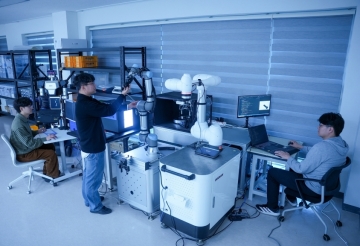
The Korea Electrotechnology Research Institute has developed autonomous manufacturing AI technology in collaboration with Changwon National University that enables robots to understand human language and perform manufacturing processes. This technology operates through a collaborative approach where AI specialized in language, vision, and robot control work together. The research team projects that the process reconfiguration time, which previously took several days or more, can be reduced to within one hour. It is expected to be applicable to addressing the shortage of skilled workers in regional manufacturing companies and enabling response to small-batch, high-mix production.
2026.05.06by 명세환 기자
Mediintech Launches Development of 22.8 Billion Won AI Robotic Endoscope
A domestic industry-academia-research-military consortium led by MediInTech, a startup company based on Korea Electrotechnology Research Institute (KERI) technology, has commenced development of an AI-based next-generation robotic endoscope platform. The project will run from April 2026 through December 2031, with total investment of 22.8 billion won. The consortium plans to develop an intelligent platform that reduces the operational limitations of conventional flexible endoscopes by combining AI autonomous steering and ultra-precision therapeutic technique automation technology. If the research proceeds as planned, it is expected to serve as an opportunity to secure domestic technology-based competitiveness in the flexible endoscope market, which is currently dominated by Japanese companies.
2026.06.08by 배종인 기자
KIMS and KERI Develop PTFE-Free Dry Cathode Manufacturing Technology
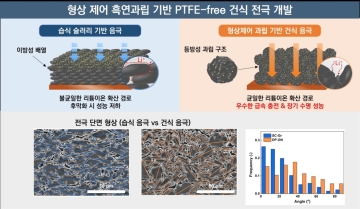
The Korea Institute of Materials Science and Korea Electrotechnology Research Institute have developed battery electrode technology for manufacturing high-performance dry cathodes without PTFE. The research team applied CMC-SBR binder to the dry process and redesigned graphite particles into spherical granular structures to improve lithium-ion diffusion characteristics. Experimental results demonstrated improved fast-charging performance and long-cycle durability, and the feasibility of implementing high-capacity batteries based on thick electrodes was confirmed. This technology is expected to be utilized in the commercialization of environmentally-friendly dry electrode processes for electric vehicles and energy storage systems.
2026.06.09by 배종인 기자
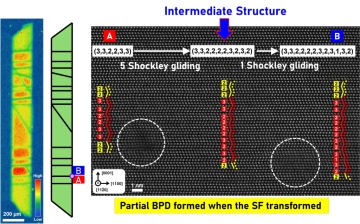
KERI identifies 'trapezoidal defect' structure in SiC power semiconductors... World's first
A research team led by Dr. Na Moon-kyung of the Next-Generation Semiconductor Research Center at Korea Electrotechnology Research Institute (KERI) has jointly identified the internal structure and generation mechanism of 'killer defects' in SiC power semiconductors with Chungnam National University and HORIBA STEC Korea. By analyzing the causes of defects occurring in the power semiconductor manufacturing process, the findings are expected to be utilized in the development of high-quality production technology in the future.
2026.06.22by 배종인 기자











