



Materials Research Institute presents long-term thermal degradation prediction technology for spent nuclear fuel dry storage aluminum
 Published2026.09.22 09:41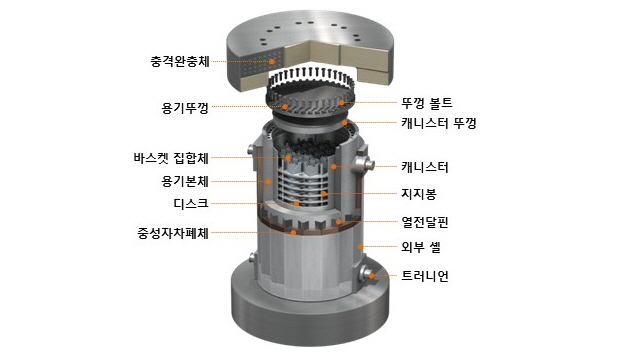
The research team conducted prolonged thermal aging experiments lasting up to 10,000 hours to analyze the material degradation mechanism, and on this basis derived a prediction method to calculate long-term property changes from short-term high-temperature test results.
Through this, the institute explained that it has identified the fundamental causes of mechanical property degradation such as material strength and ductility as thermal aging progresses.
Since dry storage containers must maintain stable performance over decades, technology to pre-evaluate material behavior over the entire actual operational period is essential.
The institute stated that this achievement can contribute to establishing licensing and safety evaluation standards for domestic spent nuclear fuel dry storage systems.
The research was conducted by Lee Jun-ho, senior researcher of the Nuclear Safety Research Division at the Korea Institute of Materials Science.

Comments
Related news
.jpg)
KIMS Publishes 'Materials Technology White Paper 2025'
The Korea Institute of Materials Science has published the "Materials Technology White Paper 2025," which provides a comprehensive analysis of policy, research and development, and industrial conditions in the domestic and international materials sector. This edition, Korea's only comprehensive white paper in the materials field, has been structured to strengthen statistics-based information provision, enabling objective understanding of the competitiveness of Korea's materials industry. It encompasses policy trends, R&D status, and industrial conditions comprehensively.
2026.07.31by 배종인 기자
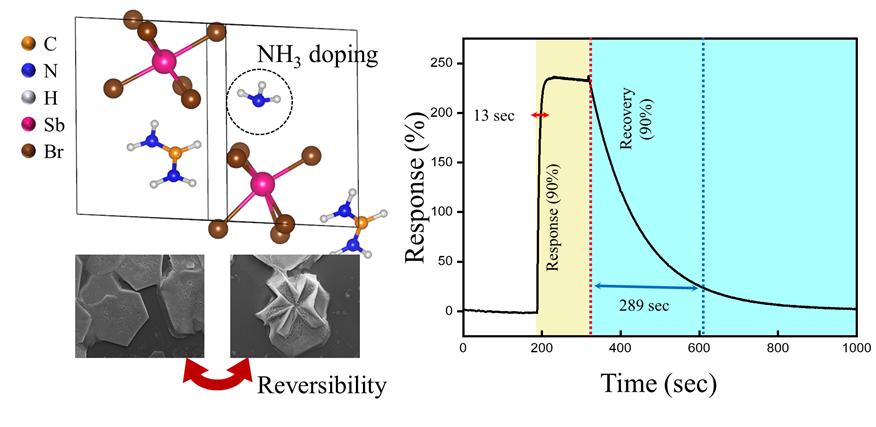
Materials Research Institute of Korea, Development of Lead-Free Perovskite-Based Ammonia Gas Sensor
The Korea Institute of Materials Science has developed an ultra-high sensitivity ammonia gas sensor applying lead-free perovskite instead of lead-based materials. This sensor can detect minute leaks at the level of 1ppm, and the newly identified operating principle presents a new direction for gas sensor research. It is expected to be utilized in enhancing the safety of hydrogen and ammonia energy infrastructure.
2026.08.05by 배종인 기자
Korea Institute of Materials Science Begins Development of Anhydrous Ammonia SCC Integrated Evaluation Platform
The Korea Institute of Materials Science has begun developing an integrated evaluation platform for stress corrosion cracking (SCC) of high-strength steel for ammonia propulsion and transport vessels. By establishing a system to verify the safety of steel in anhydrous ammonia environments using domestic technology, the institute will strengthen the international competitiveness of the shipbuilding and steel industries and lay the foundation for reflecting domestic technology in regulatory and standard revisions by the International Maritime Organization (IMO) and other bodies.
2026.08.05by 배종인 기자
Korea Institute of Materials Science Discusses Failure Cases and Analysis Technologies in Defense, Automotive, Shipbuilding, and Power Generation Sectors
The Korea Institute of Materials Science held the 21st Materials and Components Failure Analysis Workshop in August. Industry, academic, and research experts gathered to share actual failure cases from industrial sites and discuss ways to improve materials and components reliability and safety, focusing on cutting-edge analysis technologies such as AI-based failure analysis and industrial CT application techniques.
2026.08.18by 배종인 기자
Korea Institute of Materials Science Develops Carbon Nanotube Film Enabling Simultaneous Electromagnetic Shielding and Infrared Stealth
The Korea Institute of Materials Science has developed a carbon nanotube hybrid film that simultaneously implements electromagnetic shielding and infrared stealth functions. This composite material, with an ultra-thin film measuring 1/5 the thickness of human hair, blocks electromagnetic waves by 99.9999999% or greater while possessing strength comparable to steel, and is expected to be widely applied to future weapon systems, aerospace, and 5G/6G communication devices.
2026.08.19by 배종인 기자











