



ETRI Achieves 1st and 2nd Place in Two Divisions of International AI Traffic Video Analysis Competition
 Published2026.09.22 09:43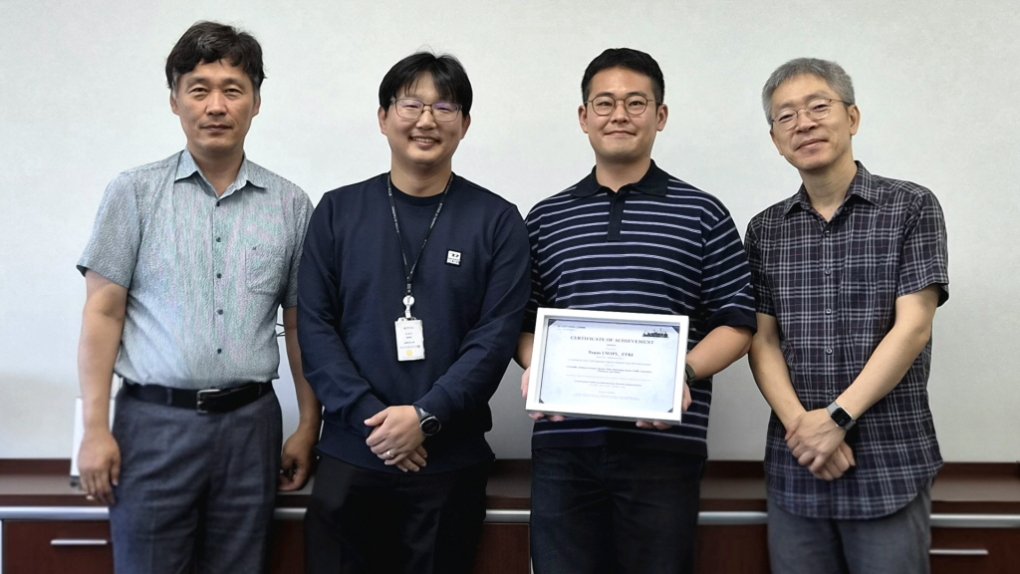
ECCV 2026 'AI City Challenge' PSI-VQA 1st Place·FETV 2nd Place
Seven teams participated in the PSI-VQA division and eight teams in the FETV division, with teams from universities, research institutions, and companies worldwide, including NVIDIA researchers, entering the competition.
This competition prioritized evaluating AI stability in new environments not encountered during the learning process and inference accuracy on images from different cameras and shooting perspectives.
Beyond simple object recognition, AI must comprehensively judge behavioral intent and situational causality.
The FETV division is a task to detect and explain traffic violations such as signal violations, wrong-way driving, and jaywalking in fisheye lens camera footage of intersections.
Due to the characteristics of fisheye lens footage where distortion increases toward the edges, high technical standards are required to accurately determine vehicle and pedestrian positions and movements.
Efficiency was enhanced through a method of first rapidly analyzing entire footage and then intensively re-analyzing sections requiring detailed judgment.
Additionally, the research team explained that by constructing a 'Traffic Evidence Graph' that interconnects scenes, objects, actions, and occurrence timing in footage, the approach reduces errors where AI generates non-existent content as fact and enhances judgment reliability.

Comments
Related news
ETRI and Busan City Launch Demonstration of AI and Digital Twin-Based Urban Flooding Prediction Platform
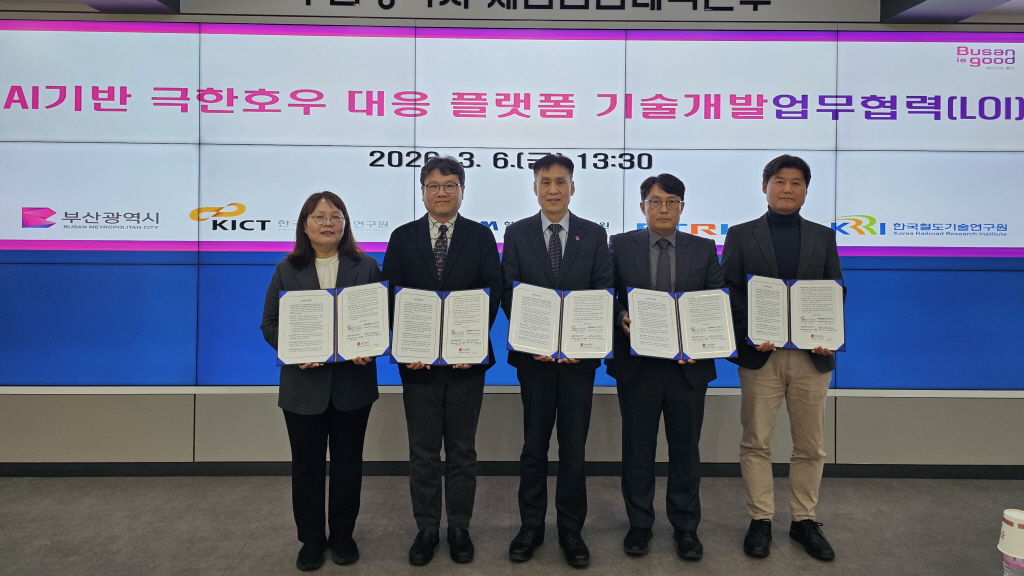
ETRI and Busan City, along with four institutions including the Korea Institute of Civil Engineering and Building Technology, Korea Institute of Geoscience and Mineral Resources, and Korea Railroad Research Institute, have begun development of an urban flooding prediction platform leveraging AI and digital twin technologies. This project, which will be implemented over five years starting in 2025 with a budget of approximately 33.8 billion won, will develop a hybrid flooding prediction model through comprehensive analysis of CCTV footage, sensor data, and historical inundation data. By combining physical simulation with AI technology, the project aims to replicate the city's drainage flow in a digital environment and realize a smart safe city by detecting and predicting flooding risks at an early stage.
2026.08.19by 명세환 기자
ETRI Unveils AI Vision and AIDC Strategy at 50th Anniversary Conference
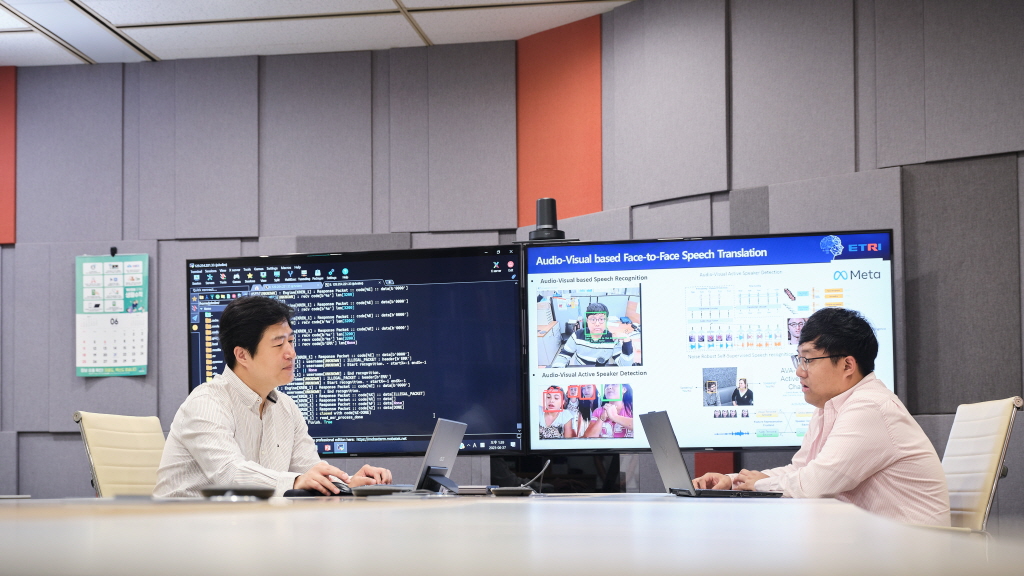
The Electronics and Telecommunications Research Institute (ETRI) will hold 'ETRI Conference 2026' in Seoul on September 1st to commemorate its 50th anniversary. ETRI President Park Se-woong will present 'A Warm World Living Together Led by AI·DX Innovation' as a new vision, and will disclose the nation's AI innovation strategy ranging from core AI scientist technologies such as shared multimodal foundation models and AI Co-Scientist to ultra-high-speed network infrastructure. The initiative will be centered on five strategic focus areas including artificial intelligence, physical AI, three-dimensional communication, spatial media, and ADX convergence, along with the 4E Combination strategy.
2026.08.26by 명세환 기자
Kuntech and ETRI Develop On-Device AI Model Obfuscation and Data Flow Analysis Technology
Kuntech is developing technology to protect AI models and inference code in on-device AI environments through a national research project led by ETRI. By combining MLIR-based obfuscation and data flow analysis technology, it blocks internal structure analysis of AI models deployed on devices. Model information is concealed through de-identification, parameter encapsulation, and neural structure obfuscation, and two related patents have been filed.
2026.09.07by 배종인 기자
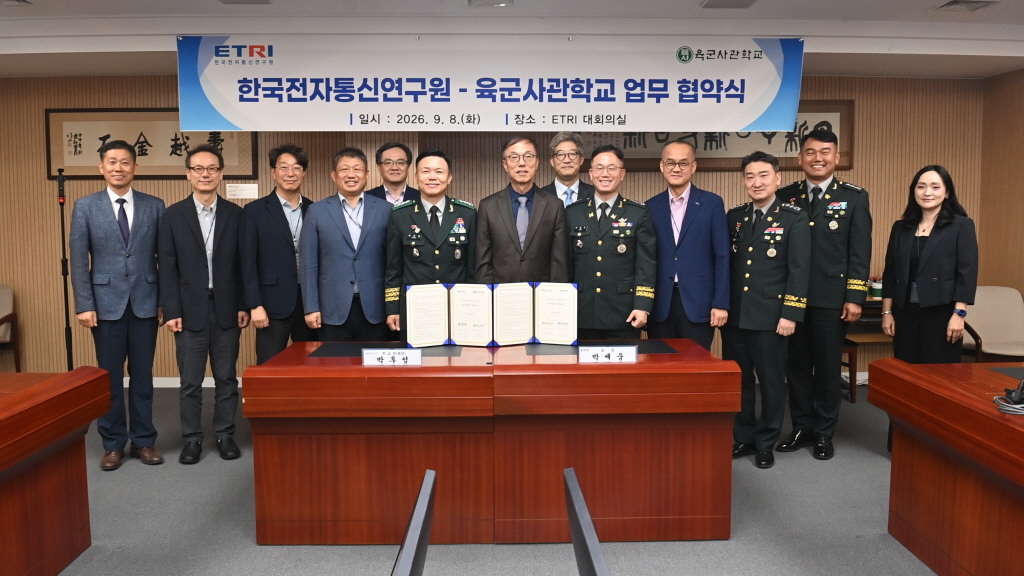
ETRI and Korea Military Academy Sign MOU for Joint Development of AI Defense Technology
ETRI and Korea Military Academy have concluded an institutional-level joint research agreement for AI defense technology. Through AI-in-glass-based wearable devices, the collaboration will support real-time situational awareness and decision-making for combat personnel, with expansion to small-unit command and control technology. The four core technologies—spatial intelligence, personal AI agents, low-power displays, and AR devices—will be integrated for development, with promotion of application across various fields including industry, medical, and disaster safety.
2026.09.08by 배종인 기자

[Semiconductor Test Solution Case Study] Electronics and Telecommunications Research Institute (ETRI), Building a High-Frequency Evaluation Platform Supporting Foundry-Grade Quality
The Electronics and Telecommunications Research Institute (ETRI) has established an on-wafer evaluation platform based on the Anritsu VectorStar™ ME7838G to resolve measurement reproducibility issues that arise during the development of GaN MMIC high-frequency devices. This platform supports single-sweep measurements up to 220 GHz and provides consistent test environments and high data reliability in the millimeter-wave and sub-terahertz bands. Through this, it enhances the correlation between simulation and measurement results and improves the accuracy of design verification, characterization evaluation, and model optimization to support the development of high-frequency semiconductors for 6G and next-generation satellite communications.
2026.09.11by 배종인 기자











