



Korea Mechanical Research Institute Develops Air-Purifying Vehicle Technology to Filter Fine Dust During Driving
 Published2026.09.28 15:48
It consists of two main technologies.
One is the 'grille-type' method that applies an air purification module to the grille area to intake and purify air around roads using driving wind pressure, while the other is the 'caliper-type' method that combines dust collection structures around the brake caliper to directly collect wear dust at the point of generation.
The European Union (EU) is gradually implementing non-exhaust fine particulate matter emission standards, and related discussions are underway domestically as well.
The Korea Mechanical Research Institute projects that this technology can be utilized as a means to improve urban air quality and respond to strengthened non-exhaust fine particulate matter regulations.

Comments
Related news
.png)
Rising Demand for AI Data Center Cooling… KIMM: “Need to Foster Heat Pumps”
The Korea Institute of Machinery and Materials has proposed that industrial high-temperature, large-capacity heat pumps and data center waste heat utilization technologies should be strategically fostered to respond to increased data center cooling demand due to artificial intelligence (AI) proliferation and industrial process decarbonization. In Issue No. 124 of "Mechanical Technology Policy," the institute analyzed that the global heat pump market will expand from $75.8 billion in 2024 to $162.6 billion by 2030, and presented natural refrigerants, digital heat pumps, and data center waste heat utilization as key technology competition areas. The report stated that research and development investment, demonstration infrastructure construction, and institutional framework establishment are necessary.
2026.06.15by 명세환 기자
.jpg)
KIMM Develops AI-Based Intelligent System for 2D Semiconductor Plasma Process
The Korea Institute of Machinery and Materials (KIMM) announced on June 17 that a research team led by Senior Researcher Kim Hyung-woo has developed an AI-driven plasma-based integrated process intelligence system that autonomously analyzes and controls next-generation 2D semiconductors with atomic-layer thickness. As precision control at the atomic-layer level has become critical due to semiconductor miniaturization, the research team integrated plasma processing and diagnostics into a single platform and incorporated AI to enable real-time interpretation of process data and automatic adjustment of conditions. This enables the system to diagnose and respond to process states without human intervention, thereby enhancing the precision and autonomy of next-generation semiconductor processes.
2026.06.17by 배종인 기자
KIMM Localizes Key Components for Next-Generation Rotary-Wing Aircraft Power Transmission Systems
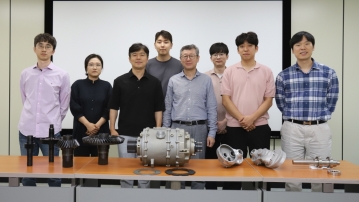
The Korea Institute of Machinery and Materials (KIMM) announced on the 22nd that the research team led by Director Yi Han-min has secured Korea's first indigenous core technologies for design and analysis of clutches, gears, housings, and bearings—key components of next-generation rotorcraft power transmission systems. The power transmission system is a device that transfers engine power to the rotor, and has traditionally had high barriers to entry in design and analysis, resulting in significant dependence on overseas technology. The research team fabricated prototypes and conducted performance verification through testing and evaluation, and the secured technologies will be applied to the development of next-generation rotorcraft.
2026.06.22by 배종인 기자
“AI-based predictive diagnostic technology is key to realizing autonomous manufacturing and physical AI”
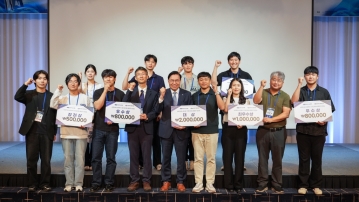
The "2026 KSPHM-KIMM Machinery Data Challenge," jointly hosted by the Korea Institute of Machinery and Materials (KIMM) and the Korea PHM Society, held its final evaluation and awards ceremony in Busan on the 25th, marking its second edition. A total of 259 participants from 80 teams competed in applying AI technology to fault prediction and condition diagnosis of mechanical equipment. KIMM provided actual operational data to promote the development of PHM technology applicable to real-world operations, and is pursuing the initiative with the goal of discovering AI talent equipped with data acquisition and utilization capabilities, which are core competencies in the Physical AI era.
2026.06.26by 배종인 기자
.jpg)
KIMM Develops Roll-to-Roll Maskless Lithography System
The Korea Institute of Machinery and Materials has developed a roll-to-roll digital maskless lithography system that enables continuous patterning of flexible substrates. By applying real-time substrate deformation and conveyance error compensation technology, the system can continuously form high-resolution patterns of 10 μm or less, establishing a mass production foundation for flexible electronic devices such as wearable devices and flexible displays.
2026.06.29by 배종인 기자











