



ETRI Wins IDEA Design Award with Medical Humanoid Interface 'NAMI.I'
 Published2026.09.29 09:51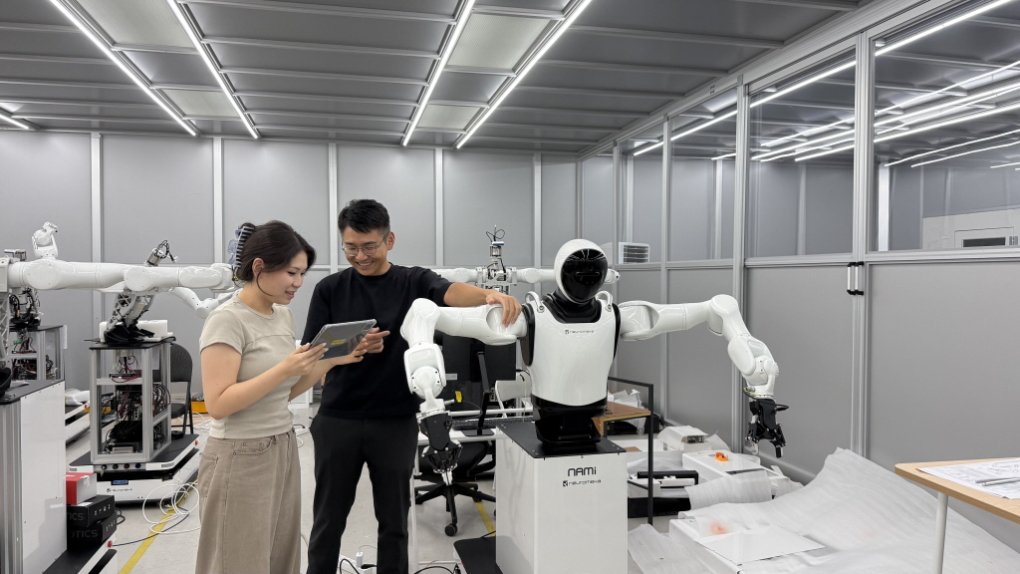
Medical Field Demonstration at Keimyung University Dongsan Hospital, Medical Staff Task-Directive-Based Interface Design
The IDEA Design Awards is counted among the world's three major design awards.
ETRI, following consecutive awards in 2024 for the teach pendant software (SW) of the autonomous mobile collaborative robot 'MOBY' at the German 'iF Design Awards' and the IDEA Design Awards, has achieved its second IDEA award in the field of user-centered robot interfaces with this recognition.
Users can request tasks such as △transportation of goods and medications △organization of medical supplies △patient guidance △patient daily living assistance, and can check the robot's current status and work progress in real time.
ETRI stated that lowering the barrier to entry for medical staff using robots can increase the possibility of humanoid robots being applied to actual medical facilities.
The development of NAMI.I involved ETRI postdoctoral researcher Ahn Ji-hoon and Dr. Dong Ji-yeon, as well as Dr. Lee Jun-ho and Manager Um Jin-yong from ㈜Neuromeka, and researchers from Korea University's CO Design Lab.
The plan is to analyze convenience, improvement points, and user requirements that emerge in the field, reflect them in the interface, and advance it through human-robot interaction (HRI) technology.
Currently, the research team is developing commercialization technology for medical auxiliary humanoid mobile robots together with ㈜Neuromeka, Georgia Institute of Technology in the United States, and the Korea Advanced Institute of Science and Technology (KAIST) through joint R&D with the Global Industrial Technology Cooperation Center of the Ministry of Trade, Industry and Energy and the Korea Institute for Advancement of Technology (KIAT).
Meanwhile, according to market research firm MarketsandMarkets, the global humanoid robot market is projected to grow from approximately 5.4 billion dollars in 2026 to approximately 50.3 billion dollars in 2035, with a compound annual growth rate (CAGR) of 28.1%.

Comments
Related news
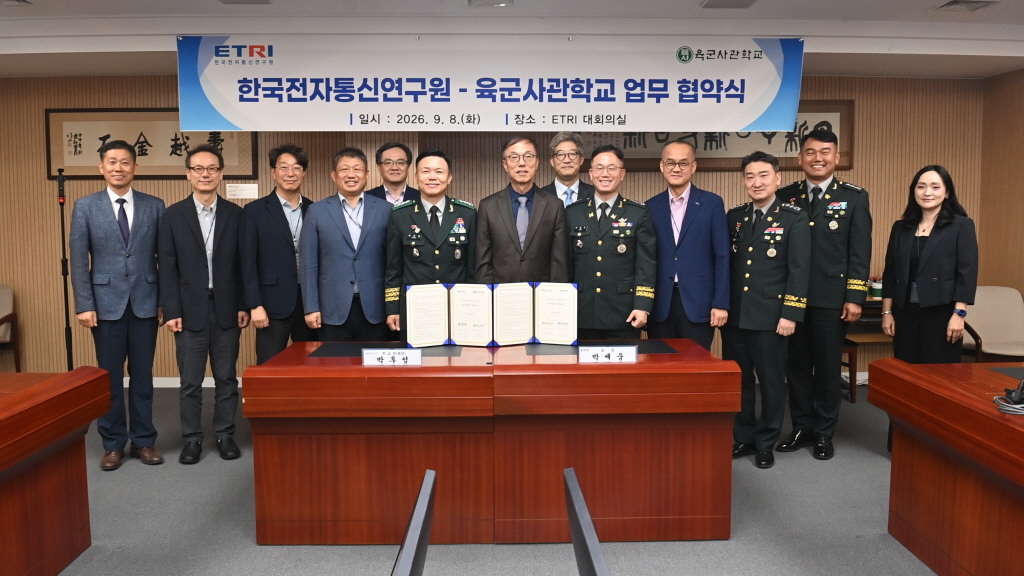
ETRI and Korea Military Academy Sign MOU for Joint Development of AI Defense Technology
ETRI and Korea Military Academy have concluded an institutional-level joint research agreement for AI defense technology. Through AI-in-glass-based wearable devices, the collaboration will support real-time situational awareness and decision-making for combat personnel, with expansion to small-unit command and control technology. The four core technologies—spatial intelligence, personal AI agents, low-power displays, and AR devices—will be integrated for development, with promotion of application across various fields including industry, medical, and disaster safety.
2026.09.08by 배종인 기자

[Semiconductor Test Solution Case Study] Electronics and Telecommunications Research Institute (ETRI), Building a High-Frequency Evaluation Platform Supporting Foundry-Grade Quality
The Electronics and Telecommunications Research Institute (ETRI) has established an on-wafer evaluation platform based on the Anritsu VectorStar™ ME7838G to resolve measurement reproducibility issues that arise during the development of GaN MMIC high-frequency devices. This platform supports single-sweep measurements up to 220 GHz and provides consistent test environments and high data reliability in the millimeter-wave and sub-terahertz bands. Through this, it enhances the correlation between simulation and measurement results and improves the accuracy of design verification, characterization evaluation, and model optimization to support the development of high-frequency semiconductors for 6G and next-generation satellite communications.
2026.09.11by 배종인 기자
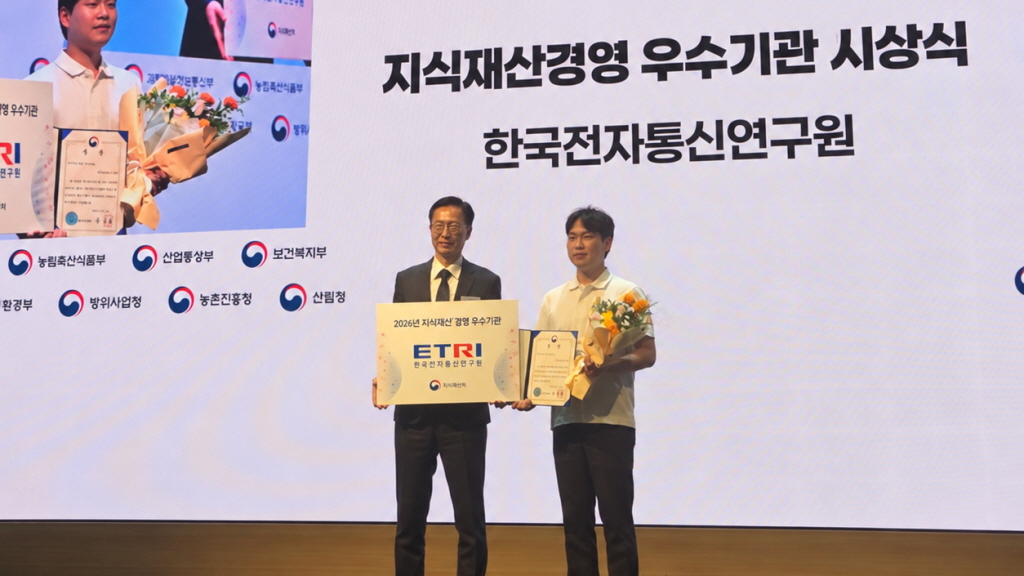
ETRI Selected as Excellent Intellectual Property Management Institution for Three Consecutive Years
The Electronics and Telecommunications Research Institute (ETRI) has been selected as an "Excellent Intellectual Property Management Institution" for three consecutive years, earning recognition for its patent creation and utilization capabilities. Last year, through international standard patent licensing in HEVC, LTE, WiFi and other technologies, ETRI achieved annual patent technology licensing fees of 53.5 billion won, marking the largest amount since its establishment. ETRI has formulated its 6th Patent Strategy for 2026-2030, strengthening IP competitiveness throughout the entire cycle from core patent creation to global commercialization, and has set a goal of achieving 100 billion won annually.
2026.09.15by 배종인 기자
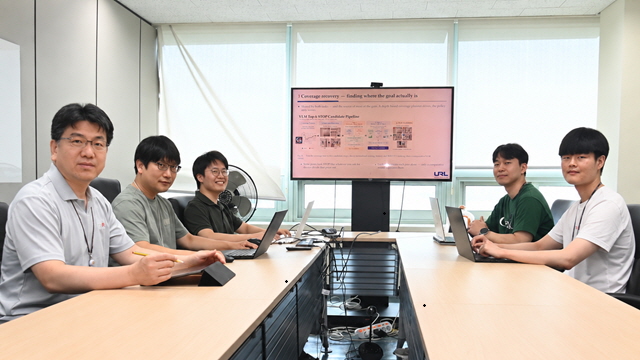
ETRI and KAIST Win First Place in International Robot Pathfinding AI Competition
ETRI and KAIST achieved first place in the VLNVerse Challenge at the ECCV 2026 international academic conference with robot vision-language navigation technology, recording a 90.7% success rate among 112 teams. The team applied 'CoRe-VLN' recovery technology to solve the problem of robots stopping due to misrecognition of destinations, and since it can be combined with existing robots without additional training, it is expected to be applied to various fields ranging from guide robots for the visually impaired to manufacturing and logistics robots.
2026.09.16by 배종인 기자
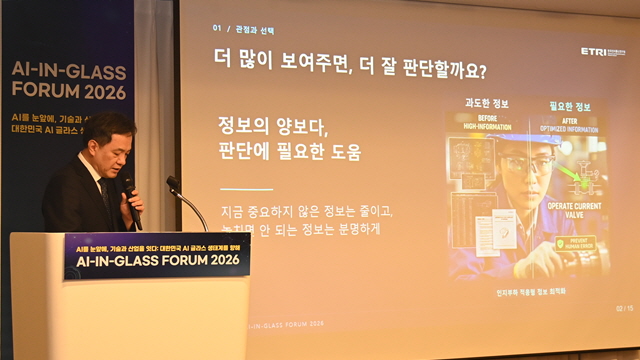
ETRI Hosts 'AI-in-Glass Forum 2026'…Building Domestic Cooperation Ecosystem
ETRI has hosted the 'AI-in-Glass Forum 2026' to build a domestic cooperation ecosystem. Industry participants from components, display, and AI services, along with academia, research institutions, and government, discussed a cooperative structure spanning from joint R&D to demonstration and commercialization. AI glasses combining lightweight and low-power technology, spatial computing, and generative AI are expected to expand into various fields including industrial operations, education, and everyday services. ETRI is strengthening domestic competitiveness through a virtuous cycle of reciprocal cooperation.
2026.09.17by 명세환 기자











