



Korean enterprises' AI trust gap plummets from 28.9 points to 1.5 points in one year
 Published2026.09.30 10:03
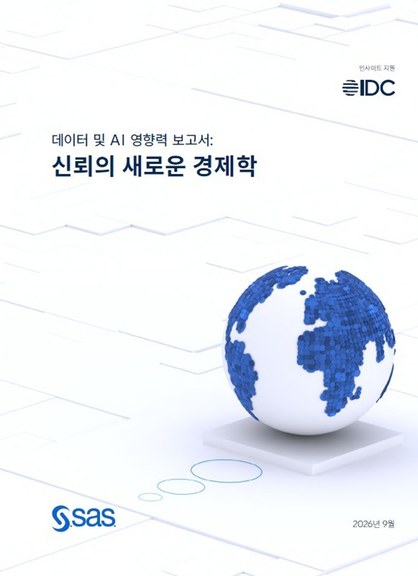 Korean enterprises' AI trust gap has narrowed by 27.4 points over the past year. Governance framework establishment has progressed rapidly, but data quality and AI decision-making explainability remain at inadequate levels. Enterprises with reliable AI systems were found to be 15 times more likely to achieve their target investment ROI compared to those without such systems.
This survey was conducted with 2,699 business and IT decision-makers across 28 countries worldwide, analyzing AI utilization status and trust-building levels primarily in banking, insurance, life sciences, and public sectors.
Trust gap refers to the difference between the trust level in AI that enterprises perceive and their actual management capabilities.
Korea's perceived trust decreased from 73.9 points to 58.6 points, while actual management capabilities increased from 45 points to 57.1 points, with the two indicators nearly converging.
Among these, the 'Model Governance and Oversight' category at 55.8 points showed the largest improvement with a 9.3-point increase compared to the previous year.
The proportion of Korean enterprises mandatorily applying data quality management procedures to all projects was only 1.9%.
The proportion of Korean enterprises that have adopted 'Agentic AI,' which independently makes judgments and takes actions, reaches 42.6%, while only 17.5% of enterprises globally possess data infrastructure commensurate with agentic AI levels.
The primary reason users modify AI recommendations was identified as 'AI's inability to explain its decision rationale.'
Enterprises with optimized data infrastructure were 4 times more likely to achieve higher ROI compared to those without.
Lee Jung-hyuk, CEO of SAS Korea, said, "In line with governance establishment, it is an important task to explain AI's decision rationale and complete data foundations with accuracy and reproducibility."

Comments
Related news
SAS Korea Enhances Analytics Capabilities Utilizing the Latest AI, Including Machine Learning and Natural Language Processing
SAS Korea announced the launch of its latest offerings that enhance advanced analytics capabilities including machine learning, deep learning, text analysis, and predictive analytics, along with new features in SAS® Viya®. Enterprises can now leverage AI-driven enterprise analytics more easily by utilizing the new SAS® Platform offering 'SAS Visual Text Analytics' and the upgraded 'SAS Visual Data Mining and Machine Learning (SAS VDMML)'.
2018.03.06by 김지혜 기자

SAS Releases Latest Version of "Viya," a Tool for In-Depth Analysis of AI Decision Processes
SAS has released the latest version of 'SAS Viya,' an enterprise analytics platform that supports transparent interpretation of how AI models operate and resolves the 'black box' problem. SAS Viya has been adopted by domestic and international companies including NH Nonghyup Bank and KB Insurance, securing various success cases that strengthen AI competitiveness and enhance personalized services for individual customers.
2018.09.09by 이수민 기자
.jpg)
SAS Korea Appoints Joo Jae-young as New CEO
Ju Jae-young, the newly appointed CEO of SAS Korea, a leading global analytics firm, has expressed his commitment to supporting customer growth through innovative AI/ML-based analytics solutions in his inaugural statement.
2023.07.24by 배종인 기자
SAS Korea Operates AI Data Analysis Job Training Program with SeSAC
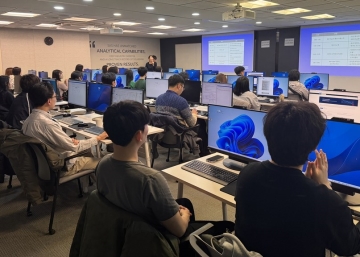
SAS Korea is opening the 'SAS AI Data Analysis Employment Program' in partnership with SeSAC (Seedling), a youth employment academy operated by the Seoul Metropolitan Government and the Seoul Business Agency (SBA). The company will begin recruiting trainees starting June 23rd. Training will run from July 20th to October 8th at the Gwanak Campus at no cost, with applications accepted until July 5th. The curriculum covers data foundational literacy, SQL and Python preprocessing, SAS Enterprise Guide and Visual Analytics practical training, and predictive modeling. Upon completion, participants receive support for obtaining internationally recognized certifications, opportunities to participate in SAS hackathons, and job placement connections with partner companies, thereby cultivating practical talent in the data and AI sectors.
2026.06.23by 명세환 기자

AMD Unveils 'Ryzen AI Max PRO 400'…Supporting Enterprise Local Agentic AI Deployment
AMD has introduced the next-generation 'Ryzen AI Max PRO 400 Series' processor for building enterprise local AI environments, moving forward with its strategy to capture the agentic AI market.
2026.09.30by 배종인 기자











