



AMD Unveils 'Ryzen AI Max PRO 400'…Supporting Enterprise Local Agentic AI Deployment
 Published2026.09.30 14:02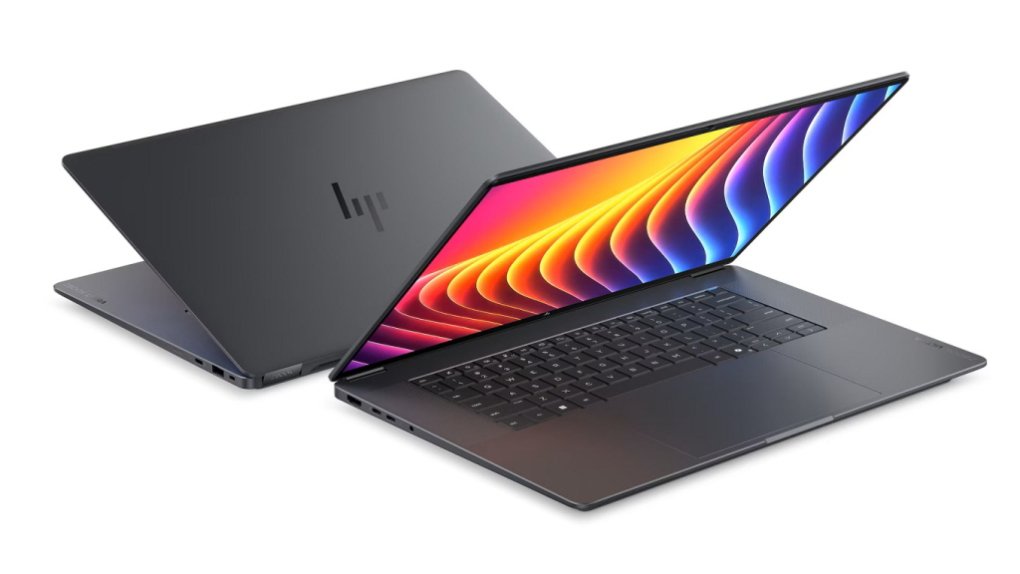
Up to 192GB Unified Memory·Supports Models with Over 300 Billion Parameters
AMD has introduced the next-generation 'Ryzen AI Max PRO 400 Series' processor for building enterprise local AI environments, moving forward with its strategy to capture the agentic AI market.
AMD recently unveiled the Ryzen AI Max and Ryzen AI Max PRO 400 Series processors for enterprise PCs and workstations, and announced a platform strategy supporting enterprises in developing and operating local AI agents.
AI agents are a form of AI capable of performing multi-stage tasks by linking multiple applications and data, unlike generative AI focused primarily on question-and-answer exchanges. Enterprises are expanding the adoption of AI agents for business automation and productivity improvement; however, cost, data security, and cloud dependency have been identified as challenges.
Supporting Large-Scale AI Models with Up to 192GB Memory
The Ryzen AI Max PRO 400 Series features up to 16 'Zen 5' CPU cores, an NPU with 55TOPS performance, and up to 40 GPU compute units.
Notably, it supports up to 192GB of unified memory, with up to 160GB available for GPU workload allocation. AMD explains that this enables execution of large-scale AI models with over 300 billion parameters based on 4-bit quantization in a local environment without cloud migration.
Enterprise AI agents require high memory capacity as they utilize not only large language models (LLMs) but also in-house documents and databases, development code, and retrieval-augmented generation (RAG) systems.
AMD states that the new processor is designed to process these complex workloads in a local environment.
Emphasizing Hybrid Strategy Combining Cloud and Local AI
AMD presented a hybrid strategy employing both local and cloud approaches as an AI infrastructure operation method.
For complex reasoning or cases requiring ultra-large models, cloud AI is leveraged, while tasks handling sensitive information such as in-house documents or development materials are processed in a local AI environment.
The company explains that utilizing local AI can reduce external data transmission and cut continuous cloud inference costs.
Additionally, it supports major AI development frameworks including PyTorch, vLLM, llama.cpp, Ollama, ComfyUI, and LM Studio, providing an integrated development environment capable of performing AI model development, testing, and deployment.
AMD explains that through the Ryzen AI Max PRO 400 Series, it plans to provide enterprises with more efficient options for developing and operating AI agents.

Comments
Related news
AMD, “The Battle in the AI Era Is Now About Systems, Not Chips”… Analysis of 'Advancing AI 2026'
AMD entered into a full-stack competitive structure with NVIDIA by unveiling the MI455X-based Helios rack-scale AI solution through the 'Advancing AI 2026' event. The key factors include large-scale adoption at the GW level by OpenAI and Anthropic, memory advantage based on HBM4, cost-per-token reduction strategy, and accelerated CUDA to ROCm transition, which directly impact the expansion of AI infrastructure and HBM demand.
2026.07.24by 배종인 기자
Supermicro Launches 6th Gen AMD EPYC 9006-Based H15 Server Portfolio
Supermicro has launched an H15 server portfolio based on the 6th generation AMD EPYC 9006 CPU. The new lineup improves CPU performance by up to 1.7x compared to the previous generation, supports up to 256 cores and 512 threads, and enhances processing capabilities for cloud, enterprise, and AI workloads with 2x PCIe bandwidth and 2.6x increased memory bandwidth. The company is expanding its AI infrastructure lineup with a 72-GPU Helios platform that integrates AMD Instinct GPU and Pensando networking.
2026.07.27by 배종인 기자
.jpg)
Cyburn Launches Ticomas in Korea… Releases 5 Liquid Coolers and Reverse Fans
Cyber has launched the PC hardware brand T-Comaas in the Korean market. The company is introducing five 360mm all-in-one liquid coolers and one reverse cooling fan, with each model featuring differentiated specifications including AMOLED, LCD, and miniature displays to meet desk interior design demand. All products come with up to 6 years of quality warranty and support both Intel and AMD platforms in black and white color options.
2026.07.27by 명세환 기자
Schneider Electric and AMD Unveil 'Helios' AI Data Center Reference Design
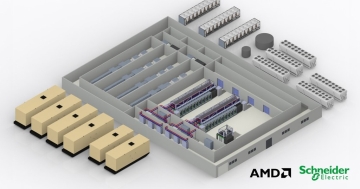
Schneider Electric and AMD have jointly developed a 'Helios' AI data center reference design. The modular architecture supports up to 246kW processing per rack and is scalable to 10.4MW, achieving efficiency levels of PUE 1.12 through liquid cooling technology. With integrated design of power, cooling, IT space, and software along with completed ANSI standard validation, it is expected to accelerate the deployment of high-density AI infrastructure.
2026.07.29by 명세환 기자

[Technical Contribution] "ADI-AMD Integrated Sensing, Control, and Computing Platform Reduces Robot Development Complexity and Accelerates Implementation Speed"
ADI and AMD's Kria AI Robotics Platform integrates sensing, control, and computing to reduce robot development complexity and shorten development time. It facilitates robot implementation in ROS 2 environments through diverse sensors, interfaces, and SOM-based AI processing.
2026.08.06by 편집부











