



This page was machine-translated and may differ from the original. View original
[Reporter's Notebook] The Secret to Smartly Navigating the Smart Lighting Market
 Published2015.11.30 20:38
"LED lighting has already been taken over by China. It's no longer competitive in terms of price. We need to leverage our IT powerhouse status to survive with smart lighting, but I don't know what that means."
A member of the LED lighting industry lamented at a forum. The speaker was frustrated, and the listeners felt helpless. Could there be a smart(?) way to overcome this crisis?
The annual lighting market, worth 120 trillion won, is expected to transition to a semiconductor lighting market, reaching 300 trillion won by 2020. While major domestic companies are investing in semiconductors, global companies like Philips, Osram, and GE already control 60% of the global lighting market.
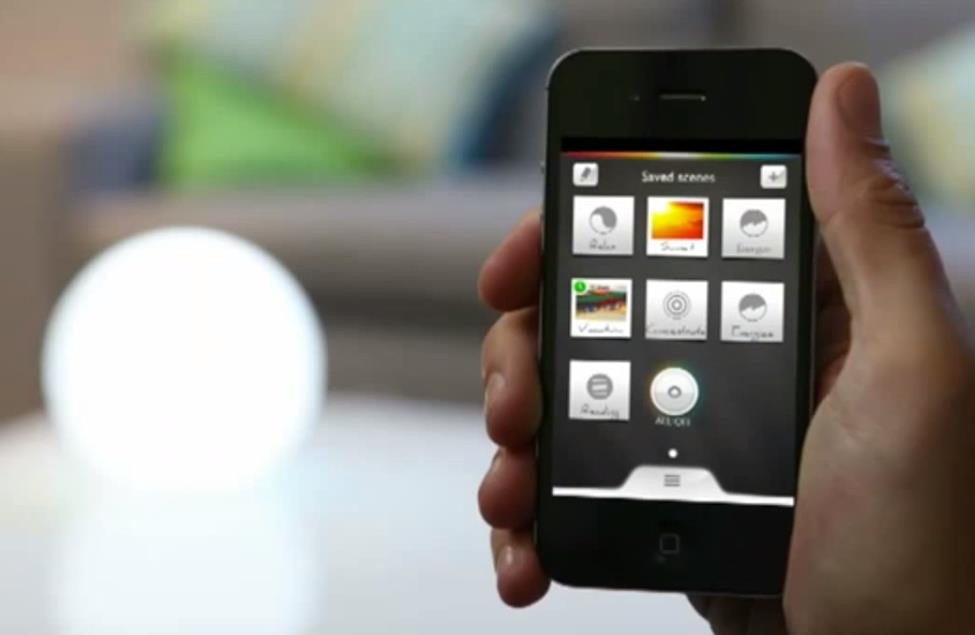
▲ Philips' Hue smart lighting products that control lighting with a smartphone
Sales of smart LED bulbs have already increased by a staggering 2,900% between 2012 and 2014, and annual shipments of smart wireless LED bulbs are projected to increase by over 4,000% by 2019 (according to ON World). Furthermore, market research firm Market Research forecasted that the visible light communication (VLC) market would grow at a compound annual growth rate of 29.3% from 2013 to 2018.
Where does Korea stand in the lighting market? I wonder where we fit between China, which is indiscriminately attacking with cheap LEDs, global lighting companies, and the uncharted territory of smart lighting. The LED market, which was previously led by mobile devices and BLUs, is now evolving into a market for LED lighting (KRW 100 trillion) and then LED convergence (KRW 300 trillion). We must keep an eye on this trend.
We must find a connection between IT and smart technologies in energy-saving, replaceable lighting and next-generation, innovative LED lighting for specialized lighting. Depending on how we respond to this vast market, it could either become a land with a clear owner or an uncharted territory.
This means we shouldn't ignore the intelligent smart lighting market, where LED lights can be connected to smartphones to turn them on and off inside and outside the home, or where wired and wireless sensors control lighting in streetlights and public buildings. For example, products like Osram's Lightify and Philips Hue, which integrate with smartphones and sensors, allow for color adjustments and remote control via smartphone. Sensor integration also allows users to monitor high humidity or carbon dioxide levels based on lighting color, and even check for incoming emails.
GE's iBeacon-equipped lighting system utilizes Li-Fi technology, which exchanges data using visible light emitted from LEDs. Li-Fi minimizes infrastructure costs by installing LED lights and utilizing light detectors. Acuity Brands Lighting, which connects beacons, uses store LED lights to act as beacons, providing store information. Some products, like Xiaomi's smartphone-connected Yeelight, have adopted a low-cost strategy from the outset.
The reason we believe that diverse smart lighting is an area where we can differentiate ourselves is that our strength lies in the fact that there is ample room for IT technology integration, and that there is still no internationally established certification system for system lighting.
However, the smart lighting industry has many technical issues to address. Smart lighting is often categorized into energy-saving, emotional, and convergent lighting. These categories encompass issues related to smart lighting's light source technology, lighting fixtures, control systems, and content technology. For example, light sources must effectively blend wavelengths to enhance efficiency, while lighting fixtures must be optimized for user needs. Furthermore, photobiological stability and glare prevention must be ensured to minimize adverse effects on human health.
Dr. Song Sang-bin of the Korea Institute of Photonics Technology stated, "Lighting demands extreme simplicity, so it shouldn't be approached like IT products, where development is driven by suppliers." He added, "While there are already many convenient lighting products on the market, many don't sell, demonstrating this point clearly." Dr. Song also emphasized that, to remain competitive, manufacturers must create products with simple processes, and consumers must emphasize ease of use.
Creating smart lighting products will certainly not be simple and straightforward from the start. However, if we integrate our IT technology into simple smart lighting products, lighting products that consumers can use naturally without any special manipulation, we have a good chance of success. For example, if we proactively invest in new technologies like visible light communication, we can secure a unique competitive edge.
A member of the LED lighting industry lamented at a forum. The speaker was frustrated, and the listeners felt helpless. Could there be a smart(?) way to overcome this crisis?
The annual lighting market, worth 120 trillion won, is expected to transition to a semiconductor lighting market, reaching 300 trillion won by 2020. While major domestic companies are investing in semiconductors, global companies like Philips, Osram, and GE already control 60% of the global lighting market.
▲ Philips' Hue smart lighting products that control lighting with a smartphone
Sales of smart LED bulbs have already increased by a staggering 2,900% between 2012 and 2014, and annual shipments of smart wireless LED bulbs are projected to increase by over 4,000% by 2019 (according to ON World). Furthermore, market research firm Market Research forecasted that the visible light communication (VLC) market would grow at a compound annual growth rate of 29.3% from 2013 to 2018.
Where does Korea stand in the lighting market? I wonder where we fit between China, which is indiscriminately attacking with cheap LEDs, global lighting companies, and the uncharted territory of smart lighting. The LED market, which was previously led by mobile devices and BLUs, is now evolving into a market for LED lighting (KRW 100 trillion) and then LED convergence (KRW 300 trillion). We must keep an eye on this trend.
We must find a connection between IT and smart technologies in energy-saving, replaceable lighting and next-generation, innovative LED lighting for specialized lighting. Depending on how we respond to this vast market, it could either become a land with a clear owner or an uncharted territory.
This means we shouldn't ignore the intelligent smart lighting market, where LED lights can be connected to smartphones to turn them on and off inside and outside the home, or where wired and wireless sensors control lighting in streetlights and public buildings. For example, products like Osram's Lightify and Philips Hue, which integrate with smartphones and sensors, allow for color adjustments and remote control via smartphone. Sensor integration also allows users to monitor high humidity or carbon dioxide levels based on lighting color, and even check for incoming emails.
GE's iBeacon-equipped lighting system utilizes Li-Fi technology, which exchanges data using visible light emitted from LEDs. Li-Fi minimizes infrastructure costs by installing LED lights and utilizing light detectors. Acuity Brands Lighting, which connects beacons, uses store LED lights to act as beacons, providing store information. Some products, like Xiaomi's smartphone-connected Yeelight, have adopted a low-cost strategy from the outset.
The reason we believe that diverse smart lighting is an area where we can differentiate ourselves is that our strength lies in the fact that there is ample room for IT technology integration, and that there is still no internationally established certification system for system lighting.
However, the smart lighting industry has many technical issues to address. Smart lighting is often categorized into energy-saving, emotional, and convergent lighting. These categories encompass issues related to smart lighting's light source technology, lighting fixtures, control systems, and content technology. For example, light sources must effectively blend wavelengths to enhance efficiency, while lighting fixtures must be optimized for user needs. Furthermore, photobiological stability and glare prevention must be ensured to minimize adverse effects on human health.
Dr. Song Sang-bin of the Korea Institute of Photonics Technology stated, "Lighting demands extreme simplicity, so it shouldn't be approached like IT products, where development is driven by suppliers." He added, "While there are already many convenient lighting products on the market, many don't sell, demonstrating this point clearly." Dr. Song also emphasized that, to remain competitive, manufacturers must create products with simple processes, and consumers must emphasize ease of use.
Creating smart lighting products will certainly not be simple and straightforward from the start. However, if we integrate our IT technology into simple smart lighting products, lighting products that consumers can use naturally without any special manipulation, we have a good chance of success. For example, if we proactively invest in new technologies like visible light communication, we can secure a unique competitive edge.
본 기사에 대한 정정·반론·추후보도 청구는 보도 청구 안내를, 그간 게재된 보도문은 정정·반론보도 모아보기를 참고해 주세요.
관련뉴스
NXP Launches World's First NFC Smart Home and Lighting Solution
2015.03.20by 명세환 기자
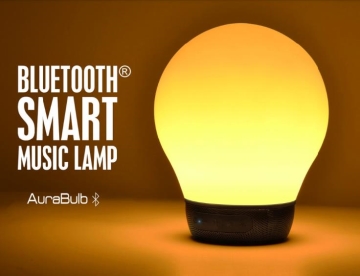
Smart LED lighting and speaker in one: Launch of the Smart LED Lighting Speaker.
The Debum Orabul is a Bluetooth speaker product featuring an added smart LED lighting lamp function. It is capable of implementing 16 million colors as well as brightness adjustment. This offers the same functionality as Xiaomi's Yeelight product. Additionally, with five different LED styles, users can change to their desired style according to the mood of the moment.
2015.10.21by 신윤오 기자

Intel Unveils Next-Generation 'Core Ultra Series 3' and vPro Platform for Enterprise PCs
인텔이 차세대 기업용 PC를 위한 ‘인텔 코어 Ultra 시리즈 3’와 최신 vPro 플랫폼을 공식 발표하며, 기업용 노트북부터 고성능 워크스테이션까지 폭넓은 수요 충족에 나섰다.
2026.03.26by 배종인 기자

ROHM Launches ESD Protection Diode Compatible with High-Speed Interfaces of 10Gbps or Higher
반도체 전문 기업 로옴(ROHM)이 10Gbps를 넘어서는 차세대 고속 데이터 통신 환경에 대응할 수 있는 ESD(정전기 방전) 보호 다이오드 ‘RESDxVx 시리즈’를 개발하며, 고속 인터페이스에서 요구되는 신호 품질 유지와 IC 보호 성능을 동시에 끌어올렸다.
2026.03.26by 배종인 기자












Sponsored Company