



KT's Giga Internet Surpasses 1 Million Subscribers, Entering Full-Fledged 'GIGA Era'
 Published2016.01.04 14:46
KT's Giga Internet customer base has surpassed 1 million subscribers. The vision presented last year on the occasion of Korea's 130 years of telecommunications history—'Leading the Fourth Industrial Revolution through Intelligent Giga Infrastructure and ICT Convergence'—is now being realized in concrete form.
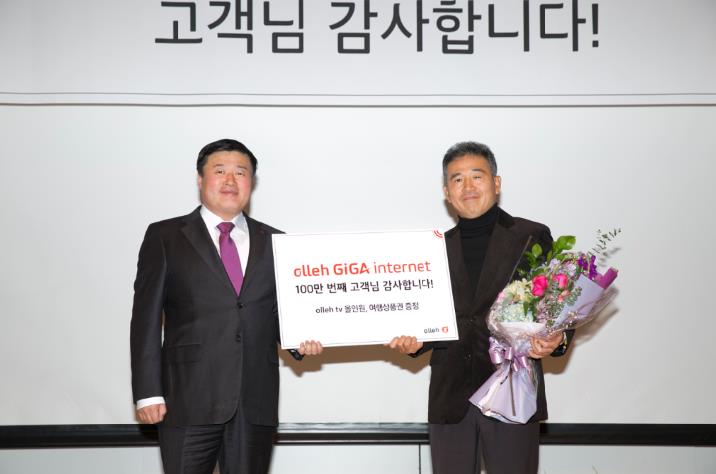
'Quantum Jump in Internet Speed' Serves as a Gateway to Activating Other Industries
KT announced that it has achieved 1 million Giga Internet customers. This result was accomplished 1 year and 2 months after the nation's first nationwide commercialization on October 20, 2014, with an average of approximately 70,000 subscribers per month, or about 2,300 per day.
Ultra-high-speed internet is typically used on a household and office basis. When simply applying the average of 2.61 household members per household nationwide (2013 Statistics Korea estimate), it means that over 2.6 million people are benefiting from Giga Internet.
The greatest significance of Giga Internet is that it has brought a 'Quantum Jump' to internet speeds that had remained stagnant for nearly a decade since 2006. Internet speeds at the 1 Gigabit level, which are 10 times faster than the conventional 100 Megabit level, have increased content consumption such as video and gaming, and have heightened satisfaction with cloud usage and web searches. Furthermore, as mobile speeds have accelerated based on Giga Internet infrastructure, Giga LTE, which provides 1 Gigabit-level speeds wirelessly, has emerged, and achievements have been made in activating OTT (Over The Top) and UHD TV services.
Since Giga Internet serves as the foundation of intelligent Giga infrastructure, achieving 1 million Giga Internet subscribers is evaluated as laying a cornerstone for the Fourth Industrial Revolution. Whereas IT industries thrived as network technology advanced from telephone modems to ultra-high-speed internet in the past, Giga Internet is now activating not only IT industries but also other sectors such as media and content.
When Giga Internet Becomes Ubiquitous,
Household Benefits Will Reach 1.095 Million Won Annually
In February last year, Professor Lee Hong-jae of Ajou University's School of Business Administration forecast through a research report (Study on the Economic and Social Effects of Giga Internet) that 'household benefits will reach 1.095 million won annually when Giga Internet becomes ubiquitous.' He also analyzed that if complete deployment of Giga Internet is achieved by 2020, total consumer benefits could reach up to 62.9 trillion won.
The expansion of Giga infrastructure, including Giga Internet, is expected to bring significant effects to economic activation and job creation. KT plans to invest a total of 4.5 trillion won in Giga infrastructure through 2017, which is estimated to generate production-inducing effects of approximately 9.5 trillion won and create approximately 32,000 jobs. Production contribution from Giga Internet is estimated at 1.14 trillion won annually.
The economic effects of Giga Internet are also significant overseas. According to a 2014 research result by the Analysis Group in the United States, regions with high Giga Internet usage rates showed income growth rates 1.1% higher than regions without Giga Internet deployment. In the United Kingdom, which is promoting Giga Internet deployment under government leadership, according to SQW research (2013), the annual gross value added (GVA) of the UK economy is projected to increase by approximately 28.4 trillion won by 2024, when the completion of the nationwide Giga Internet network is expected.
Giga Internet is enhancing the utility of Internet of Things (IoT), cloud computing, and big data—the driving forces of ICT-based creative economy. The domestic IoT market is expected to grow to 13.7 trillion won by 2020 (Korea Industrial Research Institute estimate), the cloud market to 3.6 trillion won (Ministry of Future Creation), and the big data market to 1 trillion won (Korea Institute of Science and Technology Information). If existing internet is completely converted to Giga Internet, an additional 20% growth is expected, resulting in a maximum market expansion of 9 trillion won from 2015 to 2020.
In September last year, one year before launch, KT Economic and Management Research Institute conducted a survey on Giga Internet. When asked about changes in lifestyle due to Giga Internet, 77.2% responded that there have been 'changes.' Of those who responded 'there have been changes,' 59.2% answered that 'waiting time and disconnections have decreased, reducing mental stress,' and 23.5% answered that 'business processing has become faster and efficiency has increased.' The response that 'leisure life has become more enriched' also reached 13.3%.
Expanding to All Residential Areas, Target of 2.2 Million Subscribers by 2016
Due to advantages such as stress reduction and improved work efficiency, Giga Internet is showing adoption rates more than twice as fast as 100 Megabit-level internet based on fiber-to-the-home (FTTH) networks. Whereas it previously took approximately 2 years to recruit 1 million lines of FTTH-based 100 Megabit-level internet, Giga Internet achieved 1 million subscriptions in just 1 year and 2 months.
Services based on Giga Internet's fast speeds are also receiving favorable reviews. The 'Giga WiFi Home' service, which can only be used with Giga Internet, has approximately 600,000 users, the 'Giga UHD TV' service has over 400,000 users, and 'Giga LTE,' which provides 1 Gigabit-level speeds wirelessly through combined wired and wireless services, has 500,000 users. Usage of 'Giga IoT Home Cam (CCTV)' is also increasing in line with Giga Internet deployment.
The 'Giga WiFi Home (867 Mbps),' which has a maximum speed approximately 3 times faster than standard WiFi (300 Mbps), has had a decisive impact on Giga Internet expansion by allowing users to enjoy Gigabit-level speeds even on mobile devices. While the average monthly subscription rate for Giga Internet was only 40,000 during the first 3 months after launch, it increased to an average of 60,000 monthly after the launch of Giga WiFi Home in March 2015. Furthermore, from the second half of 2015 when coverage expanded, monthly subscription trends rose sharply to around 100,000.
In 2016, KT's Giga Internet service usage is expected to become more convenient. This is because KT will construct the network more densely so that Giga Internet can be used in all residential areas throughout the year. Based on this, the goal is to achieve 2.2 million Giga Internet customers by the end of this year.
Chairman Hwang Chang-gyu called on KT and group company employees to pursue '2016 as a Year of Challenge and Leap,' emphasizing 'customer satisfaction ranking first' along with 'creating results in new businesses and new markets' and 'continuing complete differentiation.' Emphasizing that perfection in the basics is necessary to achieve 'customer satisfaction ranking first,' which he presented as the top priority, he encouraged the company to take on challenges in new businesses with differentiated technologies and know-how, similar to KT-MEG (Energy Control Center).
Related news

KT offers 'Giga IoT Home' through Samsung Electronics home appliances
KT and Samsung Electronics have joined hands to promote the spread of "Home IoT (Internet Of Things)." KT announced on the 17th that it will provide "GiGA IoT Home (hereinafter GiGA IoT Home)" in conjunction with Samsung Electronics home appliances by the end of this year.
2015.12.17by 명세환 기자
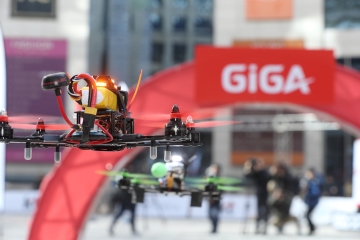
KT, enjoy gigabit speeds with a drone!
KT successfully held the 'GiGA Drone Racing' competition for the first time among domestic companies on the 27th at 1:00 PM in the central plaza of Garden Five in Songpa-gu, Seoul.
2015.12.28by 명세환 기자
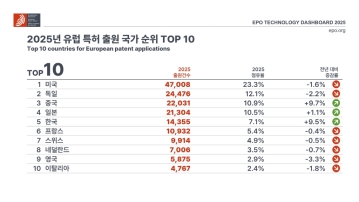
European Patent Applications Surpass 200,000 for the First Time… South Korea Maintains 5th Place, Led by Batteries and Telecommunications
According to the European Patent Office (EPO)'s 'Technology Dashboard 2025', European patent applications last year reached 201,974, surpassing 200,000 for the first time. Korean companies and inventors filed 14,355 applications, representing a 9.5% increase from the previous year and maintaining 5th place by country. Battery, digital communication, and semiconductor technologies led the growth, with Samsung ranking as the top EPO applicant for the second consecutive year and LG reaching 3rd place. The presence of major domestic cities such as Seoul, Suwon, and Yongin was also confirmed. It was also revealed that Korea's European patent strategy is expanding beyond individual technologies to span the entire industry.
2026.03.24by 명세환 기자

SK Telecom First Applies AI-Based Network Operations at Gwanghwamun K-Pop Concert
SK Telecom announced that it applied an AI-based network operation system for the first time at a large-scale K-pop concert held in the Gwanghwamun area of Seoul on March 21st, managing communication quality throughout the event. Mobile data usage during the three hours before and after the concert reached 12.15TB, approximately doubling compared to the same time slot the previous weekend. SK Telecom monitored traffic using the AI system 'A-One' in five-minute and 50-meter units to respond to potential overload situations, while also operating temporary communication facilities and on-site personnel in parallel. This case is interpreted as confirmation of the practical applicability of AI-based autonomous network operation in an environment where demand from dense events and foreign users increases simultaneously.
2026.03.23by 명세환 기자
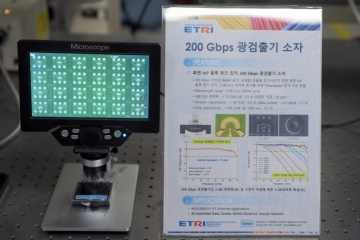
ETRI Develops 200Gbps Photodetector… Initiates Localization of Optical Receivers for AI Data Centers
The Electronics and Telecommunications Research Institute (ETRI) has developed a photodetector device that processes optical signals of approximately 200Gbps per channel for the first time in Korea. This device is a component that converts optical signals into electrical signals and determines the reception performance of AI data centers and 5G/6G communication networks. ETRI achieved bandwidth of 70GHz or higher and optical responsivity of 0.75A/W or higher, and integrated an indium phosphide lens on the rear of the chip to enhance optical reception efficiency and alignment convenience. The technology was presented at OECC 2025 and was recently published in the international academic journal 'Optics Express'.
2026.03.19by 명세환 기자











