



Vicor, High-Density Isolated AC-DC Front-End with PFC Function
 Published2016.01.07 13:51
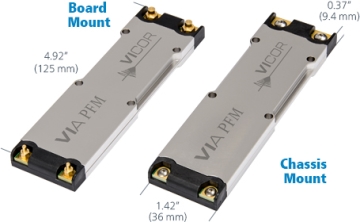
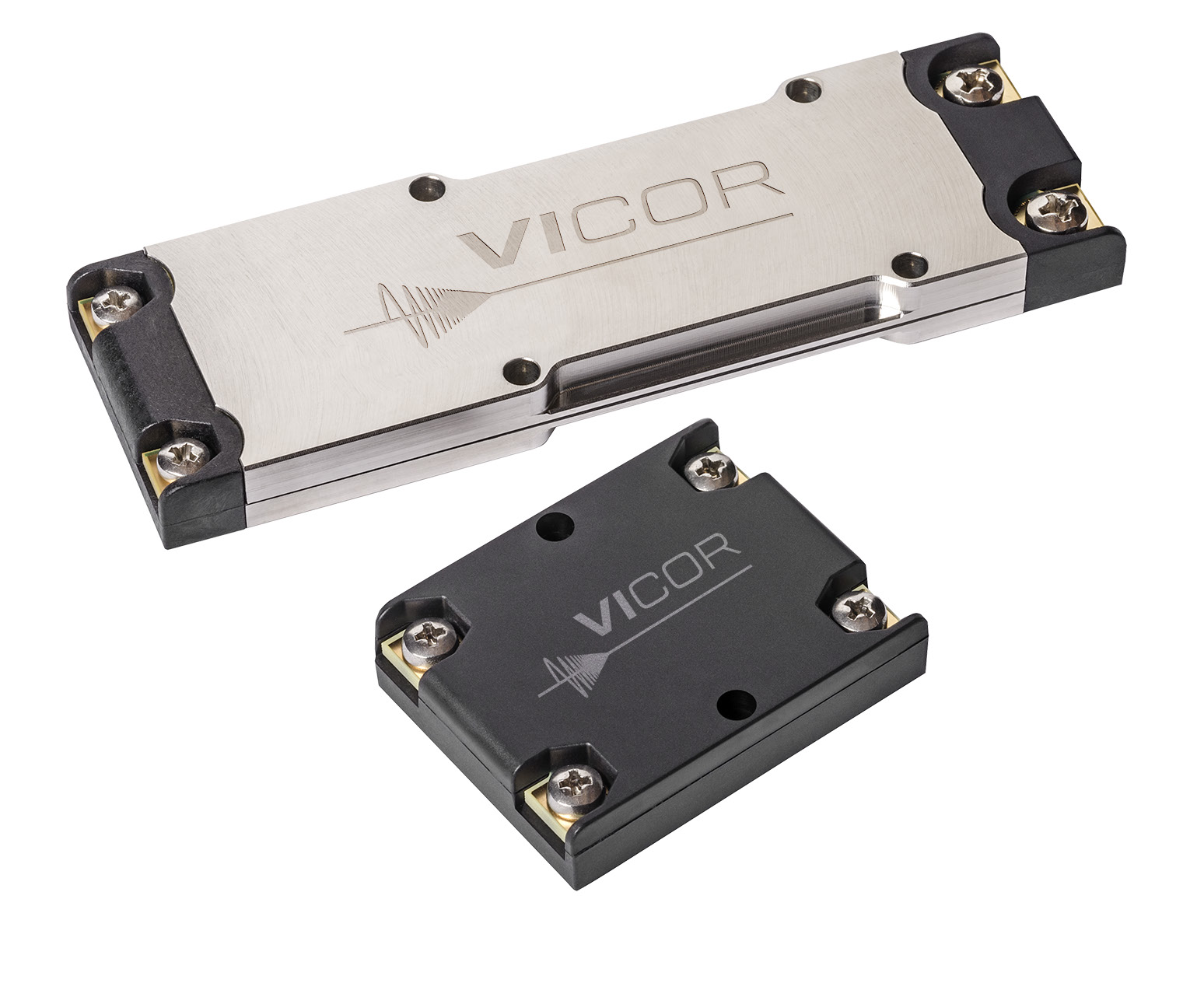 Vicor has launched a new product line of high-density PFM™ AC-DC front-end modules.
Supporting universal AC input of 85-264VAC and PFC function, this new module provides 400WDC output at maximum efficiency of 93% with fully isolated 24 or 48VDC output voltage, boasting unprecedented power density of 127 W/in³ (8 W/cm³) in a 9 mm VIA Package and best-in-class performance.
These new modules can be applied to diverse applications including industrial use, process control, telecommunications, office equipment, test and measurement, LED lighting, and more. All electronic products and systems operating independently from the AC power line must incorporate an AC-DC "front-end" to convert the AC supply voltage into stable DC voltage required by electrical circuits.
The newly introduced products integrate the complete range of front-end functions required in AC line-driven power systems—including overcurrent and inrush current protection, input power factor correction, input-output isolation, and stabilized SELV (Safety Extra Low Voltage) DC output—meeting international safety and regulatory agency standards related to isolation, EMC (CE), power factor correction, transient currents on AC lines, flicker, momentary power loss, and surge.
Both on-board mounting and chassis mounting versions are available in VIA package configuration, supporting two different operating temperature ranges.
For most applications, users can simply combine the PFM with an AIM (Universal AC Input Module) to integrate all necessary primary-side rectification, filtering, and transient current protection circuits within the VIA Package and secondary-side storage capacitance, completing a full AC-DC front-end solution.
Alternatively, the PFM front-end module can be combined with rectification, filtering, and secondary-side output capacitance optimized for specific applications. Regardless of which approach is applied, the PFM front-end module overcomes uncertainties related to custom front-end design and lengthy design cycles, enabling rapid and convenient design of high-performance, high-density AC-DC front-end solutions.
Typically, most alternative front-end systems are configured with high-capacity energy storage at elevated input voltages; however, the PFM enhances system safety by storing energy in low-voltage capacitors at isolated SELV (Safety Extra Low Voltage) output.
Moreover, with a thickness only 1/5 that of the company's existing solutions, the more robust and thermally superior VIA Package can be easily mounted on equipment side panels, chassis, or other external heat dissipation devices, delivering enhanced thermal performance in any application. Mounting the AC/DC converter on the chassis or equipment side not only reduces system size and cost but also secures additional usable space while improving thermal performance, thereby saving additional costs for supplementary heat dissipation devices.
The new PFM AC-DC front-end module provides a modular integrated AC-DC front-end solution with significantly higher power density and robustness compared to alternative products, and is well compatible with a wide range and variety of downstream components.
Power design engineers can utilize Vicor's online PowerBench™ design tool to rapidly design and implement a complete offline power system combining selected downstream modules and the PFM AC-DC front-end solution from Vicor's portfolio of high-density, high-efficiency, modular power converter products, delivering predictable performance coupled with superior power density, efficiency, and reliability.
Power Component Design Methodology and Online Configuration and Design Tools
Vicor's power component design methodology employs a modular component design approach, enabling users to predict component and system functionality and reliability, achieve faster design cycles, and facilitate system configuration, reconfiguration, and expansion. Additionally, it provides efficient system operation, high-density power, and cost-effectiveness, offering users the best alternative solution compared to competing products.
System designers can utilize Vicor's online tools to reference Vicor's diverse validated portfolio to design, optimize, and simulate their power systems from the input source to POL (Point Of Load). This innovative approach minimizes the possibility of unexpected issues and delays that are commonly observed in the final development stages of traditional user-customized design methods, while providing rapid market access and superior functionality.

Related news

Intel Unveils Next-Generation 'Core Ultra Series 3' and vPro Platform for Enterprise PCs
Intel has officially unveiled the "Intel Core Ultra Series 3" for next-generation enterprise PCs and the latest vPro platform, addressing a wide range of demands from enterprise notebooks to high-performance workstations.
2026.03.26by 배종인 기자
ROHM Launches ESD Protection Diode Compatible with High-Speed Interfaces of 10Gbps or Higher
Semiconductor specialist ROHM has developed the 'RESDxVx series' of ESD (electrostatic discharge) protection diodes capable of responding to next-generation high-speed data communication environments exceeding 10Gbps, simultaneously enhancing both signal quality maintenance required in high-speed interfaces and IC protection performance.
2026.03.26by 배종인 기자
ST Launches 75V Drive IC Targeting 48V Industrial Motor Driving
ST Microelectronics has unveiled the 'STSPIN9P' series of 75V motor drive ICs tailored for 48V-class industrial drive system design. The new product family is characterized by half-bridge and full-bridge configurations that enable design scalability according to motor type and output conditions. Power supply circuits, protection functions, and current sensing circuits are integrated on-chip to simplify system configuration, and the devices are designed to support applications up to 500W maximum. The company plans to provide reference designs and demo boards to support development and evaluation in industrial automation, robotics, pumps, fans, lighting, and textile machinery.
2026.03.26by 배종인 기자

Nordic supports security updates for the entire lifecycle of IoT devices at a single fixed cost
Nordic Semiconductor, a global leader in low-power wireless connectivity solutions, has unveiled a single fixed-cost licensing model that delivers FOTA (Firmware Over-the-Air) and device management capabilities throughout the device lifecycle via nRF Cloud, and introduced a new firmware update solution to prepare for the enforcement of the European Union's Cyber Resilience Act (CRA).
2026.03.26by 배종인 기자











