



Ministry of Science, ICT and Future Planning Announces '2015 Information Security Survey Results'
 Published2016.01.13 09:23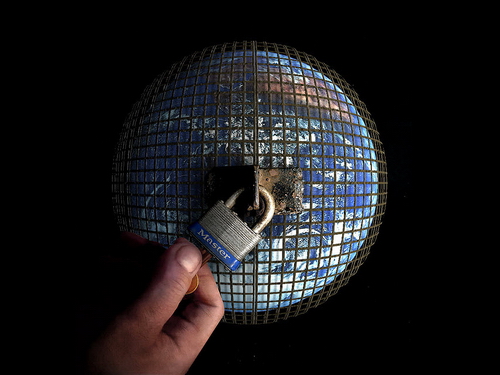
(Image source: ▲Photo: http://flickr.com/photos/azrainman. CC-BY.)
The Ministry of Science, ICT and Future Planning announced that the results of the 2015 Information Security Survey showed that information security prevention and response activities by companies and the general public had improved overall, and that the occurrence of security breaches had also decreased.
The Information Security Status Survey is conducted annually by the Ministry of Science, ICT and Future Planning, commissioned to the Korea Internet & Security Agency (KISA). It was carried out through face-to-face interviews from last August to September, targeting 8,000 companies with one or more employees and 4,000 individuals. This survey also included an investigation into mobile security to diagnose the current status of mobile security threats, which have been continuously increasing recently.
According to the survey results for the corporate sector, the percentage of businesses that have established information security policies was 13.7%, an increase of 2.4 percentage points compared to the previous year. In particular, the overall level of organizational management related to information security was found to have improved, including the operation of information security organizations (7.9%, 5.1 percentage points increase), the appointment of Chief Information Security Officers (11.0%, 3.3 percentage points increase), and the implementation of training (14.9%, 1.7 percentage points increase). In addition, response activities such as establishing emergency contact systems and response teams also increased (17.5%, 9.9%p↑), and the experience of security incidents decreased compared to the previous year (1.8%, 0.4%p↓).
Meanwhile, the percentage of companies investing in information security increased by 8.1% from the previous year to 18.6%, but the proportion of information security budgets within the total IT budget remained at the previous year's level (1.4%, up 0.3%p), indicating that there is a continued need for companies to expand their investment in information security budgets and specialized personnel.
Individuals are also raising their awareness of information protection.
Consider the importance of security more important than convenience.
In the personal sector, the majority of the public recognizes the importance of information security (94.7%, 0.8%p increase), and preventive activities such as the use of information security products (84.3%, 0.5%p increase) and performing backups (30.5%, 7.6%p increase) have increased. Additionally, it was found that 92.1% of information security product users perform antivirus updates, and the implementation rate for operating system security updates is at the 83.0% level. Consequently, the experience of security breaches decreased significantly compared to the previous year (13.5%, 8.5%p decrease).
Respondents indicated that security (61.4%) is perceived as more important than convenience (9.2%) regarding simple payment services, suggesting that securing trust in security is more critical for these services.
A mobile security survey revealed that 32% of mobile device users have experienced malware infections, indicating a trend of cyber security threats shifting to mobile. Mobile security incidents mainly occur due to access to internet addresses such as text messages (41.7%), mail, and bulletin boards (31.2%), and it was found that 87.6% of mobile device users use mobile antivirus apps and 27.6% use smishing blocking apps.
Meanwhile, it was found that 56.7% of users store their accredited certificates on mobile devices, and 77.6% of them store them in the mobile device's memory, indicating a need to strengthen security.
Song Jeong-su, Director of Information Security Policy at the Ministry of Science, ICT and Future Planning, gave a positive assessment, stating, “The increase in information security prevention and response activities and the decrease in the experience of security breaches are the result of the overall rise in social awareness regarding information security.” However, he also noted, “Reflecting the survey results, continuous efforts are needed in 2016 to promote corporate investment in information security, strengthen mobile security, and expand the adoption of safe and convenient electronic authentication.”

관련뉴스
Silicon Labs Launches MCUs Ideal for IoT Security and Energy Management
실리콘랩스는 강화된 보안 기능과 최첨단 에너지 관리 기술을 제공하는 신제품 EFM32™게코(Gecko)마이크로컨트롤러(MCU) 2종을 출시했다고 발표했다. 새로운 제이드 게코(Jade Gecko) 및 펄 게코(Pearl Gecko) MCU 제품들은 개발자들이 쉽게 사용할 수 있는 실리콘랩스의 심플리시티 스튜디오(Simplicity Studio)™ 툴로 지원되며 최첨단 하드웨어 암호화 엔진, 유연성 높은 저전력 모드, 온칩dc-dc 컨버터와 다양한 메모리 옵션을 제공한다.
2015.12.15by
Samsung Electronics Enables Security Solutions on Smart TVs
삼성전자가 타이젠 기반의 자체 스마트 TV 통합 보안 솔루션 ‘가이아(GAIA)’를 세계 최대 가전전시회 CES 2016에서 처음으로 선보인다. 2016년형 삼성 스마트 TV 전 라인업에 적용되는 ‘가이아’는 스마트 TV 서비스 · 소프트웨어 · 하드웨어의 3단계에 걸친 보안 솔루션으로 더욱 안전한 스마트 TV 사용 환경을 제공한다.
2015.12.30by
ST Launches Wireless User Authentication Technology Platform for IoT Device Security
ST마이크로일렉트로닉스(STMicroelectronics, 이하 ST)가 휴대용 저장장치 및 모바일 기기 제조업체를 대상으로IP(Intellectual-Property)및 기술 개발을 하는 클렙엑스(ClevX)社와 블루투스 스마트무선 사용자 인증이 가능한 세계 최초의 데이터락(DataLock®)암호 기능휴대용 저장매체를 출시한다고 발표했다.
2016.01.08by

Intel Unveils Next-Generation 'Core Ultra Series 3' and vPro Platform for Enterprise PCs
인텔이 차세대 기업용 PC를 위한 ‘인텔 코어 Ultra 시리즈 3’와 최신 vPro 플랫폼을 공식 발표하며, 기업용 노트북부터 고성능 워크스테이션까지 폭넓은 수요 충족에 나섰다.
2026.03.26by 배종인 기자

ROHM Launches ESD Protection Diode Compatible with High-Speed Interfaces of 10Gbps or Higher
반도체 전문 기업 로옴(ROHM)이 10Gbps를 넘어서는 차세대 고속 데이터 통신 환경에 대응할 수 있는 ESD(정전기 방전) 보호 다이오드 ‘RESDxVx 시리즈’를 개발하며, 고속 인터페이스에서 요구되는 신호 품질 유지와 IC 보호 성능을 동시에 끌어올렸다.
2026.03.26by 배종인 기자











