


Experts Put Their Heads Together to Discover Automotive Convergence Business Models
 Published2016.02.18 09:38
The Ministry of Trade, Industry and Energy (Minister Joo Hyung-hwan) held the 'Automotive Convergence Alliance Development Strategy Forum' on the 17th to strengthen the competitiveness of Korea's future automotive industry.
Last December, the Ministry of Trade, Industry and Energy declared a “transition to a convergence-centered automotive industry policy” to consolidate the capabilities of domestic related companies in response to the paradigm shift in the future automotive market, and launched the Automotive Convergence Alliance, an alliance of companies related to the future automotive industry.
The Automotive Convergence Alliance was initially launched with six companies, including Hyundai Motor, LG Electronics, KT, Naver, Hanwha Advanced Materials, and Obigo, but has expanded to about 50 companies thanks to the enthusiastic response from companies looking to enter the future automotive market.
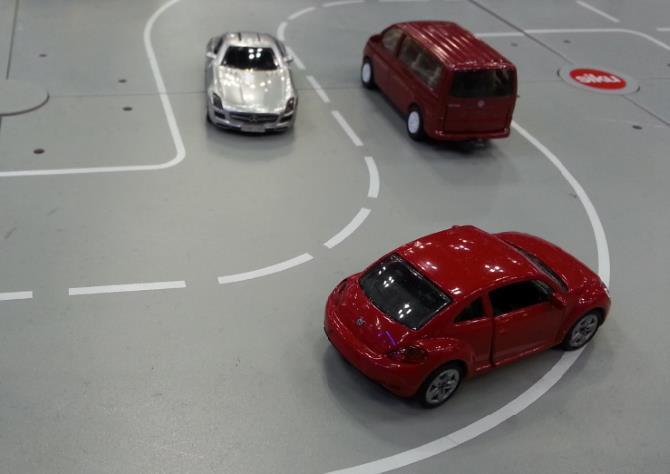
At this forum, not only the originally participating companies but also various domestic firms from sectors such as electronics, electrical engineering, semiconductors, telecommunications, software, and materials gathered to hold in-depth discussions on the creation of a future automotive convergence ecosystem.
Just as smart cars became the biggest topic at the recent Consumer Electronics Show (CES), the paradigm of the automotive industry is rapidly shifting through convergence with other industries such as IT. However, despite possessing world-class automotive and related industries like IT, Korea is currently assessed as lagging behind Germany, the United States, and Japan in future automotive competitiveness due to a lack of inter-industry collaboration.
These doorsIn order to overcome challenges, the government has been pursuing the "promotion of convergence between key industries and IT/SW" as a core task, and launched the "Automotive Convergence Alliance" last December to create a platform for promoting convergence among private companies.
At the forum, companies interested in the three fields representing future automobiles—electronics, emotional appeal, and greening—attended and discussed business models for inter-company cooperation.
In the electrification subcommittee, representatives from leading domestic electronics companies such as Samsung Electronics and LG Electronics, as well as firms in the semiconductor, IT, and software sectors, participated to discuss cooperation measures regarding active safety, driving convenience, and information convergence necessary for autonomous driving.
In the Sensitivity Division, the three major telecommunications companies (STK, KT, LG U+) and IT/software companies such as Naver and Obigo attended to discuss cooperation plans regarding services such as cloud and connectivity that link automobiles and communication technologies.
In the Greening Subcommittee, Lotte Chemical, GS Caltex, LG Hausis, and others attended to discuss cooperation plans in the materials sector for automotive lightweighting, and companies interested in power-based components and infrastructure, such as electric and hydrogen vehicles, also attended and exchanged opinions.
In addition, experts from the insurance sector (Korea Insurance Development Institute) and the legal sector (Kim & Chang Law Firm) attended the forum and expressed their interest. Furthermore, major domestic automakers such as Hyundai Motor and SsangYong, as well as key parts suppliers like Hyundai Mobis and Mando, participated in all three divisions, demonstrating that established automotive companies also intend to enhance the competitiveness of future automobiles through convergence with other industries.
The Ministry of Trade, Industry and Energy is committed to providing full support to realize collaborative business models between companies in different fields through the Automotive Convergence Alliance.
In addition, a policy subcommittee including experts in relevant fields will be newly established within the Convergence Alliance to discuss laws, systems, and standards for the commercialization of future automobiles, and the findings will be reflected in policy.
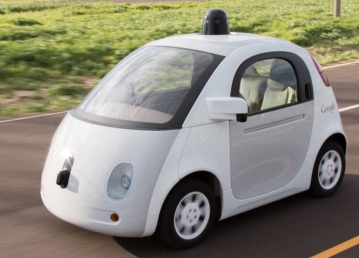
An official from the Ministry of Trade, Industry and Energy stated, “Just as there was recent discussion in the U.S. regarding whether Google’s self-driving system could be recognized as a driver, we believe there are many areas that the government, companies, and experts need to review and prepare together for the future commercialization of autonomous vehicles,” adding, “We plan to gather opinions from experts in a wider range of fields by establishing a new policy subcommittee.”
관련뉴스
Where Are We in Core Sensor Element Development? ② “Development of 79GHz Automotive Radar Sensor to Preempt the Autonomous Vehicle Market”
이에 지난주 스마트 모션센서, 대사량 측정 센서, 유해가스 센서, 광센서 개발현황에 이어 ▲차량용 션트저항 전류센서 ▲자율주행 자동차용 라이다 센서 ▲차량용 79GHz 레이더 센서 기술을 소개한다.
2015.11.23by 신윤오 기자
Domestic push for autonomous vehicles on actual roads is in its infancy, while overseas markets are racing to fully apply artificial intelligence.
정부가 자율주행차 실도로 시험운행을 시행하기로 결정하면서 자율주행차 핵심 기술에 다시 이목이 집중되고 있다. 국토교통부(장관 강호인)는 지난달 28일 ‘2016년 국토교통부 업무계획’을 발표하면서, 국토교통 7대 신(新)산업 중 하나로 자율주행차 산업 육성을 선정했다. 이 육성안에는 자율주행차의 실도로 시험운행, 시범운행단지 지정 및 실험도시 구축 등 기술개발 지원사업 계획이 담겨있다.
2016.02.01by 신윤오 기자
China, the creator of global IT giants, is now going all-in on the electric vehicle industry.
LG Economic Research Institute recently argued in a report titled "Chinese EV IT Companies Replicating Success Mythology" that "the Chinese government's active support for the electric vehicle industry is an application of government-led growth methods that elevated the IT industry to world-class standards, demonstrating the Chinese government's determination to bring the electric vehicle industry up to global levels."
2016.02.17by 신윤오 기자
A single misaligned light means 'defect'… Vehicle interior lighting now guarded by semiconductors and software
자동차 실내조명이 '보조 조명'의 자리를 벗어나고 있다. 색상과 애니메이션으로 브랜드 아이덴티티를 드러내고 운전자 취향을 담아내는 사용자 경험(UX)의 핵심 요소로 올라서면서, LED 실내 앰비언트 시장도 빠르게 커지는 중이다. 이에 관하여 '미래 자동차를 밝히는 지능형 LED 실내 조명 솔루션' 이라는 내용으로 기술 웨비나 세션을 발표하는 최영재 다보코퍼레이션 연구위원을 앞서 만나, 시장의 온도와 설계 요구의 변화를 들었다.
2026.08.28by 명세환 기자
TI, HEV·EV 트랙션 인버터용 다축 코어리스 전류 센서 TMCS2100-Q1 공개
Texas Instruments가 HEV·EV 트랙션 인버터용 다축 코어리스 홀 효과 전류 센서 TMCS2100-Q1을 공개했다. 수평·수직 자기장을 동시에 측정하는 다축 센싱 기술로 기존 단일 축 센서 대비 최대 20배 높은 정확도를 달성하며, 버스바 무개조 설계로 기계 설계 유연성을 확보했다. 800V 아키텍처 확산에 따른 고정확도 요구 충족과 소형화를 동시에 구현한다.
2026.08.27by 배종인 기자











