


Samsung Electronics Takes First Step Toward Nationwide Expansion of Smart Factories
 Published2016.02.24 16:13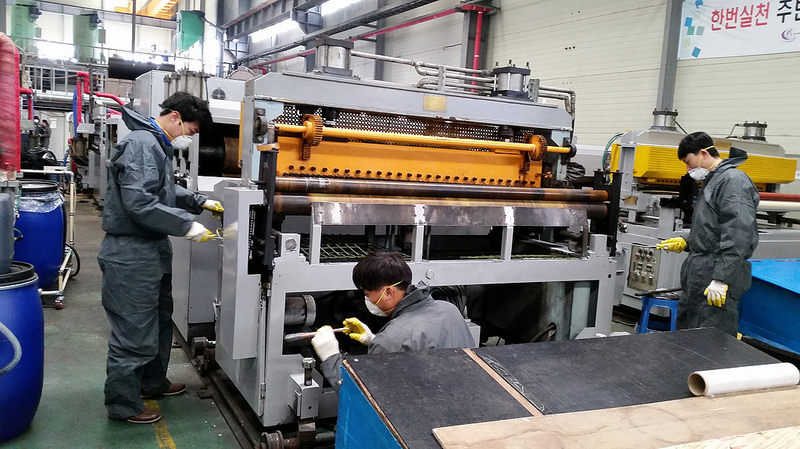
First applied to 224 companies in February, around 150 in March
Following the deployment of smart factories in the Gyeongbuk region last year, Samsung Electronics is expanding the deployment nationwide starting this year. Starting in February of this year, it will be applied first to 224 companies selected in the first round by Creative Economy Innovation Centers across the country.
The nationwide smart factory deployment project is implemented in stages according to the level, scale, and sector of small and medium-sized enterprises (SMEs) and mid-sized companies, including factory operating systems (MES, ERP, etc.) and ICT-based manufacturing technologies (manufacturing automation, process simulation, ultra-precision molds).
MES (Manufacturing Execution System) refers to a production management system, while ERP (Enterprise Resource Planning) refers to a resource management system.
Process simulation refers to simulating process layout and product design in a virtual space using 3D tools, and ultra-precision mold is an ultra-precision mold machining technology linked with CAD/CAM. Samsung Electronics plans to build 450 smart factories this year alone, including 224 in February and about 150 in March.
Achievements of smart factory deployment: 34% increase in productivity, 28% improvement in quality, and shortened logistics routes.
Hanmac Chemical Co., Ltd. (Jangseong, Jeonnam), which pioneered manufacturing site innovation activities as part of the nationwide smart factory dissemination project, succeeded in improving productivity by 34%, quality by 28%, and shortening logistics routes, while Dongsungsa (Iksan, Jeonbuk) also achieved a 36% improvement in productivity and a 52% reduction in logistics routes.
Baek Gyeong-gi, CEO of Hanmac Chemical Co., Ltd., said, “It was difficult to change the working environment due to the nature of packaging box manufacturers, but through manufacturing site innovation activities, we achieved reform beyond improvement,” adding, “We have high expectations for the adoption of Samsung Electronics’ smart factories.”
Jeong Cheol-yeong, CEO of Dongseongsa, stated, "The manufacturing site innovation activities not only improved the workplace but also instilled passion in the employees." Meanwhile, since 2015, Samsung Electronics has been supporting the establishment of smart factories by selecting about 120 companies in the Gyeongbuk region together with the Gyeongbuk Creative Economy Innovation Center.
In addition, Samsung Electronics established the Creative Economy Support Center last October to enhance the manufacturing competitiveness of domestic small and medium-sized enterprises and announced a plan to transform 1,000 companies nationwide into smart factories by 2017, in collaboration with the Ministry of Trade, Industry and Energy and the Ministry of Science, ICT and Future Planning.
Kim Jong-ho, President and Head of Samsung Electronics’ Creative Economy Support Center, stated, “The direction of smart factory construction supported by Samsung is to integrate ICT technology with manufacturing site innovation activities that transform the fundamental structure of Korea’s small and medium-sized enterprises (SMEs) and mid-sized companies.” He added, “The goal is to enable voluntary innovation to continue even after the smart factory is established by providing support for manufacturing operation systems (MES/ERP/SCM), manufacturing automation, process simulation, and ultra-precision molds.”
관련뉴스
Samsung Electronics Increases Incentive Payments for Accident-Free Semiconductor Workplaces to Twice a Year
Samsung Electronics distributed a total of 18.1 billion won in second-half 2015 incentives to approximately 10,000 employees from around 100 semiconductor partner companies on January 29th. Samsung Electronics has been providing partner company incentives twice a year, divided into first and second halves, since last year, in order to contribute to revitalizing the domestic economy. Previously, these incentives were provided once per year.
2016.01.29by
Samsung Electronics Launches LED Modules for Industrial Lighting
삼성전자가 산업용 조명에 최적화된 고광속 LED 모듈 ‘인플럭스(inFlux)’를 출시하고, 본격적인 LED 모듈 시장 공략에 나선다. 광속(Luminous Flux)이란 광원에서 나오는 빛의 총량이다.
2016.02.02by
Ecolab and K-water Discuss Innovation Collaboration in Advanced Industry Water Management
Ecolab and the Korea Water Resources Corporation jointly discussed cooperation directions for maximizing water use efficiency in advanced industries such as semiconductors and data centers and establishing sustainable water circulation. The two companies agreed to gradually develop a long-term cooperation model that combines water resource infrastructure and water management technology to promote water efficiency optimization, water reuse, and carbon reduction.
2026.08.28by 명세환 기자
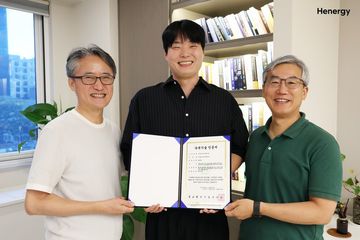
에이치에너지, 녹색기술인증 획득…솔라온케어 가동률 99.82%
에이지에너지가 태양광 발전예측 및 I-V커브 이상진단 기술로 중소벤처기업부 녹색기술인증을 획득했다. AI 기반 자산관리 플랫폼 솔라온케어는 전국 3,000개 이상 발전소에 적용되어 99.82%의 시스템 가동률과 3.7% 발전성능 개선을 달성했다. 실시간 데이터 분석을 통해 모듈 노화와 부분 음영 등 미세한 손실을 조기에 감지하고 관리함으로써 발전 수익을 보호한다.
2026.08.25by 명세환 기자
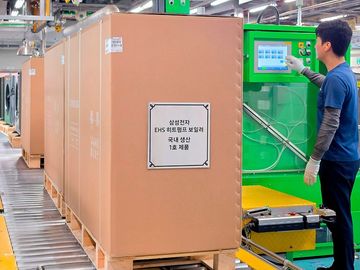
삼성전자, EHS 히트펌프 보일러 광주서 국내 생산…연 10만 대 규모
삼성전자가 난방 전기화 추진에 맞춰 광주사업장에서 EHS 히트펌프 보일러 국내 생산 체제를 구축한다. 2,132㎡ 규모 전용라인에서 이달 시험생산을 시작해 9월 말 본격 양산에 돌입할 예정이며, 연간 10만 대 이상 생산 능력을 갖춘다. 투입 전력 대비 약 5배 열을 생성하는 이 제품은 계절성능계수 4.9를 기록하며 화석연료 기반 보일러 대비 에너지 효율이 높고 탄소 배출을 줄인다.
2026.08.24by 명세환 기자











