

.png)

Enterprise mobility, mobile software, and services are driving growth
 Published2016.05.04 10:57
Expansion of customer communication and business culture through mobile, focusing on the finance and retail sectors
According to a recent report by IDC Korea (CEO Hong Yoo-sook), the domestic enterprise mobility market recorded 1.5874 trillion won last year, a 15.9% increase from the previous year, driven by the growth of the mobile software and services market.
The report (Korea Enterprise Mobility Market Forecast, 2016-2020) stated that the enterprise mobility market is expected to grow by 8.1% year-on-year this year, driven by the growth of the mobile software sector, which is showing a relatively higher growth rate than other areas. Despite the burden of security and management cited as growth-hinding factors, the domestic enterprise mobility market is projected to grow at an average annual rate of 4.3% until 2020 as corporate mobility adoption continues to increase.
Lee Young-so, a senior researcher at IDC Korea responsible for the domestic mobility market research division, stated, "The forms of mobility adoption are inevitably very diverse and complex depending on the industry, size, and internal security policies of the company." He added that companies are approaching the adoption of mobility very cautiously due to company-specific regulations, business environments, and the rapidly changing nature of mobile technology. However, it was explained that the adoption of mobility by companies is on a continuous upward trend as suppliers consistently offer diverse product lineups and packages that businesses need.
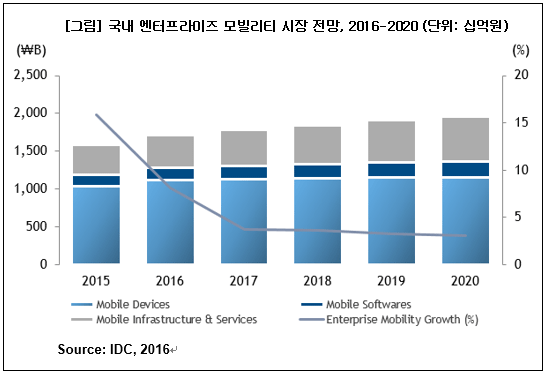
Researcher Lee Young-so added, "While the adoption of mobility is currently limited to certain departments or tasks and concentrated in specific service industries such as retail, logistics, and finance, it is expected to spread to a wider range of sectors beyond just related ones as successful references gradually increase, leading to expectations of a continuous expansion of the enterprise mobility market."
Furthermore, companies stated that the adoption of enterprise mobility would enable them to facilitate not only internal operations but also collaboration with business partners more easily and quickly. They also emphasized that, recognizing that integrating mobility into business models can enhance customer accessibility through mobile experiences and ultimately lead to improved profitability, an increasing number of companies will naturally integrate mobility into legacy systems or formulate policies that place mobility at the center of their business and operations.
The key is configuring integrated solutions and partnership strategies that reflect diverse customer needs.
Meanwhile, the report noted that while corporate skepticism regarding the adoption of mobility has significantly decreased, mobility inevitably faces complex situations when integrated with existing systems, and urged suppliers to enhance their brand power while simultaneously developing new technologies and proposing differentiated package products. It was also emphasized that there is a need to provide guidelines to enable corporate customers to successfully adopt mobility and utilize it more extensively.
In particular, the challenges facing companies were broadly categorized into four areas—'customer business environment,' 'limited budget,' 'difficulties in understanding and internalizing rapidly changing technology,' and 'anxiety regarding extensive management points and service continuity'—and suppliers were urged to develop strategic approaches and countermeasures that take these factors into account.
Although mobility is expected to establish itself as a core strategy for corporate operations by effectively communicating with customers and driving sales growth through preference analysis based on customer data, market expansion has been slow compared to the speed at which corporate and market attention began to focus on mobility, despite these expectations. This is because major service providers have concentrated their businesses on emerging areas such as cloud computing and IoT rather than mobility, and corporate clients have also frequently prioritized other technologies and services over mobility when allocating infrastructure investments.
"Senior Researcher Lee Young-so stated, 'In the mobility market, rather than large service providers, telecommunications companies, or traditional solution providers that have led the market in the past, specialized mobile solution providers with diverse technological competitiveness are expected to expand the market as key players by creating synergy through strategic partnerships.'"

관련뉴스

Lenovo Korea Targets Enterprise Market with System X Promotion
한국레노버가 x86 서버 프로모션으로 엔터프라이즈 시장을 적극 공략한다고 밝혔다. 한국레노버는 System x 서버를 특가로 제공하며 금일부터 3월 25일까지 고객들에게 사은품을 제공한다.
2016.01.21by
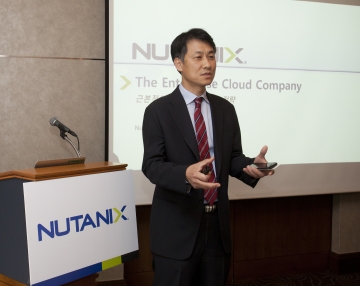
뉴타닉스, 엔터프라이즈 클라우드 특화 솔루션 발표
엔터프라이즈 클라우드 기업 뉴타닉스 코리아는 4월 26일, 롯데호텔 서울에서 엔터프라이즈 클라우드에 대한 비전을 공유하고, 이에 따른 국내 사업전략을 발표했다. 뉴타닉스 엔터프라이즈 클라우드는 자체 데이터센터에 클라우드 서비스 개념을 도입해 기존 레거시 인프라 스트럭처와 퍼블릭 클라우드의 장점을 결합해 활용할 수 있는 솔루션이다.클라우드 기반의 웹스케일 기술이 적용된 뉴타닉스의 솔루션을 통해, 비즈니스 협력사 및 고객들은 성능저하 없이 스토리지를 확장할 수 있고, 하드웨어 장애로부터 독립된 서비스의 아키텍처를 구성할 수 있다. 뉴타닉스의 하이퍼 컨버지드 아키텍처는 노드 단위의 확장과 데이터 로컬리티를 이용한 빠른 가상화 환경을 지원한다.
2016.04.26by
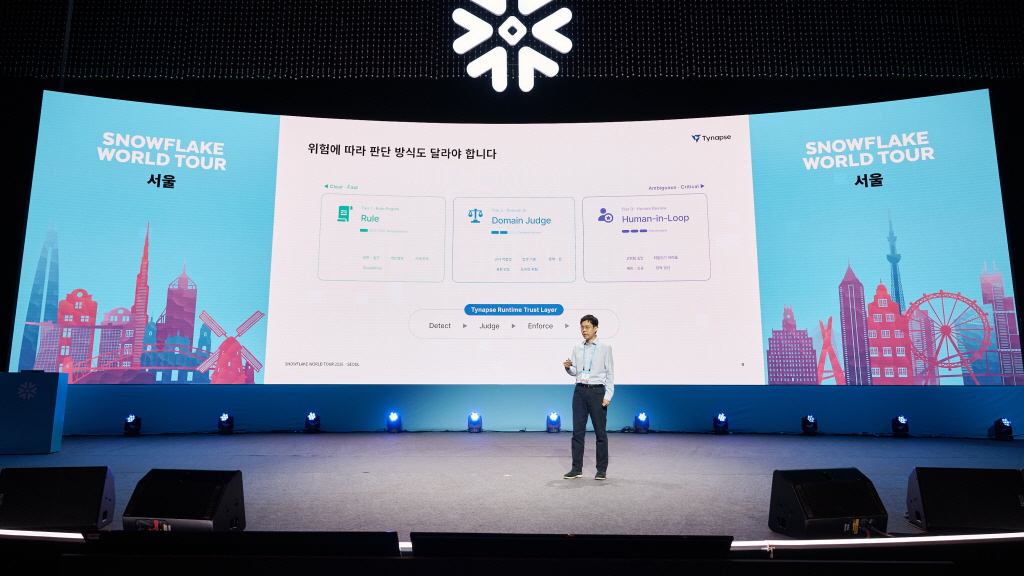
The Problem with AI is Not Performance, but Trust
CEO Kang Min-seung emphasized at Snowflake's World Tour Seoul that generative AI has entered a phase where "trust" rather than accuracy becomes the key competitive advantage. As AI is applied to various tasks including consultation, risk management, and operational automation, incorrect data, erroneous responses, and bias are creating actual business risks. He pointed out that enterprises must build a trust layer above AI. To achieve this, accurate data management, semantic structuring, governance, and prompt security are essential. He explained that AI is not merely an automation tool but a technology that reorganizes the entire organization's workflows and decision-making systems. Snowflake provides a platform that supports this trust-based AI operation, emphasizing that enterprises should build "trustworthy AI" rather than "intelligent AI."
2026.08.28by 배종인 기자

The Decisive Factor for AI Agents in Finance: "Trustworthy Data Infrastructure"
The key to spreading AI agents in the financial sector is establishing a trustworthy data system. KB Kookmin Bank is operating over 100 AI agents by 2025 and is promoting expansion to 300. AI is automating repetitive tasks across various areas such as consultation, risk management, wealth management, and relationship management. However, if data quality, governance, and semantic structuring are insufficient, errors and risks increase. KB is building an AI-Ready organization through a multi-model strategy of GPT, Gemini, and Claude, as well as a Snowflake-based data system. The bank emphasized that AI has entered a phase where it restructures not just simple automation but the entire work process and decision-making system.
2026.08.28by 배종인 기자
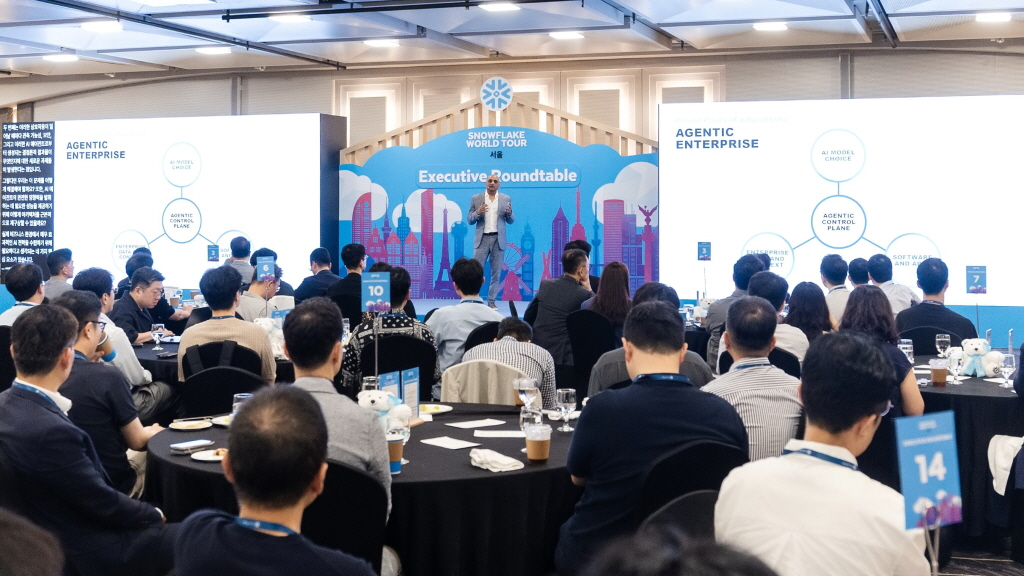
Snowflake Presents Data Platform Roadmap for Agentic AI Era
Snowflake emphasized at the Seoul roundtable that the key to enterprise AI proliferation lies in "Agentic AI" and the integration of data and workflows. Bala Kasivisvanathan stated that AI is evolving beyond simple analytics to become the driver of task automation and operational optimization, and that organizations must strengthen their data quality, processes, and governance as prerequisites for this. CJ OliveNetworks introduced that it is currently expanding AI applications in logistics and operational automation. Snowflake stressed that companies need a strategic shift to connect AI adoption to tangible business impact.
2026.08.28by 배종인 기자











