



K2L Provides OptoLyzer® CAN FD Tool, an Integrated Development Solution for Automotive Customers
 Published2016.06.17 14:42
Combined with OptoLyzer Studio software
K2L (K2L GmbH & Co. KG) announced the availability of a new OptoLyzer® CAN FD tool solution that combines the OptoLyzer MOCCA FD hardware interface with the feature-rich OptoLyzer Studio software.
The combination of these two products provides a flexible solution that can be used across the entire automotive and ECU (engine control unit) development process. The solution is designed to cover all stages of the development process, including prototyping, simulation, implementation, analysis, and verification. Using this solution from K2L, you can reduce the complexity of design, test, and system integration, and save costs and time.
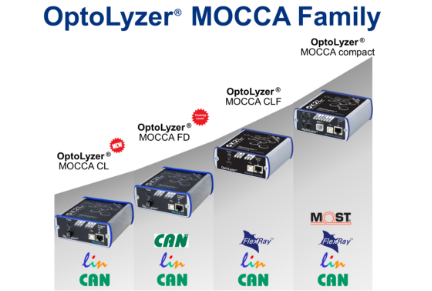
OptoLyzer MOCCA FD and OptoLyzer Studio software can be used for the development of CAN FD, CAN, and LIN networks. OptoLyzer MOCCA FD is a high-performance automotive bus interface that provides two interfaces that can be configured as CAN FD, High-Speed CAN, or Single-Wire CAN, four High-Speed CAN interfaces, and six LIN interfaces. This hardware from K2L utilizes Microchip’s MCP2561/2FD CAN FD transceiver.
OptoLyzer Studio software provides a feature-rich graphical user interface (GUI) that provides easy access to OptoLyzer MOCCA FD hardware. OptoLyzer Studio is a software tool designed for ease of use, allowing you to easily change device configurations such as baud rate and bit timing. It also provides an easy-to-understand trace view of traffic on connected buses, allowing you to observe signal behavior in a graph view during online measurements.
“Combining the OptoLyzer MOCCA FD hardware interface with the OptoLyzer Studio software provides our automotive customers with a single solution to efficiently develop CAN FD, CAN and LIN use cases across the entire design workflow,” said Matthias Karcher, Senior Manager at K2L. “We are excited to offer this solution to our customers and are confident it will meet their needs.”

관련뉴스

TI Launches Chokeless High-Speed CAN Transceiver Family Providing Superior EMC Performance
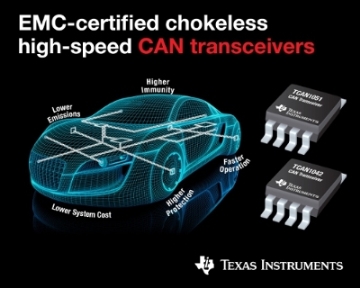
TI Korea (CEO Kent Jeon) announced the launch of two CAN (controller area network) transceiver product families that meet all industry standards for EMC (electromagnetic compatibility) required by automotive manufacturers in the United States and European regions. The new TCAN1042 and TCAN1051 CAN transceiver product families provide optimal protection and high performance for various automotive and industrial applications by supporting high-level bus fault protection capabilities, fast CAN flexible data rate (FD), and the industry's shortest loop delay time.
2016.04.06by 명세환 기자
Mentor Graphics Supplies Wire Harness Design Verification Solutions to Automotive Electronics Companies
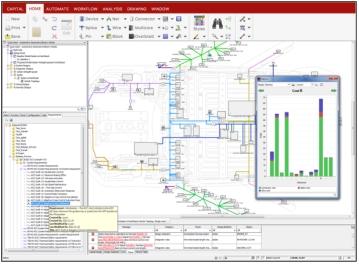
Korea Mentor Graphics (CEO Yang Young-in) announced that it has supplied 'Mentor® Capital®', its electrical systems and wire harness domain design verification solution, to LVPG (Lear Virtual Proving Grounds), the electrical design system of Lear Corporation, a global leader in automotive electronics systems development. Lear Corporation's LVPG is a solution developed for automotive OEM customers to optimize and verify electrical systems and wire harness design. LVPG enables the development of differentiated competitive products in the market by responding quickly and powerfully to customer requirements.
2016.06.08by 명세환 기자

A single misaligned light means 'defect'… Vehicle interior lighting now guarded by semiconductors and software
Automotive interior lighting is moving beyond its role as 'auxiliary lighting.' As it becomes a core element of user experience (UX) that expresses brand identity through color and animation while reflecting driver preferences, the LED interior ambient lighting market is growing rapidly. In connection with this, we met in advance with Choi Young-jae, Research Director at Dabo Corporation, who will present a technical webinar session on "Intelligent LED Interior Lighting Solutions Illuminating Future Vehicles," to hear about market trends and changes in design requirements.
2026.08.28by 명세환 기자
TI, HEV·EV 트랙션 인버터용 다축 코어리스 전류 센서 TMCS2100-Q1 공개
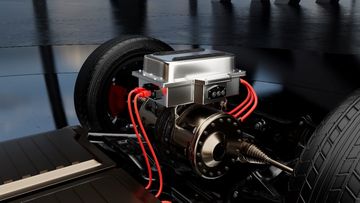
Texas Instruments가 HEV·EV 트랙션 인버터용 다축 코어리스 홀 효과 전류 센서 TMCS2100-Q1을 공개했다. 수평·수직 자기장을 동시에 측정하는 다축 센싱 기술로 기존 단일 축 센서 대비 최대 20배 높은 정확도를 달성하며, 버스바 무개조 설계로 기계 설계 유연성을 확보했다. 800V 아키텍처 확산에 따른 고정확도 요구 충족과 소형화를 동시에 구현한다.
2026.08.27by 배종인 기자











