


Back up important data to a physical storage device before going on vacation.
 Published2016.07.07 13:14
Acronis (Country Manager Ho-ik Seo, http://www.acronis.co.kr/) announced the '7 Commandments for Data Backup and Security for Vacation Season' to help office workers safely manage their data while away from their desks for extended periods during the summer vacation season.
Acronis, which has been providing secure data and system backup solutions for individuals and businesses, announced guidelines for secure data management for all PCs and laptops used for work, as well as all devices capable of accessing servers from outside the company, in time for the summer vacation season in July and August.

The '7 Commandments for Data Backup and Security for the Vacation Season' announced by Acronis are as follows.
1. Before leaving for vacation, back up important data to multiple physical storage devices.
Before leaving your desk, back up important documents stored on your PC to external storage devices in various locations, such as the PC itself or removable storage devices. Doing so ensures that your data remains safe even if the hard drive in use is damaged.
2. Use a cloud backup service to back up data from PCs, mobile devices, and other devices.
In addition to physical backups such as those to a PC or external hard drive, backing up device data to cloud storage via applications provides a double layer of data protection. Recently, telecommunications companies and portals have also been providing about 10 gigabytes of free cloud space as a basic standard, which is useful for backing up documents that are deemed suitable for cloud storage.
3. Always check the safety of a new program before installing it.
Before installing new programs, updates, or drivers, you must check their safety and complete a full backup to prevent data loss in advance. Doing so allows you to restore the system to its original state without data loss, even if problems arise due to unstable program operation.
4. Back up the entire system of the main computer and server, and automate backup tasks to perform them regularly.
There is no better countermeasure than 'system backup' for sudden system failures. If you rely solely on simple data backups, it may be difficult to fully restore your existing computing environment in the event of a malware infection, computer shutdown due to a physical disaster, or application damage. Therefore, if you back up the entire system once initially and then automatically configure incremental or differential backups to periodically back up only changes thereafter, you can conveniently save only updated content, resulting in faster backup speeds and saved disk space.
5. Utilize data management and security solutions that enhance access rights to corporate servers and data.
As smart work environments expand, there is a high demand for high-level IT infrastructure security and control solutions that enable secure data access. Employees can freely access corporate data via personal devices both inside and outside the office, while working in a safer environment by utilizing 'dual security solutions' that include monitoring and authentication functions. In addition, if you update antivirus software for work-critical PCs and devices to the latest version and conduct regular security scans, you can prevent recurring and foreseeable damage.
6. Check the technical support status of the security and backup solutions currently in use.
Even companies that have implemented security and backup solutions should continuously check for technical support, such as updates, bug fixes, and patches. In particular, it is crucial for corporate IT personnel to verify accurate information regarding solutions and technical support services during the holidays in advance, and to keep contingency plans in mind for any unforeseen incidents.
7. Thoroughly verify and plan the data recovery plan.
Even if data loss or system failure occurs, the system can be restored quickly if a disaster recovery solution is properly established. To this end, it is necessary to thoroughly check whether the existing backup products are functioning correctly and whether continuous updates and technical support are being provided.
Seo Ho-ik, CEO of Acronis Korea, stated, “Today, data exists everywhere, much like air. While digital devices can be replaced at any time with technological advancements, data cannot be replaced by anything. From the perspective of a data management solution provider, the holiday and vacation season is the time when corporate customers are most concerned about data protection.” He added, “To manage corporate data during the holidays, companies must actively protect their digital assets by establishing and executing thorough contingency plans and recovery plans in the event of an incident. Acronis will support corporate customers in 'preventing' the worst-case scenario of data loss in advance.”

관련뉴스
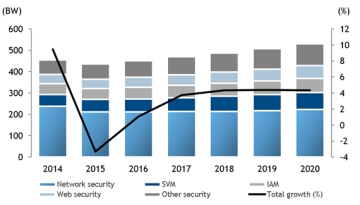
The domestic IT security market contracted by 4.1% last year compared to the previous year, but the future outlook is bright.
한국IDC(대표 홍유숙)가 최근 발간한 국내 IT 보안 제품 시장 전망 보고서에 따르면, 지난해 국내 IT 보안 제품 시장은 전년대비 4.1% 감소한 4,370억원으로 집계되었다. 방화벽, UTM 장비 등이 포함된 네트워크 보안 부문이 시장 포화에 따라 전년대비 약 10% 감소하며 전체 IT 보안 제품 시장의 하락을 주도한 것으로 분석된다. 국내 IT 보안 제품 시장은 향후 5년간 연평균(CAGR) 3.2% 성장해 오는 2019년 5천억원을 넘어서고, 2020년 5,300억원 규모에 이를 것으로 전망된다.
2016.04.07by 신윤오 기자
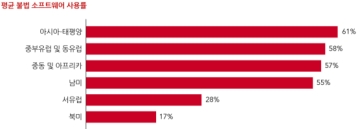
35% Illegal Software Usage Rate in Korea, High Cybersecurity Risks
소프트웨어 얼라이언스(BSA)는 불법 소프트웨어와 사이버 공격 간 높은 상관관계가 있음에도 불구, 한국 내 컴퓨터 사용자들의 불법 소프트웨어 사용률이 35%를 기록했다고 발표했다. 이 결과는 소프트웨어 얼라이언스가 최근 발간한 ‘BSA 글로벌 소프트웨어 조사 보고서: 라이센스 준수를 통한 기회의 포착(BSA Global Software Survey: Seizing Opportunity Through License Compliance)’을 통해 밝혀진 것으로, 2013년 실시한 동일 조사 대비 3 포인트 감소한 수치이나 여전히 국내 다수의 시스템이 사이버 공격에 노출되어 있음을 의미한다.
2016.05.25by 명세환 기자
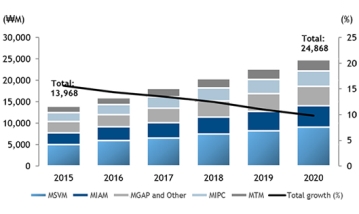
Mobile Security Industry Growth Outlook: Will Adoption of Cloud-Based EMM Solutions Increase?
한국IDC(대표 홍유숙)가 최근 발간한 ‘국내 기업용 모바일 보안 소프트웨어 전망 보고서 2016-2020에 따르면, 지난해 국내 기업용 모바일 보안 소프트웨어 시장은 약 140억원 규모로 추산된다. 또한 이 시장은 향후 5년간 연평균 12.2%로 성장해 오는 2020년 250억원 규모를 형성할 것으로 전망된다. 보고서는 스마트워크 환경이 보편화 됨에 따라 기업들이 보다 강력한 보안 정책을 바탕으로 전사적 모바일 업무 지원을 위한 다양한 모바일 보안 솔루션을 검토하게 될 것으로 내다봤다. PC, 스마트폰, 태블릿은 물론 최근 스마트워치와 같은 웨어러블 기기까지 연결되어 스마트 기기의 통제 범위가 넓어짐에 따라 관리해야 할 영역도 커지고 있는 상황인 만큼 전사적 차원의 디바이스 관리가 요구되는 상황이다. 이에 따라 클라우드 기반의 EMM 솔루션 도입과 적용에 대한 관심이 점차 늘어날 것으로 보인다.
2016.06.14by 김수지 기자
.jpg)
SalePoint Signs Multi-Year Partnership Agreement with AWS… Promoting Identity Security that Integrates Even AI Agents
세일포인트가 AWS와 다년간의 전략적 협력 계약을 체결하고, 인간과 비인간 아이덴티티를 함께 관리하는 통합 거버넌스 체계 구축에 나선다. AI 에이전트가 업무 수행 주체로 늘어나는 환경에서 접근 권한을 일관되게 관리하고, 최소 권한 원칙과 자동화된 정책 집행을 적용하겠다는 구상이다. 양사는 AWS 환경에서 AI 에이전트를 포함한 다양한 주체의 아이덴티티를 하나의 레이어에서 관리하는 기능을 공동 확대할 계획이다. 이번 협력은 AI 도입이 확대되는 기업 환경에서 보안과 거버넌스를 함께 설계하려는 움직임으로 해석된다.
2026.03.26by 배종인 기자
.png)
Databricks Unveils Open AI Security Monitoring 'Lakewatch'
데이터브릭스가 3월 24일 개방형 에이전틱 SIEM ‘레이크워치’를 공개하며 보안 시장에 진입했다. 이 제품은 보안, IT, 비즈니스 데이터를 단일 환경에서 통합 분석해 AI 기반 위협 탐지와 조사를 지원하는 것이 핵심이다. 회사는 고비용 구조 때문에 일부 데이터를 포기해온 기존 보안관제의 한계를 줄이고, 개방형 형식과 생태계를 바탕으로 대규모 데이터 분석과 자동화를 가능하게 한다고 설명했다. 레이크워치는 현재 프라이빗 프리뷰로 제공되며, 어도비와 드롭박스 등이 초기 고객으로 언급됐다. 데이터브릭스는 앤트로픽과 협력을 확대하고 안티매터, SiftD.ai 인수도 함께 발표했다.
2026.03.26by 배종인 기자











