


NI Launches 2nd Generation Vector Signal Transceiver with Significantly Improved Bandwidth and Size
 Published2016.07.15 08:20
Provides 5 times the bandwidth, 33% reduced space, and a user-programmable FPGA over existing VSTs
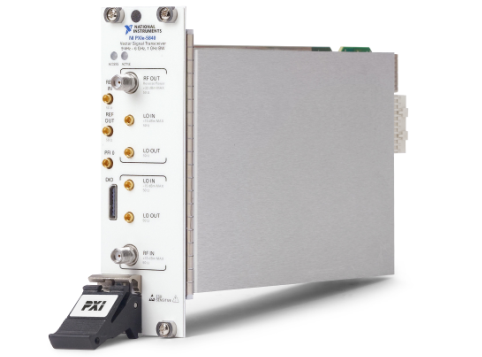
National Instruments (ni.com/korea, hereinafter NI) has released the second-generation Vector Signal Transceiver (VST).
The NI PXIe-5840 module is a VST with the world's largest bandwidth of 1 GHz, designed to solve demanding problems in RF design and test applications.
Olga Yashkov, Communications Test and Measurement Practice Manager at Frost & Sullivan, said, “NI launched the industry’s first VST with a programmable FPGA via LabVIEW in 2012, enabling accelerated design speed and reduced test costs. “The 2nd generation VST clearly demonstrates that NI is at the forefront of the rapidly changing wireless technology testing field, supporting engineers in various tasks using software-based instruments while being based on the industry’s most innovative RF test, measurement, and prototyping solutions,” he said.
Charles Schroeder, Vice President of Product Marketing for NI’s RF division, stated, “With the 2nd Generation VST, engineers can immediately solve RF test application challenges and customize functionality using software-based architectures and user-programmable FPGAs. Using intuitive LabVIEW system design software, VSTs can be precisely configured as needed at the firmware level, ultimately overcoming the challenges associated with the most demanding test and measurement processes. The 2nd Generation VST is an unrivaled product that provides the flexibility and RF performance required for conventional testing, as well as measurement and software-defined radio-based wireless communications.”
Niels Koch, Head of Radar Systems at Audi AG, said, “We were able to precisely detect the radar sensors in Audi vehicles through the software-based NI VST, which boasts maximum bandwidth and low latency, and identify problems from the early design stage. “We rapidly verified a wide range of scenarios for the safety and reliability of automobiles to enable autonomous driving capabilities using NI VST and LabVIEW-programmable FPGAs,” he said, sharing his thoughts.
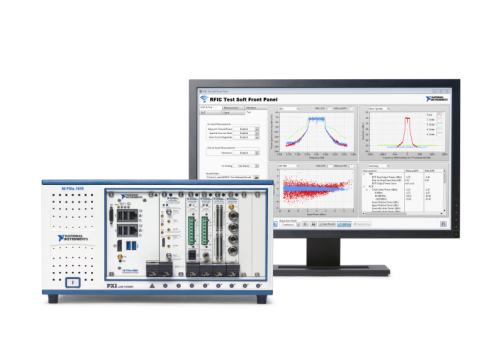
VST is an essential component of NI's platform and ecosystem, enabling engineers to build smarter test systems. NI test systems utilize PXI products ranging from DC to mmWave testing. Furthermore, high-throughput data movement is possible through PCI Express Gen 3 bus interfaces and sub-nanosecond synchronization with integrated timing and triggering.
VST users can not only utilize the LabVIEW and NI TestStand software environments but also build future-proof test systems by significantly reducing test costs, accelerating time-to-market, and meeting constantly changing requirements through a vast partner network and add-on IP.
관련뉴스

NI Korea Hosts Measurement and Control Symposium for R&D and Industrial Engineers
내쇼날인스트루먼트(ni.com/korea, 이하 NI)는 오는 6월 1일 서울 코엑스, 6월 16일 부산에서 ‘연구개발자와 산업엔지니어를 위한 측정제어 심포지움’을 개최한다고 밝혔다. 한국NI는 연구개발자와 산업엔지니어들이 실무에 필요한 내용을 기반으로 세션을 구성했다. 국내 산업이 생산을 강조하는 시대를 지나 효율을 강조하게 됨에 따라 산업현장의 가동시간을 줄이고 효율적인 장비운영을 위해 온라인 기반의 상태 모니터링 시스템을 도입하는 것이 현재의 트랜드이다. 이에 NI는 머신 상태 모니터링 세션을 마련하여 해외 및 국내에서 적용된 실제 사례를 통해 국내에 적용 가능한 구체적인 해결책을 공개할 예정이다.
2016.05.26by 명세환 기자
NI Announces Accurate, High-Performance Digital Multimeter
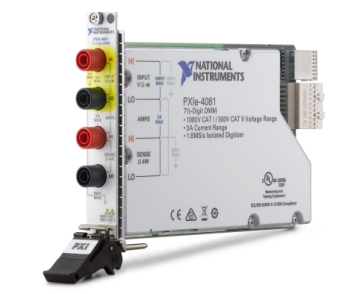
내쇼날인스트루먼트(ni.com/korea, 이하 NI)는 업계에서 가장 정확한 고성능 디지털 멀티미터(이하, DMM)인 7½ 분해능(digit)을 가진 NI PXIe-4081을 발표했다. NI PXIe-4081은 업계 최초의 PXI Express DMM으로 1.8MS/s 절연 디지타이저 역할도 수행한다. 엔지니어가 스마트한 테스트 시스템을 해야 하는 소비자 전자제품부터 항공우주 및 국방 솔루션까지 여기에 필요한 분해능(7½ digit)과 절연 성능(1.8 MS/s)을 충족시킨다.
2016.06.02by 명세환 기자
NI, 802.11ax 고효율 무선 표준 테스트 솔루션 출시
내쇼날인스트루먼트(ni.com/korea, 이하 NI)는 IEEE 802.11ax (draft 0.1) 고효율 무선 표준을 지원하는 소프트웨어인 NI WLAN Measurement Suite를 발표했다. WLAN Measurement Suite를 NI의 RF 벡터 신호 트랜시버(VST)에 연동하면 802.11 물리적 계층 사양의 변동에도 802.11ax 설계의 성능을 확실히 측정할 수 있다.
2016.06.27by 명세환 기자
Intel Unveils Next-Generation 'Core Ultra Series 3' and vPro Platform for Enterprise PCs
Intel has officially unveiled the "Intel Core Ultra Series 3" for next-generation enterprise PCs and the latest vPro platform, addressing a wide range of demands from enterprise notebooks to high-performance workstations.
2026.03.26by 배종인 기자
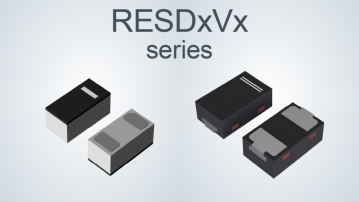
ROHM Launches ESD Protection Diode Compatible with High-Speed Interfaces of 10Gbps or Higher
반도체 전문 기업 로옴(ROHM)이 10Gbps를 넘어서는 차세대 고속 데이터 통신 환경에 대응할 수 있는 ESD(정전기 방전) 보호 다이오드 ‘RESDxVx 시리즈’를 개발하며, 고속 인터페이스에서 요구되는 신호 품질 유지와 IC 보호 성능을 동시에 끌어올렸다.
2026.03.26by 배종인 기자











