



Extended battery life for wireless sensors and implantable medical devices with ultra-low voltage performance
 Published2011.10.12 09:32
Korea, October 11, 2011 – STMicroelectronics ( www.st.com ), a world-leading integrated semiconductor company, and MIT's Microsystems Technology Laboratory (MTL) announced the results of an advanced R&D project on low-power microprocessor technology at this year's European Solid-State Circuits (ESSC) conference held in Helsinki, Finland. This voltage-scalable 32-bit microprocessor system-on-chip (SoC) combines exceptional performance with outstanding energy efficiency, making it suitable for applications in the medical, wireless sensor network, and mobile sectors where power budgets are limited and processing loads fluctuate over time.
Alessandro Cremonesi, Vice President of Strategy and Systems Technology Group and General Manager of Advanced Systems Technology at STMicroelectronics, said, “By utilizing this innovative technology, we have been able to develop a whole new level of microprocessors for applications where minimizing power consumption and extending battery life are essential, such as wireless sensors and implantable medical devices. Through the collaboration between ST and MIT, we have been able to open new horizons for ultra-low power technology.”
Anantha Chandrakasan, Chair of the EECS (Electronic, Electrical and Computer Engineering) Department at MIT, said, “We are pleased to develop an ultra-low-power microprocessor SoC in collaboration with STMicroelectronics. MIT researchers and STMicroelectronics engineers collaborated to develop and implement various architectures and circuit techniques to reduce power consumption.” “This energy-efficient processor will enable interesting sensor network applications, such as implantable biomedical systems,” he said.
The ST-MIT joint microprocessor SoC, utilizing ST's 65nm CMOS process technology, reduces power consumption to 10.2 pJ/cycle at 0.54V and uses SRAM memory cells operating at a 0.4V array voltage. Additionally, it further reduces memory access power consumption by using a small latch-based instruction and data cache at the first layer level. Furthermore, by integrating peripherals such as on-chip ultra-low power clock generation and analog-to-digital conversion, timers capable of operating with minimum voltage power supplies, and serial interfaces, this SoC can be implemented as a miniaturized and comprehensive system.
ST is a member of the Microsystems Industrial Group (MIG) under MIT's Microsystems Technology Laboratories (MTL). MIG is an industrial consortium that supports MTL's infrastructure and provides guidance regarding the institute's research and educational goals in consultation with the faculty. ST has collaborated with leading educational and research institutions around the world for many years, enabling the combination of its accumulated industrial experience and knowledge with the research capabilities and rich talent pools of these institutions.

관련뉴스
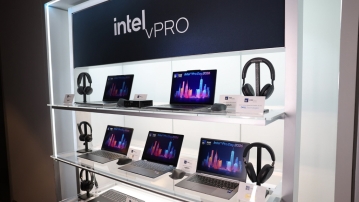
Intel Unveils Next-Generation 'Core Ultra Series 3' and vPro Platform for Enterprise PCs
인텔이 차세대 기업용 PC를 위한 ‘인텔 코어 Ultra 시리즈 3’와 최신 vPro 플랫폼을 공식 발표하며, 기업용 노트북부터 고성능 워크스테이션까지 폭넓은 수요 충족에 나섰다.
2026.03.26by 배종인 기자
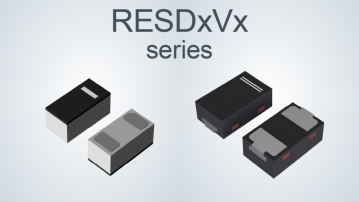
ROHM Launches ESD Protection Diode Compatible with High-Speed Interfaces of 10Gbps or Higher
반도체 전문 기업 로옴(ROHM)이 10Gbps를 넘어서는 차세대 고속 데이터 통신 환경에 대응할 수 있는 ESD(정전기 방전) 보호 다이오드 ‘RESDxVx 시리즈’를 개발하며, 고속 인터페이스에서 요구되는 신호 품질 유지와 IC 보호 성능을 동시에 끌어올렸다.
2026.03.26by 배종인 기자
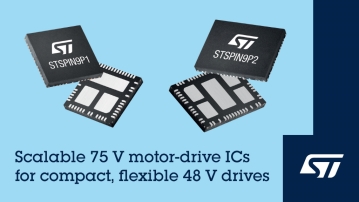
ST Launches 75V Drive IC Targeting 48V Industrial Motor Driving
ST마이크로일렉트로닉스가 48V급 산업용 구동 시스템 설계에 맞춘 75V 모터 드라이브 IC ‘STSPIN9P’ 시리즈를 공개했다. 새 제품군은 하프 브리지와 풀 브리지 구조로 구성돼 모터 종류와 출력 조건에 따라 설계를 확장할 수 있도록 한 것이 특징이다. 전원 회로와 보호 기능, 전류 감지 회로를 칩에 통합해 시스템 구성을 단순화했으며, 최대 500W급 애플리케이션까지 대응하도록 설계됐다. 회사는 레퍼런스 디자인과 데모 보드도 함께 제공해 산업 자동화, 로보틱스, 펌프, 팬, 조명, 섬유 기계 등에서 개발과 평가를 지원할 계획이다.
2026.03.26by 배종인 기자
Nordic supports security updates for the entire lifecycle of IoT devices at a single fixed cost
Nordic Semiconductor, a global leader in low-power wireless connectivity solutions, has unveiled a single fixed-cost licensing model that delivers FOTA (Firmware Over-the-Air) and device management capabilities throughout the device lifecycle via nRF Cloud, and introduced a new firmware update solution to prepare for the enforcement of the European Union's Cyber Resilience Act (CRA).
2026.03.26by 배종인 기자
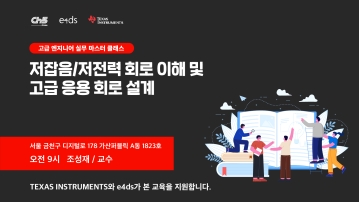
Practical Training in Low-Noise, Low-Power Circuit Design All in One Place… Training Fee Support
고감도 아날로그 회로와 센서 기반 시스템 설계 역량을 강화할 수 있는 ‘2026 고급 엔지니어 실무 마스터 클래스’가 오는 4월16일 서울 가산동 e4ds 컨퍼런스 센터에서 열린다. 이번 과정은 온라인이 아닌 오프라인 유료 실습 교육으로 진행되며, 현장 중심의 심화 학습을 원하는 엔지니어를 대상으로 한다. 이번 교육은 텍사스 인스트루먼트(Texas Instruments)가 교육비를 지원해 정가 25만원에서 10만원 할인 된 15만원에 참가할 수 있다.
2026.03.26by 배종인 기자











