


Freescale Announces Accelerometer Providing Optimal Resolution and Battery Life for Consumer Electronics
 Published2010.10.18 10:10
A family of MEMS-based motion sensing accelerometers combining low power, operational precision, and ultra-low noise suitable for portable electronic devices
According to market research firm iSuppli Corp, the global MEMS market is expected to grow by 11% in 2010, driven by strong sales of mobile phones, game controllers, and digital cameras. Most of these devices are equipped with motion-sensing features capable of image stabilization (IS), tap control, anti-theft, and orientation detection. Furthermore, as market demand for next-generation applications such as intuitive user interfaces and location-based services continues to rise, improvements in precision and battery life are essential.
In response to these demands, Freescale Semiconductor today announced an advanced family of 3-axis accelerometers designed for smart mobile devices that offers enhanced battery life while delivering industry-leading resolution, low noise, and performance suitable for embedded devices. The MMA845xQ family enables system designers to easily integrate advanced real-time applications, such as pedometers and games, as well as standard functions like orientation sensing, into their products. Furthermore, the latest Freescale accelerometers extend the battery life of smart mobile devices such as smartphones, navigation systems, MP3 players, e-readers, and netbooks.
"In addition to the recently announced Xtrinsic sensor family, Freescale has designed the MMA845xQ family, which offers outstanding motion, shock, tilt, and vibration sensing capabilities along with remarkably active power efficiency," said Demetre Kondylis, Senior Vice President and General Manager of Freescale's Sensors and Actuators business unit. "Freescale customers can now have a comprehensive motion sensing portfolio that is not only pin-compatible but also provides them with an ideal combination of performance, portability, and battery life."
The MMA845xQ accelerometer family, part of Freescale's Xtrinsic sensor solution line, is a new dimension of intelligent sensor utilizing embedded algorithms and computations across three advanced accelerometers. Together with a host processor, the embedded accelerometers assist in decision-making regarding contextual environmental sensing and support the ability to record high-precision motion for a wide range of consumer electronics devices, from smartphones and tablets to e-readers and remote controls.
This accelerometer is ideal for battery applications with low current consumption of 1.8 microamperes (μA) in standby mode and as low as 6μA in operating mode. This Freescale product features four power modes ranging from high resolution to low power, providing both best-in-class supply current savings and ultra-high resolution capable of detecting even very fine movements.
The MMA845xQ accelerometer includes a wide range of real-time functions such as directional shaking and orientation detection, tapping, impact, and drop detection. This device is a highly versatile product that supports basic applications requiring basic gestures such as lasso and flick, intermediate applications such as position and 3D gesture detection, and advanced applications such as dead reckoning or precise tilt detection.
Freescale has expanded the MMA845xQ family by announcing the 14-bit MMA8451Q and 12-bit MMA8452Q products today, in addition to the previously announced MMA8450Q. These devices feature compatible pin layouts, including register map arrangements between the accelerometers, maximizing hardware and software reusability between 12-bit and 14-bit designs, minimizing migration costs, and shortening time-to-market. The MMA845xQ accelerometers provide wide bandwidth and user-configurable sample rates ranging from 1.5 to 800 Hz to support a variety of applications, and operate within an I/O interface voltage range of 1.62V to 3.6V.
The MMA8451Q accelerometer integrates an on-chip FIFO (first-in/first-out) memory buffer capable of storing up to 32 sets of X, Y, and Z data samples. This reduces the functional load on the host processor, thereby improving overall system power efficiency and response times. Using the FIFO buffer in conjunction with other embedded functions allows the host processor to analyze only the necessary data while preventing potential data loss when multiplexing other sensors on the same IIC bus. The combination of the host processor and the FIFO function enables current consumption reductions ranging from 78% to over 96%, depending on the microcontroller's state and the selected output data rate.
Feature Summary
• 14-bit and 12-bit digital output
• Resolution: (14-bit) - 0.25 mg. (12-bit) - 1mg
• Low noise: 99 microg per root-Hz (independent of resolution)
• Low power mode: 6 μA
• I/O interface supply voltage: 1.62 ~ 3.6V
• ball

관련뉴스
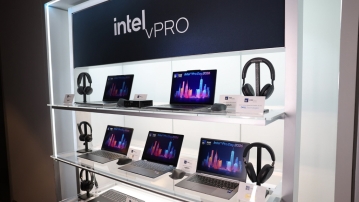
Intel Unveils Next-Generation 'Core Ultra Series 3' and vPro Platform for Enterprise PCs
인텔이 차세대 기업용 PC를 위한 ‘인텔 코어 Ultra 시리즈 3’와 최신 vPro 플랫폼을 공식 발표하며, 기업용 노트북부터 고성능 워크스테이션까지 폭넓은 수요 충족에 나섰다.
2026.03.26by 배종인 기자
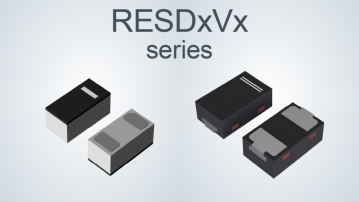
ROHM Launches ESD Protection Diode Compatible with High-Speed Interfaces of 10Gbps or Higher
반도체 전문 기업 로옴(ROHM)이 10Gbps를 넘어서는 차세대 고속 데이터 통신 환경에 대응할 수 있는 ESD(정전기 방전) 보호 다이오드 ‘RESDxVx 시리즈’를 개발하며, 고속 인터페이스에서 요구되는 신호 품질 유지와 IC 보호 성능을 동시에 끌어올렸다.
2026.03.26by 배종인 기자
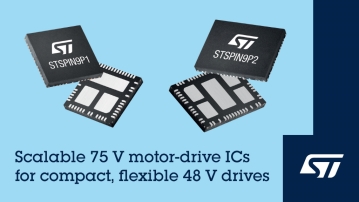
ST Launches 75V Drive IC Targeting 48V Industrial Motor Driving
ST마이크로일렉트로닉스가 48V급 산업용 구동 시스템 설계에 맞춘 75V 모터 드라이브 IC ‘STSPIN9P’ 시리즈를 공개했다. 새 제품군은 하프 브리지와 풀 브리지 구조로 구성돼 모터 종류와 출력 조건에 따라 설계를 확장할 수 있도록 한 것이 특징이다. 전원 회로와 보호 기능, 전류 감지 회로를 칩에 통합해 시스템 구성을 단순화했으며, 최대 500W급 애플리케이션까지 대응하도록 설계됐다. 회사는 레퍼런스 디자인과 데모 보드도 함께 제공해 산업 자동화, 로보틱스, 펌프, 팬, 조명, 섬유 기계 등에서 개발과 평가를 지원할 계획이다.
2026.03.26by 배종인 기자

Nordic supports security updates for the entire lifecycle of IoT devices at a single fixed cost
Nordic Semiconductor, a global leader in low-power wireless connectivity solutions, has unveiled a single fixed-cost licensing model that delivers FOTA (Firmware Over-the-Air) and device management capabilities throughout the device lifecycle via nRF Cloud, and introduced a new firmware update solution to prepare for the enforcement of the European Union's Cyber Resilience Act (CRA).
2026.03.26by 배종인 기자

Practical Training in Low-Noise, Low-Power Circuit Design All in One Place… Training Fee Support
고감도 아날로그 회로와 센서 기반 시스템 설계 역량을 강화할 수 있는 ‘2026 고급 엔지니어 실무 마스터 클래스’가 오는 4월16일 서울 가산동 e4ds 컨퍼런스 센터에서 열린다. 이번 과정은 온라인이 아닌 오프라인 유료 실습 교육으로 진행되며, 현장 중심의 심화 학습을 원하는 엔지니어를 대상으로 한다. 이번 교육은 텍사스 인스트루먼트(Texas Instruments)가 교육비를 지원해 정가 25만원에서 10만원 할인 된 15만원에 참가할 수 있다.
2026.03.26by 배종인 기자











