

.png)

SK Telecom First Application of Base Station Equipment Implemented with General-Purpose Servers and Software in 'Commercial Network'
 Published2016.09.12 09:57
Development of core application technologies such as automatic recovery in the event of base station failures and function splitting technology
Base station equipment that exchanges wireless signals with mobile phones has been implemented using general-purpose servers and software and applied to a commercial network for the first time.
SK Telecom (CEO and President Jang Dong-hyun, www.sktelecom.com) announced that it has successfully tested the application of a cloud-based next-generation virtualized base station (SDRAN, Software-Defined RAN) to an actual LTE commercial network at the SK Telecom R&D Center in Bundang, together with global telecommunications equipment manufacturer Nokia (CEO Rajeev Suri).
This virtualized base station implements the functions of existing mobile communication base stations into a virtualized cloud using general-purpose IT servers, and is a new concept of virtualized base station that innovates the base station structure so that the RRU (Remote Radio Unit)* performs some of the functions handled by the existing base station DU (Digital Unit)*.
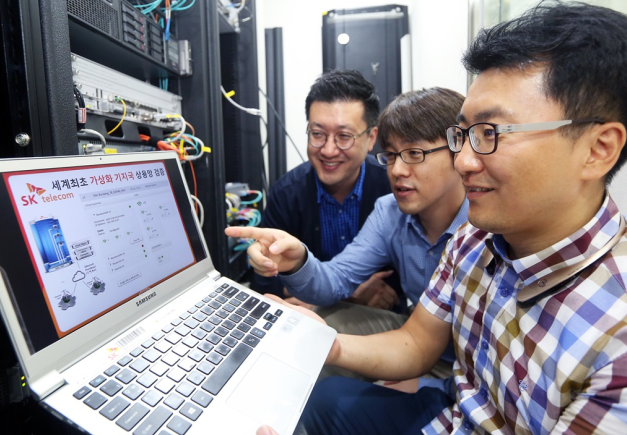
In particular, with the success of this base station virtualization, SK Telecom has succeeded in virtualizing the entire LTE network, from the core network which is the center of the existing network to the base station which is the final end point, and is evaluated to have completed the foundational technology for the innovation of the communication network structure to 5G.
This virtualized base station is designed so that the RRU, which processes wireless transmission and reception signals, performs some of the functions handled by the DU, which processes digital signals, thereby drastically reducing data volume and enabling long-distance transmission.
In addition, the base station can independently detect system abnormalities, automatically restore it in the event of a failure, and adjust base station capacity according to the number of subscribers connected to the base station and the traffic load.
While existing dedicated communication equipment consisted of proprietary hardware different from each manufacturer, making compatibility difficult and reducing efficiency in network operations, virtualized base stations are evaluated to have lowered communication infrastructure costs and improved communication quality and network stability by adopting general-purpose IT servers.
Since demonstrating the world's first virtualized base station in 2013, SK Telecom has continued to collaborate with Nokia to develop a new type of base station equipment by combining telecommunications infrastructure and IT technology. It has now successfully conducted the world's first commercial network verification for commercial subscribers and plans to expand commercial network verification to other regions within the year.
"By verifying Nokia's AirScale cloud RAN technology on a commercial network together with SK Telecom, we have set an important milestone in the evolution of next-generation networks," said Frank Weyerich, General Manager of Wireless Network Products at Nokia. "We intend to lead the construction of future cloud-based wireless networks, including 5G, together with SK Telecom."
Park Jin-hyo, Head of Network Technology at SK Telecom, stated, “This commercial SDRAN verification is a groundbreaking example of demonstrating core 5G technologies on an LTE network,” adding, “SK Telecom will continue to lead the innovation of next-generation network architecture by consistently developing innovative technologies, such as virtualized base stations, together with various business partners possessing excellent capabilities.”
관련뉴스
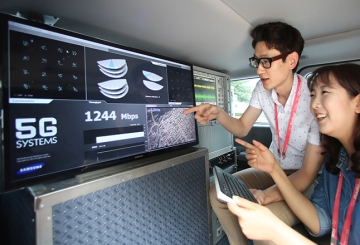
Samsung Electronics Develops Antennas and Power Amplifiers for 5G Base Stations and Terminals
삼성전자가 5G 기지국과 단말기를 소형화하기 위한 무선 통신 기술을 개발했다고 29일 발표했다. 삼성전자는 기기의 케이스에 안테나의 일부 기능을 증착하는 기술을 적용해 두께 1mm 이하의 크기의 5G용 소형 안테나를 개발했다. 또한 무선 신호를 증폭시키는 파워엠프(Power Amplifier, PA)를 효율적으로 설계해 기존 초고주파수 제품 대비 출력 전력을2배 이상 개선하고, 전력 효율을 50%이상 향상시켰다. 5G 시연에 사용해왔던 기존 기지국과 단말기는 다소 큰 크기로 인해 상용화하기에 무리가 있었으나 이번 기술로 인해 제품 소형화가 가능해질 전망이다.
2016.07.01by 명세환 기자
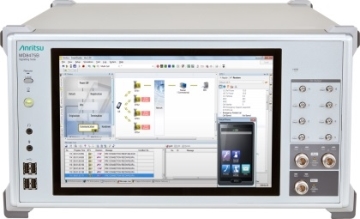
안리쓰, 올인원 기지국 시뮬레이터 MD8475B 출시
안리쓰는 최신 LTE-Advanced 사양을 포함한 다양한 통신 표준을 지원하는 UE의 성능 평가를 위해 R&D 부문에서 사용할 새로운 신호 테스터 MD8475B를 출시한다고 발표했다. 새로 개발된 올인원 MD8475B 테스터는 스마트폰을 개발하고 4 Component Carrier Aggregation(4 CC CA) 및 2x2 MIMO 기술이 내장된 최신 UE의 성능 테스트와 IP 레이어 throughput테스트를 수행하는 R&D 부문을 위해 설계되었다. MD8475B는 사용이 편리한 GUI와 안정적인 자동 측정 환경이 제공되는 SmartStudio state-machine 소프트웨어를 사용하기 때문에 별도의 테스트 시나리오가 필요 없다.
2016.07.01by 명세환 기자
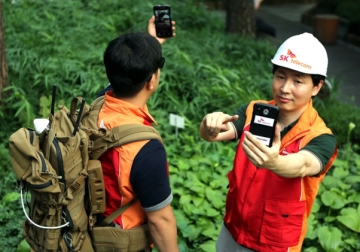
SK Telecom Develops 'Backpack-Type LTE Equipment' Unaffected by Base Station Damage
강원도 정선 산간 지방 폭우로 대규모 산사태가 발생해 통신망이 두절됐다. 이로 인해 국민안전처 상황실에서는 민간인 구조 접수가 제대로 이뤄지지 않아 피해 상황 파악에 어려움을 겪었다. 현장에 도착한 소방?경찰 인력들이 배낭형 LTE장비를 매고 산 중간 재난현장에 도착해 전원을 켜자 통신시설이 복구됐다. 조난자들의 신고 접수가 원활히 이뤄지기 시작했으며, 소방?경찰 인력은 실시간 공유 기술이 탑재된 전용 단말로 구조에 돌입했다. 중앙 상황실에서는 현장에서 실시간으로 보내오는 영상과 사진을 공유 받았으며, 현장 인력들에게 신속한 구조 지시를 내릴 수 있었다.
2016.08.04by 신윤오 기자
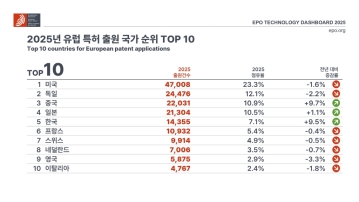
European Patent Applications Surpass 200,000 for the First Time… South Korea Maintains 5th Place, Led by Batteries and Telecommunications
According to the European Patent Office (EPO)'s 'Technology Dashboard 2025', European patent applications last year reached 201,974, surpassing 200,000 for the first time. Korean companies and inventors filed 14,355 applications, representing a 9.5% increase from the previous year and maintaining 5th place by country. Battery, digital communication, and semiconductor technologies led the growth, with Samsung ranking as the top EPO applicant for the second consecutive year and LG reaching 3rd place. The presence of major domestic cities such as Seoul, Suwon, and Yongin was also confirmed. It was also revealed that Korea's European patent strategy is expanding beyond individual technologies to span the entire industry.
2026.03.24by 명세환 기자
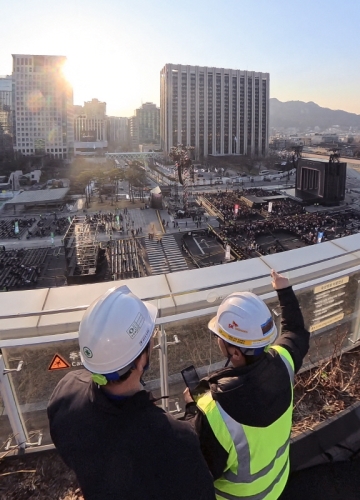
SK Telecom First Applies AI-Based Network Operations at Gwanghwamun K-Pop Concert
SK텔레콤이 3월 21일 서울 광화문 일대에서 열린 대형 K-팝 공연에 AI 기반 네트워크 운영 시스템을 처음 적용해 통신 품질을 관리했다고 밝혔다. 공연 전후 3시간 동안 모바일 데이터 사용량은 12.15TB로 직전 주말 같은 시간대보다 약 2배 늘었다. SK텔레콤은 AI 시스템 ‘A-One’을 활용해 5분 단위, 50m 단위로 트래픽을 감시하며 과부하 가능성에 대응했고, 임시 통신 시설과 현장 인력 운영도 병행했다. 밀집 행사와 외국인 이용 수요가 동시에 늘어나는 환경에서 AI 기반 자율 네트워크 운영의 현장 적용 가능성을 확인한 사례로 해석된다.
2026.03.23by 명세환 기자











