



[Reporter's Notebook] The Tipping Point, the Big Bang Disruption, and the Fourth Industrial Revolution
 Published2016.09.20 11:44
Following the First Industrial Revolution of production and transportation machinery, the Second Industrial Revolution of mass production of electricity, and the Third Industrial Revolution of electronics, communications, and computers, humans are now facing the Fourth Industrial Revolution of software and artificial intelligence.
So, when and how will the Fourth Industrial Revolution arrive? I would like to explain the changes brought about by the Fourth Industrial Revolution using the terms "tipping point" and "Bigbang Disruption."
A dramatic moment of sudden change, the tipping point
First, there is the concept of a tipping point. It refers to a dramatic moment when a situation, which has been progressing insignificantly, suddenly breaks the balance and everything changes in an instant. In other words, a tipping point is the dramatic moment when an unpopular event becomes a catalyst for explosive popularity.
According to Klaus Schwab’s *The Fourth Industrial Revolution*, we can predict the tipping points of key technologies that have recently emerged. For the Internet of Things (IoT), which has been a hot topic in recent years, the point in 2022 when one trillion sensors are connected to the internet can be considered the tipping point. For example, the UK NHS is collaborating with HP to develop wearable sensors and IoT devices, and is conducting a digital diabetes coach testbed project. The UK NHS is also carrying out a pilot project to install IoT devices in the homes of dementia patients for monitoring.
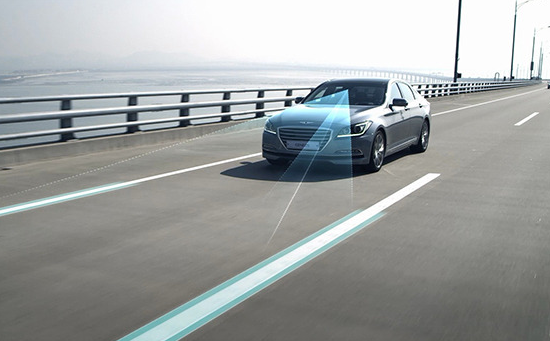
Innovations that create new markets and break the existing order, such as autonomous vehicles and fintech, are called Big Bang Disruption. Please refer to the Hyundai Motor Company blog image for the photo.
The tipping point for wearable technology is also set for 2022, when 10% of the world's population uses wearable devices. In the fashion industry, the applications of wearable devices are expanding as various global companies are currently developing or launching smart clothing that measures heart rate, respiration, electromyography, and more.
With the commercialization of the first implantable mobile phone in 2023, the tipping point for implantation technology is fast approaching. In the case of implantable contraceptives, projects are underway for devices operated by external remote control, and capsule-type obesity monitoring devices are also being developed to monitor fat levels in obese patients and generate substances that induce a sensation of fullness. It appears that a tipping point for new visual interfaces will occur in 2023 as 10% of eyeglasses become connected to the internet. Using the well-known Google Glass, it will become easier to instantly check patient information during surgery.
What will happen in 2023 when 90% of the world's people use smartphones? When the era of carrying a small supercomputer in your pocket arrives, it seems likely that healthcare call centers, free emergency phone services, emergency situations, and mobile telemedicine will become much more commonplace. By 2024, the tipping point for the connected home will be reached as household devices account for more than 50% of in-home internet traffic. This will make in-home monitoring of dementia patients easier.
The tipping point for artificial intelligence and decision-making is predicted to be 2026. At this time, AI will join corporate boards and make decisions on critical corporate matters. Cancer treatment plans will be established using IBM Watson, and cancer diagnosis will also become possible. If robotic pharmacists appear in the U.S. in 2021, it seems likely to mark a new turning point for service robots. Various robots used in pharmaceuticals have been developed and released, and in Japan, robots for elderly care are also being developed.
The tipping point for 3D printing will be reached in 2024, when a 3D-printed liver is transplanted. By then, it appears that various 3D printing technologies will be utilized for purposes such as replacing human bone tissue and performing simulated surgeries.
Big Bang Disruption, where collapse and creation occur simultaneously
Now, let's look at Big Bang Disruption. Big Bang Disruption refers to innovation that goes beyond merely improving existing products or services to creating new markets, such as autonomous vehicles and fintech, and breaking the existing order. It is said to have been coined by American management expert Larry Downes, and the theory posits that when Big Bang Disruption occurs, collapse and creation take place simultaneously, significantly shortening the lifespan of companies and products, while rapid adaptation and innovation have a major impact on a company's survival and growth.
For example, the "Big Bang Disruption" of wearables corresponds to the mid-growth phase of the growth curve in 2016, and it is projected to enter the maturity phase by 2023. This coincides with the tipping point of wearables. The "Big Bang Disruption" of smart cities is expected to enter the maturity phase in 2016, while smart homes are projected to reach maturity in 2020. Furthermore, the Internet of Things (IoT) will not enter maturity until 2028, and the expected maturity date for the cloud is 2021.
As such, events unfolding over the next 10 or 20 years will bring significant changes to our daily lives. Accordingly, this is a time when a shift in our attitude is urgently needed as we face the era of the Fourth Industrial Revolution. This means that quick judgment is required regarding where our industries should focus and how to do so. We must prepare for future technologies by focusing on securing patents in application fields centered on foundational technologies and infrastructure where Korea has a competitive edge, rather than on source technologies; furthermore, there must be a clear division of roles where large corporations lead infrastructure and application fields, while small and medium-sized enterprises lead sensors, devices, and application fields.
Of course, the tipping point and the Big Bang disruption are merely predictions and forecasts. For some sectors, they may arrive earlier than predicted, while for others, they may arrive later. After all, no one knows the future. In this regard, we must not forget that even in an era of transformation that arrives 'suddenly' and 'in an instant,' we can realize results and reap rewards to the extent that we are prepared.
관련뉴스
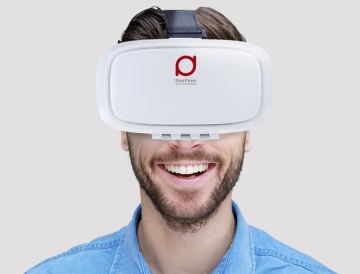
China's VR Market Is Growing Fast, VR Devices Expected to Grow 476% This Year
IT 시장 분석 및 컨설팅 기관인 IDC(www.idc.com)의 전망에 따르면, 2016년 중국 VR(Virtual Reality: 가상현실) 디바이스 시장이 DeePoon, ANTVR, 3Glasses 등 중국 VR 업체의 성장에 힘입어 출하량이 전년대비 476% 증가한 48만대에 이를 것으로 예측된다. 현재 이들 VR 기업들은 하드웨어 및 장비에서 부터 소프트웨어 에코시스템을 아우르는 장기 플랜을 공표하고 있다. 뿐만 아니라, Oculus, HTC, Sony와 같은 주요 글로벌 VR 업체들도 2016년 부터 제품 출시를 시작한다고 발표했다.
2016.02.25by 신윤오 기자

[Survey Results Announcement] Smart Cars Take Second Place in the IoT Field with the Brightest Prospects. So What's First?
E4ds News conducted a survey on 'IoT Business Status' targeting 120 participants who attended the online live broadcast 'IoT Business Talk with Director Kim Hak-yong,' held on February 25th. When asked what product currently on the market best implements IoT technology among Internet of Things devices, 27.9% of respondents answered smartband, followed by smartwatch (20.2%), smart boiler (9.5%), remote power control device (9.5%), smart lighting (8.7%), drone (7.7%), smart glasses (4.8%), and facial recognition camera (4.8%).
2016.03.21by 신윤오 기자
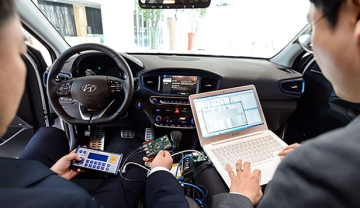
Self-driving car patent applications are booming domestically, while overseas applications are plummeting.
According to the Korea Institute for Intellectual Property Strategy (KISTA), the leading autonomous vehicle countries—Japan, the United States, and Germany—hold an average of 41.8% of major market share, while Korea achieved only 7.9%. This is analyzed as being due to insufficient technology acquisition targeting overseas markets, given that Korea's autonomous vehicle development stage is still in its early phases. Overall patent applications related to autonomous vehicles have surged since 2002 as autonomous vehicle concept cars and R&D development plans have increased. Patent applications are primarily concentrated in the United States and Japan, with Japan focused mainly on a small number of completed vehicle manufacturers, while the United States showed diverse applicants including numerous component suppliers, internet companies, and completed vehicle manufacturers.
2016.09.05by 신윤오 기자

A single misaligned light means 'defect'… Vehicle interior lighting now guarded by semiconductors and software
자동차 실내조명이 '보조 조명'의 자리를 벗어나고 있다. 색상과 애니메이션으로 브랜드 아이덴티티를 드러내고 운전자 취향을 담아내는 사용자 경험(UX)의 핵심 요소로 올라서면서, LED 실내 앰비언트 시장도 빠르게 커지는 중이다. 이에 관하여 '미래 자동차를 밝히는 지능형 LED 실내 조명 솔루션' 이라는 내용으로 기술 웨비나 세션을 발표하는 최영재 다보코퍼레이션 연구위원을 앞서 만나, 시장의 온도와 설계 요구의 변화를 들었다.
2026.08.28by 명세환 기자
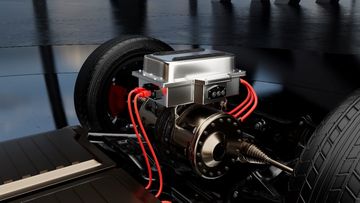
TI, HEV·EV 트랙션 인버터용 다축 코어리스 전류 센서 TMCS2100-Q1 공개
Texas Instruments가 HEV·EV 트랙션 인버터용 다축 코어리스 홀 효과 전류 센서 TMCS2100-Q1을 공개했다. 수평·수직 자기장을 동시에 측정하는 다축 센싱 기술로 기존 단일 축 센서 대비 최대 20배 높은 정확도를 달성하며, 버스바 무개조 설계로 기계 설계 유연성을 확보했다. 800V 아키텍처 확산에 따른 고정확도 요구 충족과 소형화를 동시에 구현한다.
2026.08.27by 배종인 기자











