



New VLT Technology to Change DRAM Market Landscape, Mass Production 'Uncertain'
 Published2016.10.11 19:09
Unlike capacitor-based DRAM technology, it does not require refresh, so power consumption is also improved.
Was it because there wasn't enough time to demonstrate, considering they claimed to be a 'game changer' in the DRAM market?
Kilopass Technology, Inc., which claims to be a leader in the OTP memory market, took the time to introduce its VLT (Vertical Layered Thyristor) technology, stating that it is a technology that will change the landscape of the DRAM market in the future.
Kilopass's VLT technology is based on thyristor technology, a complex structure electrically equivalent to the cross-coupled pairs of bipolar transistors that form a latch. This structure is suitable for memory applications because it stores values, and unlike current capacitor-based DRAM technology, it is characterized by not requiring a refresh. Since thyristors were first developed in the 1950s, there have been several attempts to utilize them in the SRAM market, but none have been successful.

▲ Kilopass CEO Charlie Cheng
In other words, this means that the company has succeeded in applying thyristor technology, which eliminates the need for capacitors, to a standard DRAM structure that uses capacitors and transistors. VLT explained that it realized a DRAM bit cell based on vertically implementing a thyristor structure as an auxiliary device for a 4.5F2 high-density cell structure.
Then, what kind of changes does applying VLT technology bring to DRAM?
First, it was stated that new materials and physics are not required. It was also explained that the advantage is that data such as yield can be identified 15 months before mass production using a simulator that is 1,000 times faster. Since more than 30 test programs are conducted and various voltage ranges are supported, there is no need to add anything entirely new. This implies a 45% reduction in costs and ultimately leads to the ability to apply a safe process.
In particular, VLT added that it can scale directly down to 7nm because it has eliminated complex capacitors. This is particularly noteworthy because while logic foundry companies producing processors, SoCs, and NAND flash memory products are already ahead at process nodes below 10nm, capacitor-based DRAM technology is lagging behind by as much as two generations.
In addition, the absence of capacitors eliminates the need for complex and power-consuming refresh operations. According to data from the manufacturer, VLT-based DDR4 DRAM can reduce standby power consumption by 10 times to 50 fA/bit and increase performance by up to 15%.
The company stated that VLT bitcell operation and silicon measurements were completed in 2015, and the memory macro test chip is currently in the early stages of testing. The full macro-level test chip was tape-out completed in May, and the first chip (silicon) test is currently underway.
"In licensing discussions with major DRAM manufacturers"
Charlie Cheng, CEO of Kilopass, who visited Korea, said, “Kilopass is currently actively discussing business partnerships and licensing with major DRAM manufacturers,” adding that he could not disclose further details due to ongoing discussions with clients.
When asked about his ambition to prioritize the PC and server markets and his view on the stagnating DRAM market, he responded optimistically, “It is true that DRAM in the PC market is stagnating, and I am aware that NAND flash is expanding in the server market. However, as the social media and cloud markets grow, the unique advantages of DRAM will continue.”
At the meeting that day, Kilopass began by stating that innovation usually originates from startups, citing examples such as Qualcomm, SanDisk, and Atheros, which competed against established powerhouses with innovative technology. The implication was that they, too, would change the landscape of the market like those companies; however, the meeting left much to be desired in terms of an explanation regarding their 'strategy,' which was just as innovative as their 'technology,' specifically what they planned to do and how they intended to change the landscape of DRAM.
관련뉴스
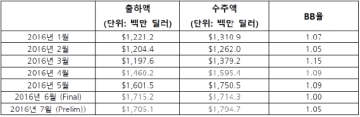
Semiconductor equipment shipments increased due to China's purchase of 3D NAND manufacturing equipment.
According to the July BB ratio report released by SEMI (Semiconductor Equipment and Materials International), North American semiconductor equipment manufacturers' three-month average bookings for July 2016 totaled $1.79 billion, with a BB ratio of 1.05. The BB ratio is calculated by dividing bookings by billings, and a BB ratio of 1.00 means bookings of $105 per $100 of billings. July front-end equipment bookings reached $1.59 billion, up from the previous month's bookings of $1.49 billion, and up 12.3% compared to July 2015. July front-end equipment billings were $1.44 billion, resulting in a front-end equipment BB ratio of 1.10. June front-end equipment billings were $1.47 billion, and July 2015 billings were $1.34 billion. The front-end equipment category includes wafer processing, mask/reticle manufacturing, wafer fabrication, and fab equipment.
2016.08.29by 김수지 기자
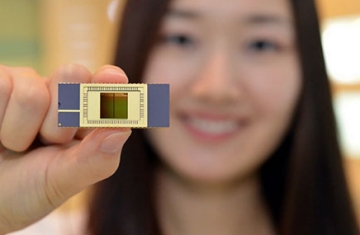
Samsung's monopoly on the 3D NAND market is entering a full-fledged nationwide era starting in the second half of the year
업계에 따르면, 삼성의 독무대였던 3D 낸드(NAND) 시장에 도시바, 샌디스크, 마이크론, 인텔, SK하이닉스 등의 업체가 본격적으로 가세하면서 불꽃 튀는 경쟁이 불가피하게 되었다. 더구나 이들 업체간의 경쟁은 서로 다른 기술의 경쟁이기도 해 향후 3D 낸드의 진화 방향도 가름하는 계기가 될 것으로 보인다. 3D 낸드는 평면(2D) 낸드의 회로를 수직으로 세운 플래시 메모리 반도체의 한 종류로 평면 미세공정 기술이 10nm대에서 한계를 맞으면서 이를 뛰어넘기 위해 개발된 기술이다. 쉽게 말해 단독주택(2D)을 아파트(3D)로 만들었다고 생각하면 쉽다. 위로 쌓으면 속도가 빠르고 용량을 크게 늘릴 수 있으며 안정성과 내구성도 뛰어난 것으로 알려졌다.
2016.08.30by 신윤오 기자
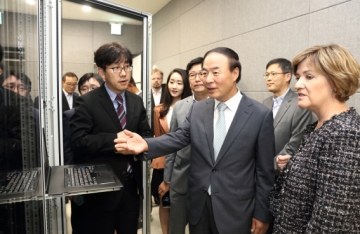
Samsung Electronics Partners with SAP to Advance Next-Generation Memory Development
삼성전자가 SAP(에스에이피)와 차세대 인메모리 플랫폼 연구 개발을 위한 '공동 리서치센터'를 내달부터 운영한다고 밝혔다. 인메모리 데이터베이스(in- memory database)는 중앙처리장치(CPU)의 정보를 처리하는 메인 메모리(주기억장치)에 초대용량의 데이터를 저장해 처리 속도를 크게 향상시키는 기술이다.
2016.09.30by 신윤오 기자
.jpg)
SalePoint Signs Multi-Year Partnership Agreement with AWS… Promoting Identity Security that Integrates Even AI Agents
세일포인트가 AWS와 다년간의 전략적 협력 계약을 체결하고, 인간과 비인간 아이덴티티를 함께 관리하는 통합 거버넌스 체계 구축에 나선다. AI 에이전트가 업무 수행 주체로 늘어나는 환경에서 접근 권한을 일관되게 관리하고, 최소 권한 원칙과 자동화된 정책 집행을 적용하겠다는 구상이다. 양사는 AWS 환경에서 AI 에이전트를 포함한 다양한 주체의 아이덴티티를 하나의 레이어에서 관리하는 기능을 공동 확대할 계획이다. 이번 협력은 AI 도입이 확대되는 기업 환경에서 보안과 거버넌스를 함께 설계하려는 움직임으로 해석된다.
2026.03.26by 배종인 기자
.png)
Databricks Unveils Open AI Security Monitoring 'Lakewatch'
데이터브릭스가 3월 24일 개방형 에이전틱 SIEM ‘레이크워치’를 공개하며 보안 시장에 진입했다. 이 제품은 보안, IT, 비즈니스 데이터를 단일 환경에서 통합 분석해 AI 기반 위협 탐지와 조사를 지원하는 것이 핵심이다. 회사는 고비용 구조 때문에 일부 데이터를 포기해온 기존 보안관제의 한계를 줄이고, 개방형 형식과 생태계를 바탕으로 대규모 데이터 분석과 자동화를 가능하게 한다고 설명했다. 레이크워치는 현재 프라이빗 프리뷰로 제공되며, 어도비와 드롭박스 등이 초기 고객으로 언급됐다. 데이터브릭스는 앤트로픽과 협력을 확대하고 안티매터, SiftD.ai 인수도 함께 발표했다.
2026.03.26by 배종인 기자











