

.png)

What are the top 10 strategic technologies with the highest potential to reach a turning point in the next five years?
 Published2016.10.21 11:50
Preparing the foundation for intelligent digital mesh, including artificial intelligence technology
Gartner (Gartner. Inc.) highlighted the top 10 strategic technology trends that enterprises should pay attention to in 2017 at the Gartner Symposium/ITxpo.
According to Gartner, a "strategic technology trend" is either a technology trend with significant disruptive potential that is just breaking out of the adoption phase and expanding in impact and use, or a fast-growing technology trend with a high degree of volatility that will reach a tipping point within the next five years.
David Cearley, vice president and Gartner Fellow, said, "Gartner's top 10 strategic technology trends for 2017 are laying the foundation for the Intelligent Digital Mesh. The first three trends are about 'Intelligence Everywhere' and how data science techniques and approaches, including advanced machine learning (ML) and artificial intelligence (AI), are evolving to enable the development of intelligent physical and software-based systems that are programmed to learn and adapt.
The following three technology trends focus on the digital world and the increasingly close connection between the physical and digital worlds. The rest is focused on the platform and service mesh needed to implement an intelligent digital mesh,” he said.
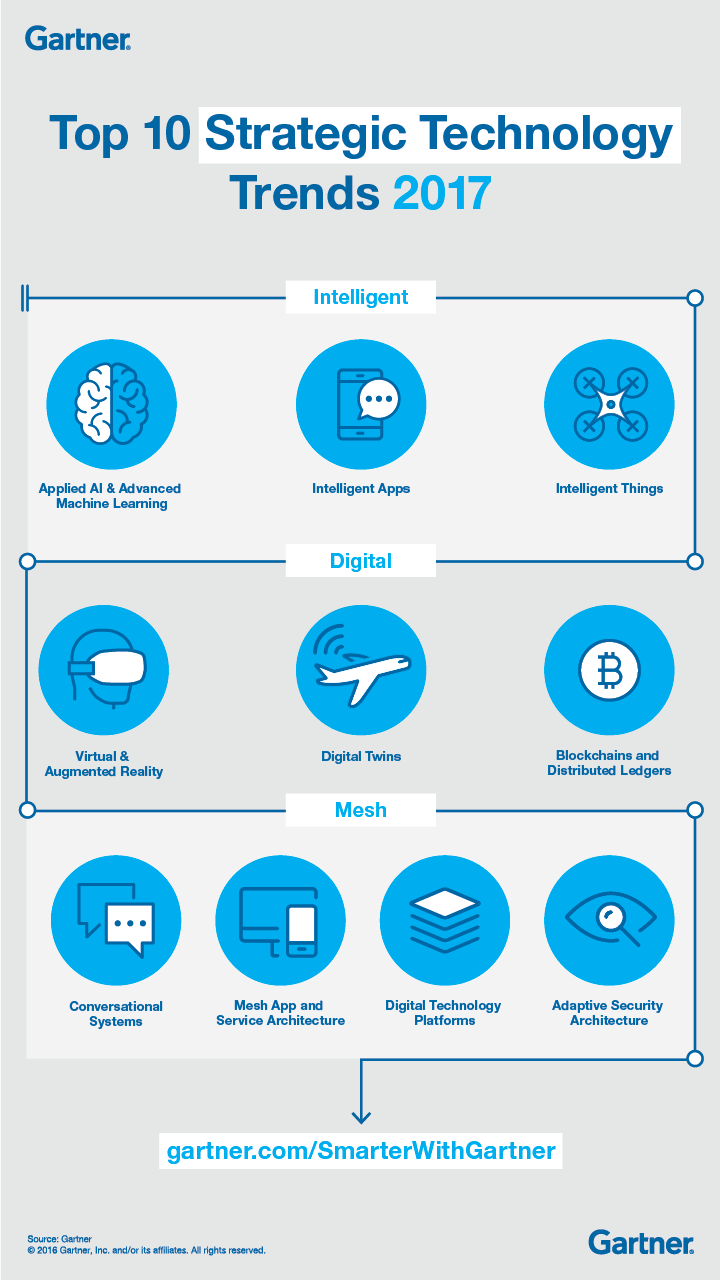
1. Artificial Intelligence and Advanced Machine Learning
Artificial intelligence and advanced machine learning are comprised of a variety of technologies and techniques, including deep learning, neural networks, and natural language processing. Furthermore, many cutting-edge techniques go beyond traditional rule-based algorithms to create autonomous systems that understand, learn, predict, and adapt, potentially operating on their own. This is what makes smart devices appear "intelligent."
2. Intelligent App
Intelligent apps, such as virtual personal assistants, can perform some of the functions of a real assistant, making everyday tasks like email prioritization easier and highlighting the most important content and interactions to enhance user efficiency. Intelligent apps, such as virtual customer assistants (VCAs), can handle more specialized tasks in sales and customer service. Thus, intelligent apps have the potential to transform the nature of work and the structure of the workplace.
“Within the next 10 years, most apps, applications, and services will have some level of AI built in,” said David Searle, vice president. “This will form a long-term trend that will continuously evolve and expand the scope of AI and machine learning applications for apps and services.”
3. Intelligent Things
Intelligent things are physical objects that go beyond the execution of rigid programming models to perform advanced functions through applied AI and machine learning, and interact more naturally with their surroundings and people. Gartner predicts that as intelligent things like drones, autonomous vehicles, and smart devices proliferate, there will be a shift from individual intelligent things to a collaborative intelligent things model.
4. Virtual Reality and Augmented Reality
Immersive technologies like virtual reality (VR) and augmented reality (AR) are changing the way people interact with each other and with software systems. "The landscape of immersive content and applications for consumers and businesses will explode through 2021," said David Searley, Vice President. "VR and AR capabilities will merge with the digital mesh to create a more seamless system of devices capable of orchestrating the flow of information delivered to users as hyper-personalized apps and services. Immersive applications will transcend isolated, individual experiences by integrating diverse mobile, wearable, Internet of Things (IoT), and sensor-rich environments. Rooms and spaces will be activated by objects, and connections across the mesh will emerge and interact with immersive virtual worlds."
5. Digital Twin
Digital twins, dynamic software models of physical objects or systems, use sensor data to understand their current state, respond to changes, and improve operations and enhance value. A digital twin contains complex elements such as metadata (classification, composition, structure), conditions or states (location, temperature), event data (time series), and analytics (algorithms, rules).
Within three to five years, millions of objects will be represented as digital twins. Companies will be able to proactively plan and repair equipment service, plan manufacturing processes, manage plant operations, predict equipment failures, improve operational efficiency, and develop improved products. Thus, digital twins will become an alternative to the combination of skilled personnel and traditional monitoring and control devices, such as pressure gauges and pressure valves.
6. Blockchain and Distributed Ledgers
Blockchain is a distributed ledger in which value exchange transactions, such as Bitcoin and other tokens, are sequentially organized into blocks. Each block is linked to the previous block and recorded via a peer-to-peer network, utilizing cryptographic trust and authentication mechanisms. Blockchain and distributed ledger concepts are attracting attention for their potential to transform industry management models. While there are currently exaggerated claims related to the financial services industry, they have potential applications in diverse fields such as music distribution, identity verification, title registration, and supply chains.
7. Conversational System
Conversational interfaces currently focus primarily on chatbots and voice-enabled devices embedded in speakers, smartphones, tablets, PCs, and automobiles. However, the digital mesh encompasses an expanded range of devices people use to access applications and information, or to interact with people, social communities, governments, and businesses. The device mesh encompasses a broad range of devices capable of interacting with people, extending beyond traditional desktop computers and mobile devices. As the device mesh expands, communication models will expand, and more diverse collaborative interactions between devices will emerge, laying the foundation for new, persistent, and pervasive digital experiences.
8. Mesh App and Service Architecture (MASA)
In a Mesh App and Service Architecture (MASA), mobile, web, desktop, and IoT apps are connected to a broad backend service mesh to create what users perceive as an "application." This architecture encapsulates services and exposes APIs at multiple levels across organizational boundaries, balancing the need for agility and scalability with the composition and reuse of services. MASA enables users to have optimized solutions across the digital mesh—desktops, smartphones, and cars—and provides a consistent experience as they move across these different channels.
9. Digital Technology Platform
Digital technology platforms provide the fundamental building blocks for digital business and are key technologies for achieving it. Gartner identified five key elements essential for realizing new capabilities and business models for digital business: information systems, customer experience, analytics and intelligence, IoT, and business ecosystems. Every company likely possesses some level of these five digital technology platforms. These platforms are fundamental building blocks for building a digital business and are essential technologies for achieving it.
10. Adaptive Security Architecture
Intelligent digital meshes and their associated digital technology platforms and application architectures are becoming more complex than ever from a security perspective. Vice President David Searle emphasized, "Existing security technologies should serve as a baseline for securing IoT platforms. Monitoring user and enterprise activity is a critical capability that must be added to IoT scenarios. However, the limitations of IoT present new vulnerabilities for many IT security professionals, requiring new remediation tools and processes. These must be considered in IoT platform-related projects."
관련뉴스
Wafer shipments projected to record moderate annual growth through 2018
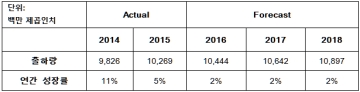
The Semiconductor Equipment and Materials International (SEMI) recently announced its annual silicon wafer shipment forecast for the semiconductor industry. The report contains forecasts for silicon demand between 2016 and 2018. According to SEMI's projections, the total area shipments of polished and epitaxial silicon wafers are forecast at 10.444 billion square inches in 2016, 10.642 billion square inches in 2017, and 10.897 billion square inches in 2018 (see table). Total wafer shipments this year are expected to exceed the record levels achieved in 2015, and this elevated level of shipments is projected to continue in 2017 and 2018 as well.
2016.10.14by 신윤오 기자
What are the top 10 predictions to watch out for since 2017?
세계적인 IT 자문기관인 가트너(Gartner Inc.)는 2017년 이후에 주목해야 할 10대 주요 전망을 발표했다. 가트너의 2017년 주요 전망은 지속되고 있는 세 가지 디지털 혁명인 ▲경험과 참여 ▲비즈니스 혁신 ▲디지털 역량 강화에 따른 2차 효과의 근본적인 영향에 대해 평가한다. 가트너 펠로우(Fellow) 겸 최고 연구 책임자인 다릴 플러머(Daryl Plummer) 총괄부사장은 “가트너의 주요 전략 기술 전망은 기술 진화의 가장 핵심적인 분야에서 발생 가능한 도발적인 전망을 지속적으로 제공한다. 시장과 업계 전체를 재정의하는 상시적인 변화의 물결로 변천한 디지털 변혁(digital disruption)라는 개념이 미래 성과의 핵심”이라며 “지난 해 가트너는 디지털 변화가 빠르게 다가올 것이라고 전망했다. 올해도 가속화는 지속될 것이며 사람과 기술에 광범위하게 영향을 미치는 2차 효과가 발생할 수도 있다”고 덧붙였다.
2016.10.20by 김수지 기자
The Problem with AI is Not Performance, but Trust
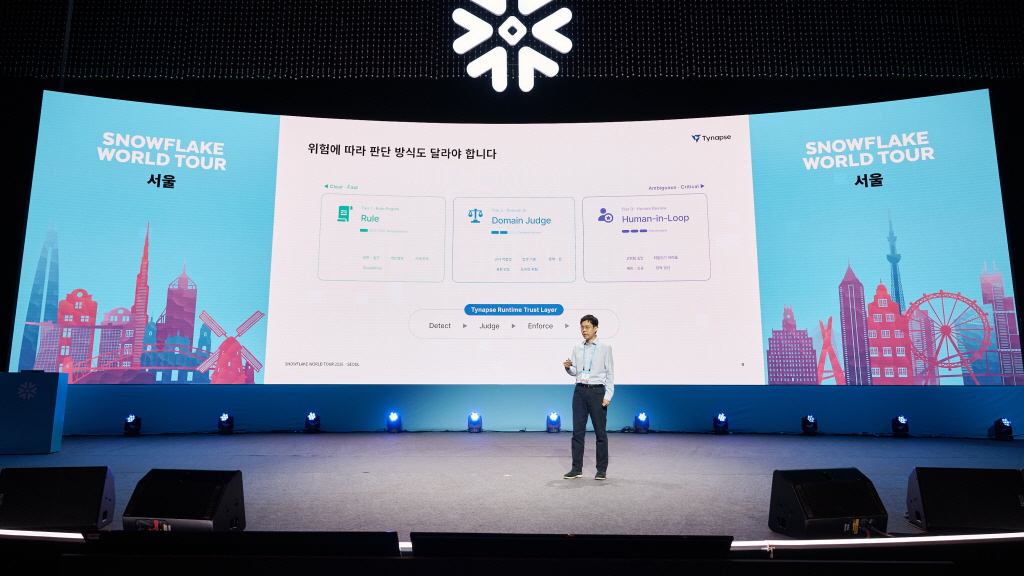
CEO Kang Min-seung emphasized at Snowflake's World Tour Seoul that generative AI has entered a phase where "trust" rather than accuracy becomes the key competitive advantage. As AI is applied to various tasks including consultation, risk management, and operational automation, incorrect data, erroneous responses, and bias are creating actual business risks. He pointed out that enterprises must build a trust layer above AI. To achieve this, accurate data management, semantic structuring, governance, and prompt security are essential. He explained that AI is not merely an automation tool but a technology that reorganizes the entire organization's workflows and decision-making systems. Snowflake provides a platform that supports this trust-based AI operation, emphasizing that enterprises should build "trustworthy AI" rather than "intelligent AI."
2026.08.28by 배종인 기자
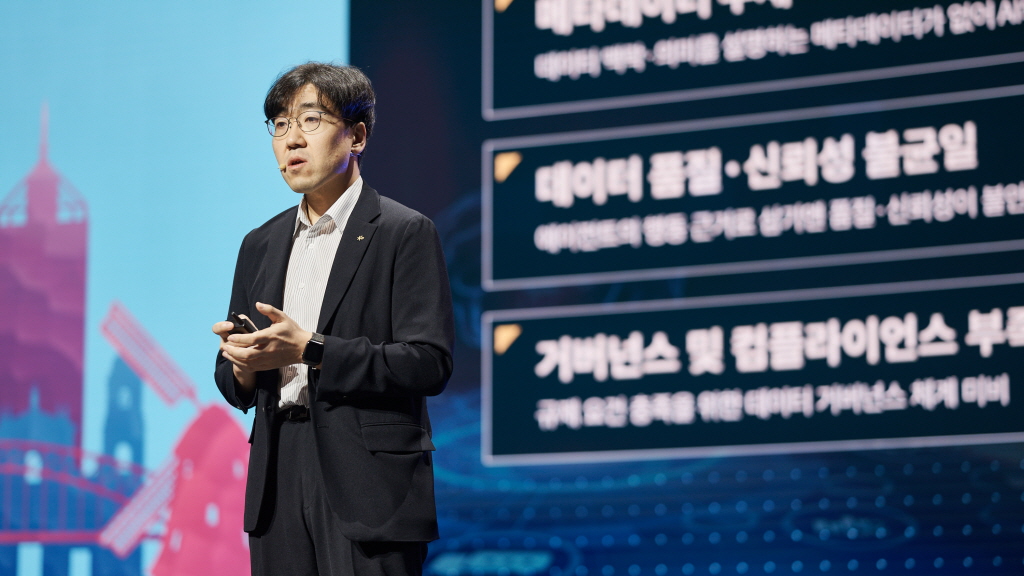
The Decisive Factor for AI Agents in Finance: "Trustworthy Data Infrastructure"
The key to spreading AI agents in the financial sector is establishing a trustworthy data system. KB Kookmin Bank is operating over 100 AI agents by 2025 and is promoting expansion to 300. AI is automating repetitive tasks across various areas such as consultation, risk management, wealth management, and relationship management. However, if data quality, governance, and semantic structuring are insufficient, errors and risks increase. KB is building an AI-Ready organization through a multi-model strategy of GPT, Gemini, and Claude, as well as a Snowflake-based data system. The bank emphasized that AI has entered a phase where it restructures not just simple automation but the entire work process and decision-making system.
2026.08.28by 배종인 기자
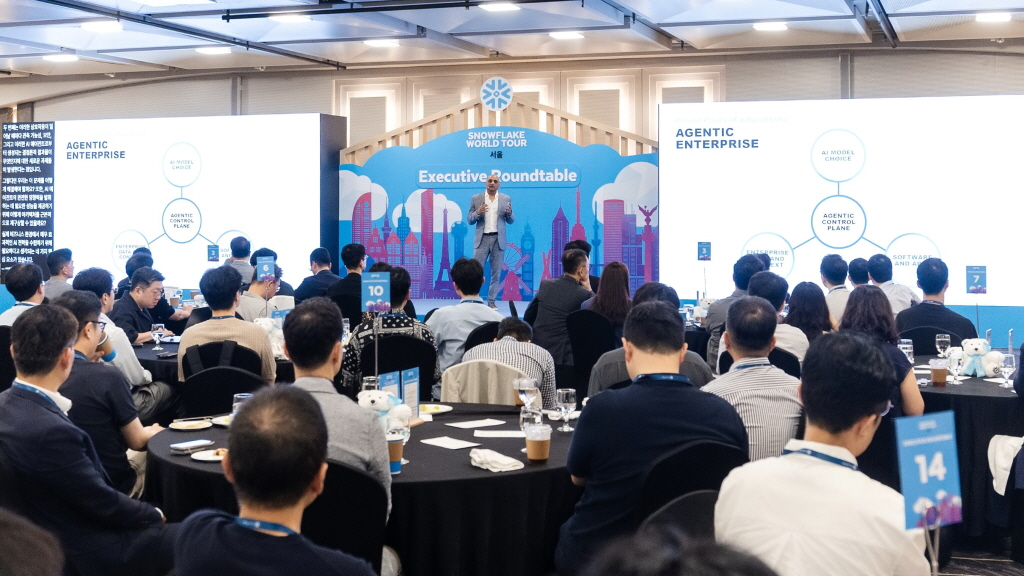
Snowflake Presents Data Platform Roadmap for Agentic AI Era
Snowflake emphasized at the Seoul roundtable that the key to enterprise AI proliferation lies in "Agentic AI" and the integration of data and workflows. Bala Kasivisvanathan stated that AI is evolving beyond simple analytics to become the driver of task automation and operational optimization, and that organizations must strengthen their data quality, processes, and governance as prerequisites for this. CJ OliveNetworks introduced that it is currently expanding AI applications in logistics and operational automation. Snowflake stressed that companies need a strategic shift to connect AI adoption to tangible business impact.
2026.08.28by 배종인 기자











