


[Journalist's Notebook] Is Selective Concentration Really Wrong for Eco-Friendly Vehicle R&D?
 Published2016.11.14 18:57
The largest trade surplus industry in the domestic trade balance (53 billion dollars). Added value of 10.7% of total manufacturing. Tax revenue of 37.7 trillion won, representing 14.7% of total tax revenue, with manufacturing employment of 330,000 people (6.9% of total employment of 1.77 million).
These figures represent the current status of Korea's automotive industry. Since 2009, the Korean automotive industry has been ranked in the top 5 globally in automobile production. It is truly a foundational sector of Korea's domestic industry.
So, how are we designing the future for such an important (?) industry? Last week's Eco-Friendly Vehicle Future Power Forum was a venue that simultaneously presented analysis and concerns about this reality.
In conclusion, industry officials spoke with one voice that falling technology competitiveness has become inevitable due to low R&D budgets (1.6% of the total) relative to the automotive industry's weight in GDP (3.2%). This means that automotive technology research and development investment compared to advanced countries is severely inadequate. The forum pointed out that due to the expansion of regional industries, core preemptive technology research budgets are actually declining.
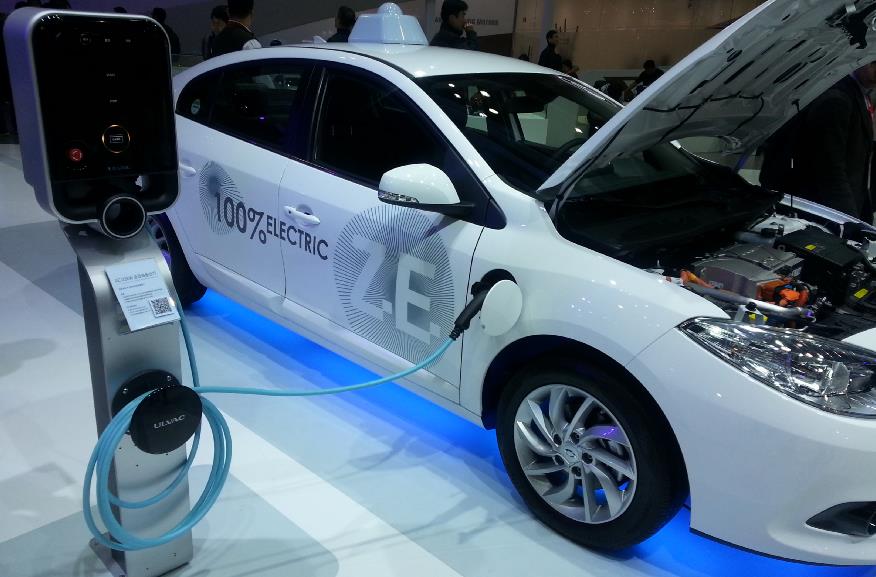
▲Electric vehicle charging scene.
In response, participants agreed that groundbreaking increases in investment are needed to cultivate and consolidate industry-academic-research capabilities, overlapping regional business investments should be avoided, and nationwide R&D projects should be expanded.
For reference, in the United States, the automotive R&D budget is increasing, and research by domestic researchers and partners is being encouraged for cleaner and more efficient transportation. Research mainly focuses on advanced combustion, vehicle efficiency, alternative fuels, EV, and low-carbon fuel development. The ACE (Advanced Combustion Engine) Program is operating at an annual government funding level of approximately 43 billion won, with plans to double the budget in 2017. Professor Min Kyung-deok from Seoul National University evaluated it as follows: "It operates in a competitive format between company-led consortiums on a single issue, resulting in high utilization of foundational technologies and effective linkage to industrialization."
Let's take a look at Europe. Europe receives support from the HORIZON 2020 research organization comprised of 14 automotive manufacturers, with each project being operated through government or partner company funding. Europe operates the FVV research organization focused on basic internal combustion engine technology and the EUCAR research organization focused on applied technology, providing project-based government funding to private-led research organizations.
The United States and Europe Conduct Internal Combustion Engine Research Centered on Alliance Organizations
However, in contrast, Korea and Japan employ a method where individual companies invest in R&D independently. Naturally, this would result in weaker cooperation in sharing or linking project outcomes among government, companies, and academia. Japan recognized this as a problem and has currently established an inter-ministerial coordination organization (CSTI) to strengthen collaboration through cross-departmental projects. Japan has introduced a program through the SIP program to present a new vision for internal combustion engine technology with the goal of 50% thermal efficiency and 30% CO2 reduction.
Korea's R&D emphasizes technology development for regulatory compliance, taking into account the timing of environmental and safety regulations. Investment in smart cars has been expanded to accommodate strengthened advanced country safety standards, with focus on vehicle emergency braking systems, lane departure warning/maintenance assistance systems, and speed warning system development. For reference, the Ministry of Industry used 145.5 billion won in 2015 as support budget for automotive industry core R&D.
Given these circumstances, the forum emphasized that expansion of government automotive R&D is necessary considering the industry's weight. Along with the statement that R&D should be "nationwide" rather than regional, the forum stated that efforts should focus on regulatory compliance areas with high cost-effectiveness and that a long-term support strategy for securing fuel cell and battery original technologies is necessary.
Additionally, it emphasized that strengthening automotive industry competitiveness 5-10 years from now is more urgent than 20-30 years later. It argued that original technologies for engine platforms, hybrid systems, and infrastructure construction acceleration must be developed, and forward-looking consideration for fuel diversification is necessary. Particularly, it emphasized that "balanced" R&D investment is needed rather than concentrated investment in a single sector, and stressed support for original technology development R&D over product technology development. It also voiced concerns about measures to secure advanced talent supply and original technology for the future due to the ecosystem decline of universities and national research institutes in the engine sector.
Electric Vehicles, Fuel Cell Cars...It's Uncertain Which Automobile Form Will Grow
Selective Concentration Is Risky, So Let's Invest in a Balanced Way—But What's the Solution?
Synthesizing these arguments, the consensus was that existing internal combustion engine technology should achieve higher efficiency and that comprehensive investment across various fields including this should take place. While the forum's organizers consist primarily of automotive manufacturers and academia, making such arguments understandable, several questions could not be dismissed. For instance, the argument that investment should be balanced and distributed rather than selectively concentrated, the focused introduction of overseas examples of internal combustion engines, and the pessimistic stance toward regional investment projects are among them.
Of course, there has been recent talk about autonomous driving, but the truth is that it is uncertain how the automotive technology scenario will develop according to automotive technology forecasts. So far, gasoline and diesel vehicles powered primarily by internal combustion engines remain core, and it is unknown how long these vehicles will continue as mainstream. When and how EV (electric vehicles), FCEV (fuel cell vehicles), BEV (battery electric vehicles), PHEV (plug-in hybrid cars), HEV (hybrid electric vehicles), and LPG vehicles will spread and become obsolete remains unknown.
However, the argument that because it is uncertain which automobile form will develop, R&D must be conducted to prepare for all these automobile technologies, that is, the so-called selective concentration strategy, seemed to lack persuasiveness. This is because the capital available for investment is limited, and our capabilities also have boundaries, so sufficient review of this aspect should be conducted before discussing "balanced" investment. Additionally, it was unfortunate that the discussion did not first address why regional projects were necessary in the first place and why investment in them was made, given Korea's domestic context.
Related news
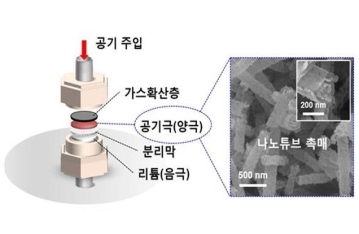
Will Mass Production of Next-Generation Lithium-Air Batteries for Electric Vehicles Become Possible?
A research team led by Kim Il-doo from the Department of Materials Science and Engineering at KAIST has developed a technology capable of mass-producing catalysts, a key component of lithium-air batteries. Lithium-air batteries are receiving attention as next-generation batteries to replace lithium-ion batteries used in electric vehicles, and it is expected that the fundamental technology developed by the research team will bring lithium-air battery commercialization one step closer.
2016.02.18by 신윤오 기자
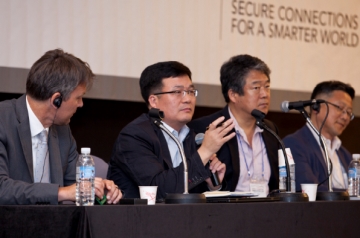
[Discussion] Autonomous Vehicles: "Overconfidence is dangerous, but there is no need to fear either"
Interest in autonomous vehicles shows no signs of cooling. Autonomous vehicles require extensive technological advancement starting from existing automotive technology itself, encompassing advanced component-related technologies, and extending to surrounding infrastructure technologies including roads. 'Automotive Innovation Day 2016,' hosted by Automotive Electronics, a representative automotive technology exhibition in Korea, was held on the 14th with the participation of approximately 700 people. The event addressed key issues for future automotive development including ADAS and autonomous vehicles, connected cars and IoC (Internet of Car), automotive security, and testing—hot topics in the automotive industry—and received enthusiastic response from participants. In the panel discussion concluding the conference, government and industry experts related to autonomous vehicles participated, providing insights into the latest industry trends. E4ds News presents a live coverage of the panel discussion on 'Core Technologies and Implementation Directions for Autonomous Vehicle Commercialization.' The panel discussion, moderated by Beom-jin Yoon (Automotive Electronics), included ▲Ui-kyung Jung, Section Chief (Ministry of Land, Infrastructure and Transport) ▲Jae-gon Shin, Team Leader (Korea Transportation Safety Authority Automotive Safety Research Institute) ▲Jae-gwan Lee, Director (Korea Automotive Technology Institute) ▲Lars Reger, CTO (NXP Semiconductors), and others.
2016.07.25by 신윤오 기자
Tesla Begins Electric Vehicle Pre-orders in Korea
Tesla Motors is launching online pre-reservations for the Model S, Model X, and Model 3 in Korea. Tesla announced that customers can make pre-reservations by paying reservation deposits for the Model S (2 million won), Model X (5 million won), and Model 3 (1 million won), respectively. Tesla is the world's first premium electric vehicle company headquartered in California. Founded in 2003 by Silicon Valley engineers, Tesla has made a major impact in the electric vehicle market through unprecedented performance, design, and customer experience.
2016.08.22by 김수지 기자

A single misaligned light means 'defect'… Vehicle interior lighting now guarded by semiconductors and software
Automotive interior lighting is moving beyond its role as 'auxiliary lighting.' As it becomes a core element of user experience (UX) that expresses brand identity through color and animation while reflecting driver preferences, the LED interior ambient lighting market is growing rapidly. In connection with this, we met in advance with Choi Young-jae, Research Director at Dabo Corporation, who will present a technical webinar session on "Intelligent LED Interior Lighting Solutions Illuminating Future Vehicles," to hear about market trends and changes in design requirements.
2026.08.28by 명세환 기자
TI Unveils Multi-Axis Coreless Current Sensor TMCS2100-Q1 for HEV/EV Traction Inverters
Texas Instruments has unveiled the TMCS2100-Q1, a multi-axis coreless Hall-effect current sensor for HEV and EV traction inverters. By simultaneously measuring horizontal and vertical magnetic fields through multi-axis sensing technology, it achieves up to 20 times higher accuracy compared to conventional single-axis sensors, while the busbar-unmodified design provides mechanical design flexibility. It simultaneously meets the high-accuracy requirements and miniaturization driven by the expansion of 800V architectures.
2026.08.27by 배종인 기자











