


The ISSCC 2017, the semiconductor Olympics, opened under the theme of "Intelligent Chips for a Smarter World."
 Published2016.11.21 16:55
Memory-centric papers remain stagnant, but growth is notable in the Greater China region.
The International Solid-State Circuit Conference (ISSCC 2017), known as the World Semiconductor Olympics, has confirmed its schedule for next year.
This conference, which was first held in 1954 and will be its 64th next year (February 5-9, San Francisco, USA), is the most prestigious conference among the IEEE conferences in the field of semiconductor integrated circuit systems and system integration, and together with IEDM (International Electron Devices Meeting), it forms the two major mountain ranges in the fields of semiconductors and solid-state circuits.
Currently, this conference has over 3,000 scholars and researchers from 25 countries participating, and companies such as Intel and Samsung Electronics have announced their new CPUs and DRAMs here, while world-class research institutes such as KAIST and IMEC in Europe have attracted attention by showcasing technologies ahead of their time.
At this year's ISSCC 2017, under the theme of "Intelligent Chips for a Smart World," various circuit and system technologies that will further accelerate the development of smart products that have recently been changing our lives will be presented.
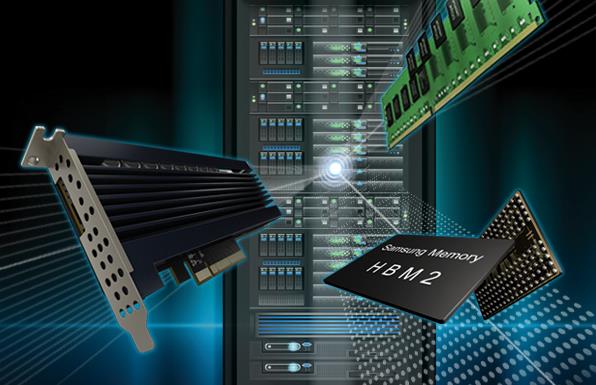
▲ In Korea, papers on memory and touch were mainly accepted at next year's ISSCC conference. The photo was captured from the Samsung Memory site.
“Advances in semiconductor circuits and systems are driving the continued convergence of the real and virtual worlds,” said Dr. Sungdae Choi of SK Hynix, a member of the ISSCC Far East Korea Committee. “Applications centered around IoT and real-time data analysis are demanding new methods to increase massive amounts of equipment and information processing capabilities.”
Accordingly, with the increase in sensor deployment, data communication volume, and data center load, intelligent chips at all levels are essential for future systems to increase the efficiency of information collection, networking, storage processing, and more.
Korea surpasses Japan again in paper acceptance, ranking second globally.
The counterattack of the Greater China region, including 15 Taiwanese films, 6 Macau films, and 4 Hong Kong films.
A total of 641 papers were submitted from around the world for this conference, and after rigorous review, 205 were ultimately accepted. Of these, 25 papers were accepted, including six from KAIST, six from Samsung, and five from Pohang University of Science and Technology (POSTECH). Korea ranked second only to the United States (94 papers), reclaiming the second-place spot previously held by Japan (14 papers).
However, with the growth of the Greater China region, including 15 films from Taiwan, 6 films from Macau, and 4 films from Hong Kong, it seems necessary to explore the future direction of development for Korea, which has been stagnant for several years. For reference, if you look at the adoption status by country, in addition to the countries mentioned above, there are the Netherlands (13 articles), Canada (4 articles), Germany (4 articles), Switzerland (4 articles), and Belgium (3 articles).
Furthermore, examining the status of paper acceptance by field, the order is wireless (14%), analog (13%), IMMD (12%), RF (12%), technical division (10%), data converter (9%), MEM (8%), DAS (7%), and DC (7%). An introduction to each of these fields is as follows.
The analog division presented a total of 27 papers in three sessions. Among the 12 papers from Asia, 10 from the US, and 5 from Europe, Korea ranked first in Asia with 4 papers. KAIST presented “A New Concept Class D Amplifier for EMI Reduction and High-Quality Audio,” while Pohang University of Science and Technology introduced “An Oscillator That Reduces Frequency Changes in a Simple and Interesting Way.” Dr. Yook Young-seop of SK Hynix introduced recent trends, saying, “Research is being conducted to reduce the power consumption of the oscillator itself in order to apply it to ultra-low-power systems. Research is also being conducted to reduce the overall size, increase the density of the transmitted power, and improve efficiency.”
In the field of data converters, a total of 14 papers were presented across two sessions, with papers on gigahertz data converters and hybrid ADCs attracting attention. In the field of DAS (Digital Architectures & Systems), closely related to the conference's theme of artificial intelligence, a total of 15 papers were presented across two sessions. Papers related to digital processors and deep learning processors are being published, and it is said that there were many papers submitted related to deep learning.
KAIST Professor Yoo Hoi-jun to Present at Deep Learning Forum
In particular, Professor Yoo Hoi-jun of KAIST will be giving an invited presentation titled “Deep Learning-Deep Neural Networks, Architecture and SoC Implementations” at the Deep Learning Forum to be held during the conference. Furthermore, KAIST student Shin Dong-ju will present the world’s first low-power processor that supports both CNNs and RNNs. STMicroelectronics is expected to garner attention for its unusual presentation of a deep learning processor at an academic conference with its paper, “An Efficient Deep Learning SoC Processor Capable of Dynamic Mapping of Deep Neural Networks.”
The Digital Circuits (DC) division will present 19 papers across three sessions, while the IMMD (Imager, MEMS, Medical, and Display) division will present 25 papers across three sessions. In particular, Asia demonstrated its strength in the IMMD division, particularly in the areas of image sensors and touch sensors. A total of four Korean papers were accepted in these fields.
Among these, KAIST's "High-Sensitivity EEG-NIRS Multi-Modal SoC for Anesthesia Depth Monitoring" topic, which received a lot of attention, is a technology that precisely measures both EEG and NIRS signals on a single semiconductor chip and configures all the elements required for the system into a small patch, enabling simple and accurate anesthesia depth monitoring during surgery. Regarding the dynamic vision sensor announced by Samsung Electronics, Dr. Yoon-Kyung Choi of Samsung Electronics said, "It is efficient and will have many applications because it only senses differences from the previous frame without having to sense the entire image."
Samsung Electronics Announces 3D NAND Flash Memory Technology and SRAM Using the World's Smallest 7nm Process
In the memory sector, where Korea holds a strong position, nine of the 17 accepted papers are Korean. In the DRAM sector, Samsung Electronics and SK Hynix are scheduled to present seven of the nine papers. Samsung Electronics will present 512Gb 3D NAND flash memory technology capable of storing three bits per cell and SRAM utilizing the world's smallest 7nm process.
The RF division will feature sessions on TX and RX building blocks and frequency generators, and in particular, the power amplifier session will present research results on further increasing the efficiency of power amplifiers as signal modulation methods become more complex. The wireless division will present a total of 29 papers in four sessions, of which Samsung will present two papers jointly with North America. Dr. Kyu-Hyun Lim of FCI said, “Regardless of the next-generation wireless transceiver application, not only high performance but also low power consumption is required. High-performance/low-power consumption papers related to 4G LTE-A, 5G mm-wave, WiFi, and IoT were accepted.” The wired division will present a total of 14 papers in two sessions, of which seven are related to ultra-high-speed wirelines and the rest are related to circuits, components, and packaging technologies for ultra-high-speed optical communications.
Meanwhile, KAIST Professor Yoo Hoi-jun, the first Korean to serve as the chairman of the ISSCC Technology Program in 2015, said, “China has recently been aggressively supporting the industry by making huge investments across the semiconductor industry, including memory and processors.” He added, “In order for Korea to continue to maintain its advantage, a more systematic and strategic approach at the government level is essential, and the scale of R&D must be increased and the treatment of engineers must be improved.”
Comments
Related news
Secure system semiconductor technology for autonomous vehicles by 2021
Nine national strategic projects have been announced to secure new growth drivers. The nine national strategic projects selected by the government are ① autonomous vehicles ② post-steel lightweight materials ③ smart cities ④ artificial intelligence ⑤ virtual and augmented reality ⑥ precision medicine ⑦ carbon resources ⑧ (ultra)fine dust ⑨ bio-pharmaceuticals. The government announced at the second presidential Science and Technology Strategy Meeting held on the 10th that it has decided to intensively foster the nine national strategic projects through concentrated investment at the national level and public-private collaboration.
2016.08.11by 신윤오 기자
[Reporter's Notebook] Forget Moore's Law, It's Semiconductor Packaging Now
Dr. Wei Koh from Huawei, who spoke at the recently held JEDEC Mobile & IoT Forum, concluded his presentation with this proclamation. This is because as semiconductor CMOS chip-level scaling technology approaches its limits, packaging technology, a back-end semiconductor process, is emerging as an alternative for system integration. That's right. The so-called "Moore's Law," which states that the integration density of microchips doubles every 18 months, has seen its cycle gradually lengthen. This means we have now entered an era where integration beyond Moore's Law itself—"More than Moore" (MtM)—has become necessary.
2016.08.23by 신윤오 기자
Semiconductor equipment shipments increased due to China's purchase of 3D NAND manufacturing equipment.
According to the July BB ratio report released by SEMI (Semiconductor Equipment and Materials International), North American semiconductor equipment manufacturers' three-month average bookings for July 2016 totaled $1.79 billion, with a BB ratio of 1.05. The BB ratio is calculated by dividing bookings by billings, and a BB ratio of 1.00 means bookings of $105 per $100 of billings. July front-end equipment bookings reached $1.59 billion, up from the previous month's bookings of $1.49 billion, and up 12.3% compared to July 2015. July front-end equipment billings were $1.44 billion, resulting in a front-end equipment BB ratio of 1.10. June front-end equipment billings were $1.47 billion, and July 2015 billings were $1.34 billion. The front-end equipment category includes wafer processing, mask/reticle manufacturing, wafer fabrication, and fab equipment.
2016.08.29by 김수지 기자
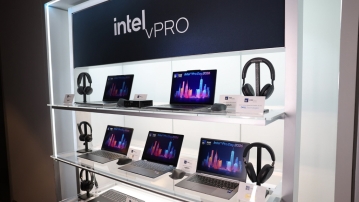
Intel Unveils Next-Generation 'Core Ultra Series 3' and vPro Platform for Enterprise PCs
Intel has officially unveiled the "Intel Core Ultra Series 3" for next-generation enterprise PCs and the latest vPro platform, addressing a wide range of demands from enterprise notebooks to high-performance workstations.
2026.03.26by 배종인 기자
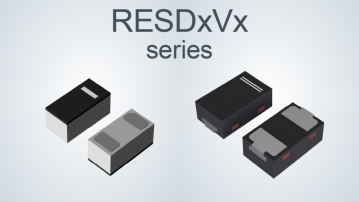
ROHM Launches ESD Protection Diode Compatible with High-Speed Interfaces of 10Gbps or Higher
Semiconductor specialist ROHM has developed the 'RESDxVx series' of ESD (electrostatic discharge) protection diodes capable of responding to next-generation high-speed data communication environments exceeding 10Gbps, simultaneously enhancing both signal quality maintenance required in high-speed interfaces and IC protection performance.
2026.03.26by 배종인 기자











