



ROHM to Expand Supply of Optical Image Stabilization Drivers for High-End Smartphones
 Published2016.11.25 15:37
Development of feedback control drivers and various actuator control technologies.
Compared to electronic image stabilization, optical image stabilization solutions enable clear, shake-free shooting even in dark environments and with distant subjects.
ROHM is expanding its lens driver business for smartphone camera image stabilization. The company has expanded its lineup of lens driver ICs by combining analog signal processing technology and driver circuit technology accumulated from motor drivers and the like with advanced digital signal processing technology.
With existing electronic correction solutions dominating the mainstream market, the strategy is to continue pushing optical image stabilization (OIS) driver solutions capable of in-frame correction.
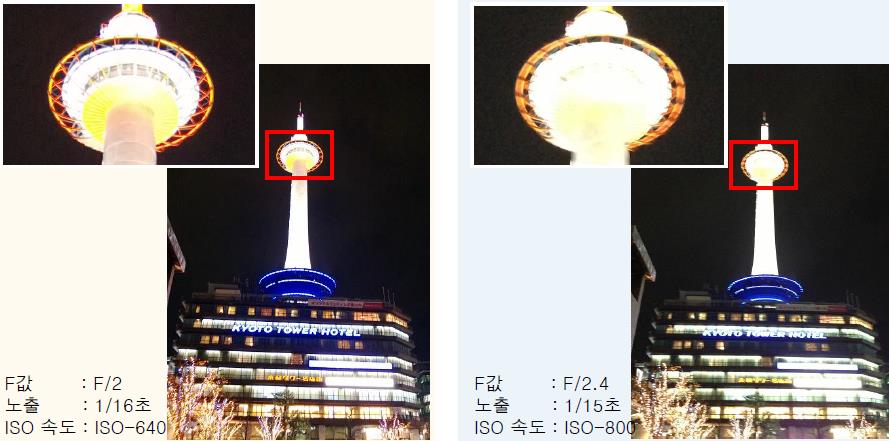
▲ Comparison of optical image stabilization (left) and electronic image stabilization. As shown in the photo, even dark areas and distant subjects appear clearly.
With smartphone cameras evolving rapidly in recent years, it has become common practice to incorporate features such as autofocus, image stabilization, and zoom. Accordingly, ROHM Co., Ltd., which has been developing lens driver ICs for camera modules since 2008, has been supplying products to smartphone manufacturers. ROHM developed a model that supports a ringing correction function to suppress excessive vibration for feedforward control, which was the mainstream for autofocus lens drivers at the time, and a bidirectional driving actuator called Bi-Direction.
In 2012, the lineup was further expanded by developing lens driver ICs for optical image stabilization that began to be installed in smartphones, models compatible with ball-type actuators with different structures, as well as lens drivers for feedback-controlled autofocus.
Electronic image stabilization basically detects image deviations between frames and corrects them to eliminate such deviations, whereas optical image stabilization is a method that detects and corrects hand shake signals through a gyroscope sensor installed in the camera or smartphone body.
While both electronic and optical image stabilization have their advantages and disadvantages, optical image stabilization has recently become highly valued for its ability to achieve high performance in dark environments or when photographing distant subjects. Accordingly, manufacturers expect that the adoption of optical stabilization will increase in the future, and that there will be a greater number of cameras that utilize both optical and electronic methods to further enhance image stabilization capabilities.
Optical image stabilization requires mechanical components for driving and area for its control IC, but it can utilize the entire effective area of the pixel and enables correction not only between frames but also within frames. In particular, the absence of image quality degradation due to image processing distinguishes it from electronic image stabilization methods.
In addition, there are various methods of optical image stabilization; in digital still cameras, there is the 'lens shift method,' which shifts only the corrected lenses within the lens group, and the 'sensor shift method,' which fixes the lenses and shifts the image sensor. In smartphone cameras, the 'lens barrel shift method,' which shifts the entire lens group, is mainly adopted. ROHM is also promoting the development of control technology for various actuators.
Advisor Yoshihiro Sekimoto stated, “ROHM’s lens driver ICs for camera modules are planned to be primarily supplied to flagship models capable of delivering top performance in the smartphone market, which has now entered a mature stage.”
Comments
Related news
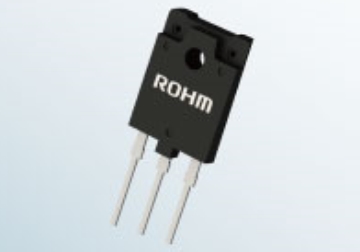
ROHM Develops SiC-MOSFET Suitable for High Voltage and Low Current Characteristics
ROHM Co., Ltd. has developed a 1700V-rated SiC-MOSFET (SCT2H12NZ) for industrial equipment such as general-purpose inverters and manufacturing devices that operate at high voltage. With increasing awareness of energy conservation in recent years, power semiconductors that realize low power consumption are being adopted in industrial equipment such as general-purpose inverters and manufacturing devices. These industrial equipment often incorporate auxiliary power supplies that not only supply the main power circuit but also provide power supply voltage for control ICs and various system drive applications. Silicon MOSFETs with voltage ratings of 1000V or higher are widely adopted in these auxiliary power supplies.
2016.08.29by 신윤오 기자
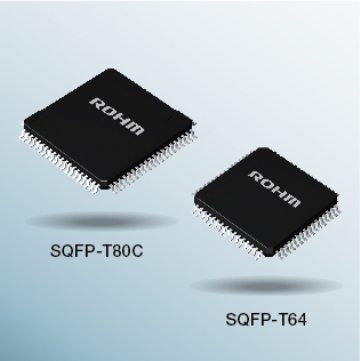
ROHM Properly Brings High Sound Quality to Life with Enhanced Sound Processor
ROHM Co., Ltd. announced the development of sound processors (BD34704KS2/BD34705KS2) adopted in home theater systems and other applications. This product, designed for high-end AV amplifiers supporting high-resolution audio sources, performs audio volume adjustment and signal path switching. It is a series addition to ROHM's sound processors, which have received high acclaim with cumulative shipments (over the past 5 years) exceeding 120 million units.
2016.10.11by 신윤오 기자
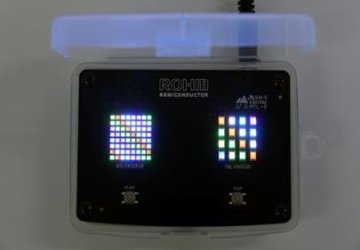
ROHM Develops Reflector-Type High-Brightness 3-Color LED Suitable for Miniaturization
ROHM Co., Ltd. announced the development of a reflector-type LED (MSL0402RGBU) for consumer applications such as dot matrix light sources in wearable devices and entertainment devices that are continuously becoming more compact. This product is a reflector-type high-brightness tri-color (red, green, blue) LED that realizes the industry's smallest size (1.8mm x 1.6mm) by applying ROHM's accumulated miniaturization technologies. This enables high-quality color mixing and precise LED expression through high-density mounting.
2016.11.08by 신윤오 기자

OpenAI Holds Developer Event 'DevDay Exchange' in Seoul
OpenAI held the 'DevDay Exchange' event in Seoul on the 22nd, with over 600 domestic developers in attendance. Korea currently ranks 3rd globally in weekly active users of dots and 5th in ChatGPT Pro usage, with discussions focused on agent-based work automation and enterprise AI transformation strategies. AWS and LG CNS shared phased implementation cases ranging from AI model adoption to integration with existing systems and establishment of security and governance frameworks.
2026.10.23by 배종인 기자
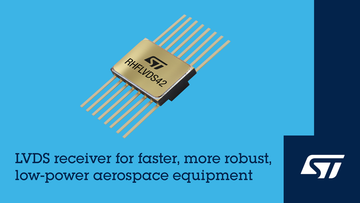
ST Launches RHFLVDS42 QML-V Certified Quad LVDS Receiver for Aerospace
STMicroelectronics has launched the RHFLVDS42, a QML-V certified quad LVDS receiver for aerospace applications. The device supports maximum 600Mbps data transmission, demonstrates radiation and ESD tolerance, and meets 300krad(Si) TID requirements, while satisfying EAR99 regulations for immediate deployment across global supply chains. It is manufactured using a validated 130nm CMOS process in France and is available in Flat-16 package and bare die form.
2026.10.23by 배종인 기자











