



“You should choose an ST MCU that meets all the IoT implementation requirements, including low power, security, and development boards.”
 Published2016.12.09 17:28
High security performance and fast, economical prototype development possible
Smart healthcare, home IoT, industrial IoT, and the Internet of Small Things are key areas in the industry outlook for next year that has been pouring out recently.
In other words, the Internet of Things (IoT) is now beginning to blossom into a tangible business in specific fields. Accordingly, the semiconductor industry is racing to release specialized solutions to implement these IoT applications. MCUs, which play a key role in configuring intelligent systems, are no exception.
In particular, the key requirements for MCUs implementing IoT applications are low power, communication, and security. STMicroelectronics' latest STM32, which already boasts a wide user base, is considered a representative solution that satisfies these requirements.
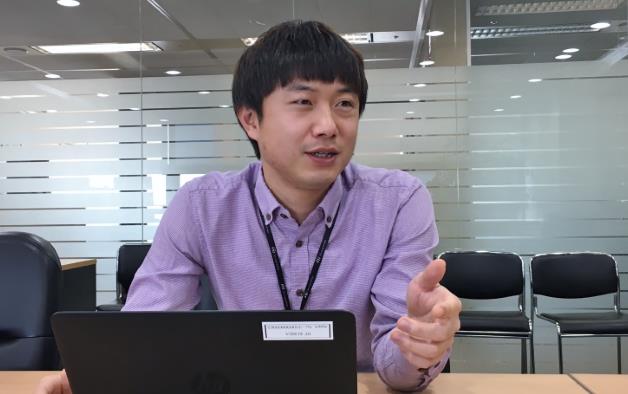
“ST MCUs are specialized for IoT application development in three key areas,” said Kim Du-hyung, Manager at STMicroelectronics Korea. “First, they are highly energy efficient. Many IoT application products these days are battery-powered. These products are sensitive to energy efficiency, making low power consumption paramount. ST MCUs offer exceptional energy efficiency through various low-power modes and technologies, giving them a competitive edge in the IoT market.”
The second reason given by Manager Kim is its high security performance. STMCU provides high-level security algorithms as a hardware unit, so it is explained that various security functions such as Firewall, Read/Write protection, Anti-Tamper, and Crypto can be easily applied just by using this one chip.
Finally, he cited rapid and economical prototyping. ST distributes Nucleo boards with Arduino support, STM32CubeMX software, and software libraries. Among these, STM32CubeMX and software libraries can be downloaded free of charge. It also provides X-Nucleo, which supports various functions such as BLE, LoRa, Wi-Fi, sensors, and Sub-GHz RF.
The idea is that you can easily combine it with the Nucleo board like stacking Lego blocks to quickly implement desired functions. ST's support for an open development environment has been a key selling point for engineers, as it significantly reduces the time and cost of prototyping.
So, I decided to go into more detail, one by one. Below is a Q&A with Manager Kim.
Issue 1. Low-power perspective
Q. Among the STM32 product line, the STM32L series is said to be an MCU specialized in low power, but other companies are also releasing many low-power MCU products. Please explain how it is different.
A. First, it has the best energy efficiency. According to the results of the EEMBC ULPBench, a standard benchmark test comparing the efficiency of low-power microcontrollers announced in February of this year, the STM32L series achieved 176.70 ULPMark-CP without a buck converter that requires external components such as coils or capacitors, surpassing the scores of competing products. It also achieved an EEMBC CoreMark score of 273.55 at 80MHz, objectively proving its industry-leading performance and power efficiency. Furthermore, the ability to utilize a variety of detailed low-power modes allows for a variety of low-power applications depending on user application scenarios. In particular, STMCUs are highly resilient to external environmental characteristics compared to competing MCUs due to their low current consumption variation with temperature changes.
Q. While the MCU's low-power performance is important, its relationship with the surrounding circuitry is also crucial. Are there any devices or features that minimize power consumption in each mode?
A. First, you can utilize Batch Acquisition Mode (BAM), which optimizes data transfer with optimal current consumption by combining the communication interface and internal SRAM while in low-power mode (Sleep mode). Additionally, there are low-power Timers and low-power UARTs that operate with minimal current consumption in low-power mode. Furthermore, the STM32L4 supports independent power inputs for I/O, USB, LCD, and analog, enabling hardware-level power savings.
Q. For example, in the STM32CubeMX current consumption simulation, what functions and scenarios can developers include to estimate the results?
A. STM32CubeMX's current consumption simulation function can calculate current consumption estimates based on the user application's approximate operating conditions and low-power mode scenarios. Depending on the application, battery usage and type can be selected. Furthermore, the operating time and activated peripherals for each low-power mode can be selected and added to configure a comprehensive scenario, allowing the current consumption estimates to be verified.
Issue 2. Communication Perspective
Q. Communication is crucial for IoT configuration. What communication modules are supported, and how can developers easily add new ones to the board they want to use?
A. ST offers a variety of X-Nucleo boards that are compatible with Nucleo boards, including BLE, LoRa, Sub-GHz RF, and Wi-Fi. These enable rapid and economical prototyping.
Issue 3. Security Perspective
Q. What security features does STM32 provide in addition to those built into the ARM core, and what are the reasons for them?
A. STM32 provides a variety of high-level security functions as a hardware unit. Specifically, first, there is a Firewall to protect data or code in a specific part of Flash or SRAM from codes running outside the designated area, second, an Anti-Tamper function to protect against physical access from outside the MCU, and third, a CRC calculation unit used to verify transmitted data. 4) Security algorithms such as Random Number Generator, Hash, Cryptographic, and AES have dedicated hardware devices built in to enable high-speed processing.
Issue 4. Development Environment Perspective
Q. What are the differences between your company and other companies in terms of development environment support, such as tools and software?
A. First, ST-Link/V2 is a low-cost program and debug tool that supports SWIM and JTAG/SWD and can be used for STM8 and STM32 development. In terms of hardware tools, it provides various reference boards, such as Nucleo boards that include Arduino and ST Morpho headers and support the mbed environment, Discovery boards that can test specific functions of the MCU, and Evaluation boards that can test all functions of the MCU. In particular, the Nucleo board allows for quick and easy prototyping in conjunction with Arduino shields or the XNUCLEO board provided by ST.
The STM32Cube MX tool in the software toolbox is a tool that can generate initialization C code. It graphically sets pin outs, peripheral parameters, clock trees, etc. and generates initialization C code based on user settings. For reference, STM32Cube MX supports all ST MCU product lines.
Q. You said that the KEIL license can be used for free when using the F0, L0 family and the Cortex-M0, M0+ family. What is the benefit of this?
A. In fact, developing a project using an MCU consumes a significant amount of money, time, and effort. This also applies to building an integrated development environment (IDE). For the STM32F0 and STM32L0, a well-known commercial compiler, such as KEIL, is provided free of charge. This saves both time and money, significantly reducing the burden on project progress.
Q. Can developers obtain references in advance in various modes such as Stop mode, Sleep mode, Shutdown mode, and Standby mode?
A. Of course. You can download the Cube library for the corresponding product family from the ST website (www.st.com/stm32) and refer to example code for each low-power mode, depending on the reference board. Additionally, you can download the STM32Cube MX library to view example code for low-power modes for various reference boards in different product families.
관련뉴스
STMicroelectronics Launches 16V CMOS Analog Comparator Using New Process Technology
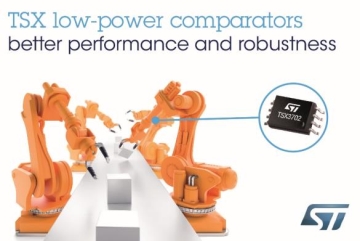
ST마이크로일렉트로닉스(이하 ST)가 신세대 공정 기술을 이용해 16V CMOS 듀얼 및 쿼드 아날로그 컴퍼레이터를 업그레이드 출시했다. 이로써 평균 전류소모를 컴퍼레이터 당 5μA로 낮추는 것은 물론 전파 시간이 더 빨라지고 최고 4kV까지 ESD 성능이 향상되었다. 새로운 TSX393, TSX339, TSX3702, TSX3704는 전 세대 IC와 호환이 가능하며 경쟁 제품인 바이폴라 컴퍼레이터에 비해 ST CMOS 디바이스의 성능 및 효율 상의 장점을 크게 향상시켰다. 2.7V ~ 16V에 이르는 넓은 단일 공급전압 범위를 제공하고 산업 및 자동차 장비를 비롯해 다양한 애플리케이션에서 사용되고 있는 표준 전압으로 동작이 가능하다.
2016.11.25by 김수지 기자
ST Expands Online Security Support with STSAFE, Adding the Latest TPM Module
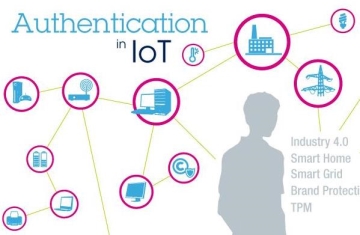
ST마이크로일렉트로닉스(STMicroelectronics, 이하 ST)가 컴퓨터 및 스마트 커넥티드 기기의 사이버 공격 방어를 위해 업계에서 검증된 쉴드를 제공하는 최첨단 보안 모듈 2종을 출시했다. 새로운 STSAFE TPM(Trusted Platform Module)은 암호화 키나 소프트웨어 측정과 같은 시스템 인증 데이터를 엑세스와 변경이 불가능한 하드웨어에 저장하는 업계에서 표준화된 방법을 제공하여 PC 및 서버뿐만 아니라 프린터, 복사기, 홈 게이트웨이, 네트워크 라우터, 스위치와 같은 여러 가정 및 사무용 장비를 보호하도록 돕는다. 이 안전한 저장공간은 공격자가 디바이스의 무결성을 저해하고, 개인 데이터를 도용하거나 시스템 및 데이터, 네트워크 자체를 위험하게 만드는 비인증된 액세스나 권한을 얻기 위해 시스템을 침해하는 것을 방지한다.
2016.11.29by 김수지 기자
ST Unveils Turnkey Sensor Boards to Ease IoT and Wearable Design
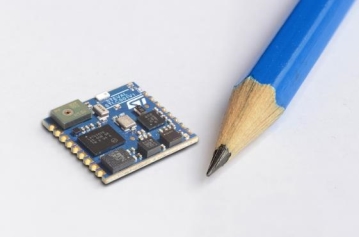
ST마이크로일렉트로닉스(이하 ST)의 새로운 센서타일(SensorTile)은 13.5mm x 13.5mm로 현재 동종 솔루션 중 가장 작은 크기의 턴키 센서 보드로, MEMS 가속도센서와 자이로스코프, 지자기센서, 압력센서, MEMS 마이크를 탑재하고 있다. 또한 온보드 저전력 STM32L4 마이크로컨트롤러와 결합하여 웨어러블, 게임 액세서리, 스마트홈, IoT(Internet-of-Things) 기기 등의 개발을 위한 센싱 및 커넥티비티 허브로 사용할 수 있다.
2016.12.08by 김수지 기자

Intel Unveils Next-Generation 'Core Ultra Series 3' and vPro Platform for Enterprise PCs
인텔이 차세대 기업용 PC를 위한 ‘인텔 코어 Ultra 시리즈 3’와 최신 vPro 플랫폼을 공식 발표하며, 기업용 노트북부터 고성능 워크스테이션까지 폭넓은 수요 충족에 나섰다.
2026.03.26by 배종인 기자

ROHM Launches ESD Protection Diode Compatible with High-Speed Interfaces of 10Gbps or Higher
반도체 전문 기업 로옴(ROHM)이 10Gbps를 넘어서는 차세대 고속 데이터 통신 환경에 대응할 수 있는 ESD(정전기 방전) 보호 다이오드 ‘RESDxVx 시리즈’를 개발하며, 고속 인터페이스에서 요구되는 신호 품질 유지와 IC 보호 성능을 동시에 끌어올렸다.
2026.03.26by 배종인 기자











