



U.S. Mandates Vehicle-to-Vehicle Communication Technology for All Small Vehicles
 Published2016.12.15 17:56
The United States Department of Transportation (DoT) and the National Highway Traffic Safety Administration (NHTSA) announced a Notice of Proposed Rulemaking.
NXP Semiconductors stated that it welcomes the proposed regulation, which mandates the application of vehicle-to-vehicle communication technology to all small vehicles.
V2X (Vehicle-to-Everything) technology enables vehicles located more than one mile apart to communicate directly wirelessly with each other, and it will serve as the foundation for the future introduction of autonomous vehicles. V2X technology allows drivers to perceive a wider range, extending beyond the range of human visual perception.
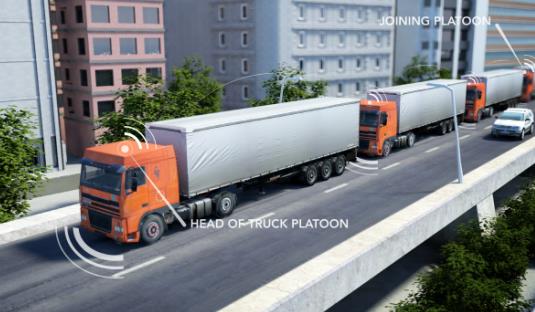
Thus, it is a core technology that enables machines to drive better than humans. Furthermore, because V2X is reliable regardless of weather or lighting conditions, it is expected to provide significant complementary effects to existing driver assistance technologies used in autonomous vehicles, such as radar, cameras, and ultrasound.
Along with the announcement of these regulations, a report on the preliminary outlook for the safety effects of Left Turn Assist (LTA) and Intersection Movement Assist (IMA) was also released. According to the report, these technologies are expected to reduce annual collision accidents by 592,000 and fatalities by 1,083. Other research suggests that V2X technology reduces carbon emissions and can also improve traffic flow by alerting drivers to congested or hazardous areas one mile in advance.
NXP possesses industry-leading technology, such as the RoadLink solution, a full-fledged automotive security V2X system solution. Security is vital in wireless communication. Therefore, the RoadLink solution incorporates high-performance security elements equivalent to those used in bank cards or electronic passport systems to block hacking attempts on connected cars. The NXP RoadLink solution is integrated into Delphi's communication platform and is scheduled to be introduced in mass-produced vehicles in the United States for the first time.
Kurt Sievers, General Manager of NXP’s Automotive business, stated, “As one of the leading technology providers in the automotive market, this announcement that we can bring this technology, which contributes to driver safety, to mass production sooner than expected will be a significant milestone in the history of the industry and will change road traffic and automobiles in a completely different direction.”
According to Kurt Sivers, the market has been grappling with the chicken-or-the-egg dilemma. “Safety technology must be installed not only in the driver’s own vehicle but also in other vehicles that could pose a risk to it,” he explained. “This decision by the U.S. Department of Transportation has paved the way for the adoption of V2X technology by the industry and policy-making bodies.”
In addition, “NXP has been deeply involved in the testing process of these technologies from the beginning.” "Therefore, we anticipate that applying V2X technology to just 5–10% of all vehicles will generate positive ripple effects. For example, driving at the same speed as other vehicles can improve traffic flow. These benefits will expand as the number of vehicles equipped with V2X technology increases, and the newly announced regulations will serve as an important foundation to accelerate this change," he added.
관련뉴스
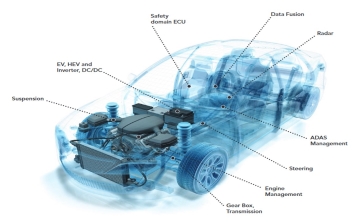
NXP, 고신뢰성 SBC 시리즈 확대로 차량 전장 시스템 기능 안전 강화해
NXP반도체는 최신 시스템 기반 칩(SBC: System Basis Chip)인 FS45 및 FS65 시리즈를 새롭게 선보였다. 이 제품들은 시스템 수준의 높은 신뢰성을 갖춘 기능 안전을 제공하며, 동시에 전반적인 전력 소모는 줄여 준다. 새롭게 선보이는 SBC 제품은 배터리 관리 시스템, 전자 스티어링 시스템, 전기차 또는 하이브리드 차량은 물론, 시동 및 정지 장치 등의 첨단 구동 시스템(advanced power train system)과 변속 시스템에도 사용이 가능하다.
2016.10.07by 신윤오 기자
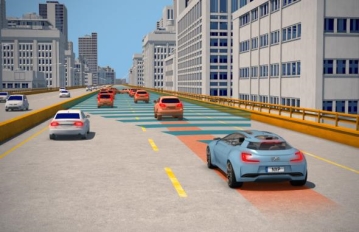
NXP Launches New Automotive Radar MCU Supporting Partial Autonomous Driving
NXP 반도체는 안전한 자율주행을 실현하는 데 필요한 기능과 성능을 제공할 차량용 레이더 마이크로컨트롤러(MCU) 신제품인 NXP S32R27를 출시했다. NXP는 레이더 기반 ADAS 반도체 솔루션의 선도적 공급 기업으로, 2016년에 출하된 모든 차량용 레이더 모듈 중 50%는 NXP의 레이더 처리 및 프론트엔드 기술을 사용할 것으로 추산된다.
2016.11.08by 신윤오 기자

NXP, 트럭간 11m 거리 군집주행 성공 '빠른 반응 속도' 더 높일 것
NXP반도체와 협력사는 뮌헨의 일렉트로니카 전시회에 앞서, 현재 진행 중인 지능형 보안 교통 시스템을 시연하는 행사를 가졌다. 이 시연에는 뮌헨 도로에서의 플래투닝 주행, 신호등 및 차량 동기화, 보안 V2X 기술 기반의 교통 약자 보호 기술이 포함됐다. 또한 NXP와 DAF 트럭은 2017년을 목표로 사람보다 30배 빠르게 반응하는 트럭 플래투닝 주행 계획을 발표했다. 이 목표를 달성한다면 트럭 운송 업체는 플래투닝 주행에서 뛰어난 데이터 보안성을 유지하면서 높은 효율 및 안전성 향상을 기대할 수 있을 것이다.
2016.11.10by 신윤오 기자

A single misaligned light means 'defect'… Vehicle interior lighting now guarded by semiconductors and software
자동차 실내조명이 '보조 조명'의 자리를 벗어나고 있다. 색상과 애니메이션으로 브랜드 아이덴티티를 드러내고 운전자 취향을 담아내는 사용자 경험(UX)의 핵심 요소로 올라서면서, LED 실내 앰비언트 시장도 빠르게 커지는 중이다. 이에 관하여 '미래 자동차를 밝히는 지능형 LED 실내 조명 솔루션' 이라는 내용으로 기술 웨비나 세션을 발표하는 최영재 다보코퍼레이션 연구위원을 앞서 만나, 시장의 온도와 설계 요구의 변화를 들었다.
2026.08.28by 명세환 기자
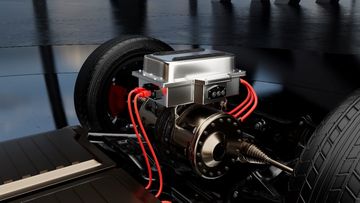
TI, HEV·EV 트랙션 인버터용 다축 코어리스 전류 센서 TMCS2100-Q1 공개
Texas Instruments가 HEV·EV 트랙션 인버터용 다축 코어리스 홀 효과 전류 센서 TMCS2100-Q1을 공개했다. 수평·수직 자기장을 동시에 측정하는 다축 센싱 기술로 기존 단일 축 센서 대비 최대 20배 높은 정확도를 달성하며, 버스바 무개조 설계로 기계 설계 유연성을 확보했다. 800V 아키텍처 확산에 따른 고정확도 요구 충족과 소형화를 동시에 구현한다.
2026.08.27by 배종인 기자











