



[Critical IT Scene] Smart Appliances with Deep Learning Technology
 Published2016.12.22 18:26
Air conditioners that concentrate cooling in frequently occupied spaces, refrigerators that automatically enter power-saving mode during sleep, etc.
LG Electronics will debut smart appliances featuring Deep Learning technology for the first time at the 'CES 2017' exhibition opening on the 5th of next month in Las Vegas, USA.
LG Electronics will showcase deep learning-based smart appliances such as air conditioners and robot vacuums that independently learn user habits in using home appliances and surrounding environmental conditions to provide optimal features to users.
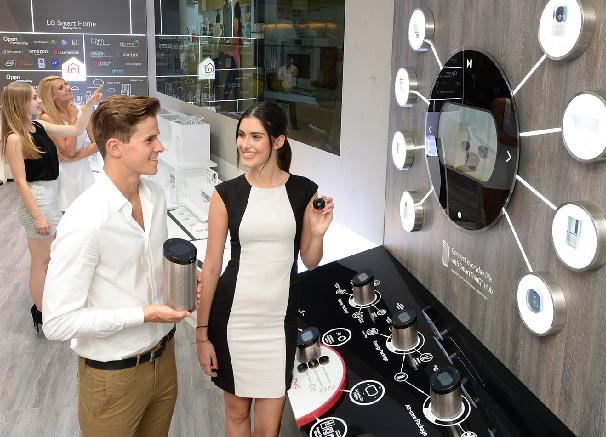
■SmartThinQ sensor showcased at the IFA exhibition in September.
LG Electronics plans to add deep learning to its smart home service 'SmartThinQ(SmartThinQTM)' and lead the way in true smart homes where appliances independently understand and operate for customers.
LG Electronics' deep learning-based smart appliances analyze data accumulated in the cloud through various sensors and WiFi, and independently operate in ways optimized to users' lifestyle patterns and surrounding environments.
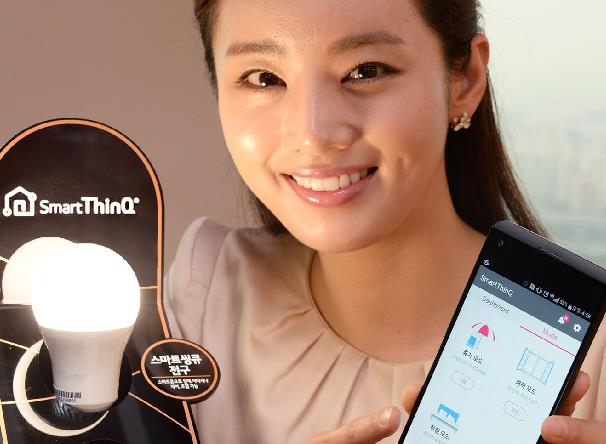
■ LG smart home service linked with SmartThinQ exchanges signals with smartphones through a dedicated gateway of the SmartThinQ sensor. LG Electronics launched three IoT-linked devices including smart bulbs, smart plugs, and motion sensors in October.
While conventional air conditioners cool all areas of the living room uniformly, air conditioners with deep learning technology identify spaces where users spend most of their time and concentrate cooling there. Robot vacuums can distinguish between obstacles to avoid and obstacles to cross. Previously, they would attempt to go over a person's feet, but with the help of deep learning, they wait about 3 seconds in front of a person's feet, resume cleaning if the feet move away, or take a detour if the feet remain stationary.
Smart refrigerators also analyze the number of times and duration doors are opened, and automatically operate in power-saving mode during sleeping hours when users do not open the door. During summer heat, if the temperature and humidity in the kitchen are high, the sterilization function is set to the highest level, 'Power Mode,' to prevent food from spoiling easily. Smart washing machines fill more water and raise the temperature in areas with high mineral content to ensure better rinsing.
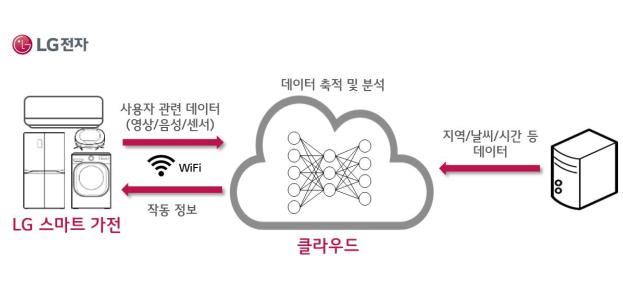
LG Electronics has launched smart home accessories including SmartThinQ™ Sensor and SmartThinQ™ Hub this year, and plans to showcase smart appliances equipped with deep learning technology next year, progressively building the smart home infrastructure.
LG Electronics' Song Dae-hyun, Executive Vice President of H&A Business Division, emphasized, "We will continue to lead the smart home market with deep learning technology that enables appliances to understand customers."
Related news
LG Electronics to integrate Amazon voice recognition service into SmartThinQ Hub
LG Electronics has partnered with Amazon, the world's largest e-commerce company, in the smart home sector. LG Electronics has decided to integrate Amazon's Internet of Things service with the SmartThinQ™ Sensor and SmartThinQ™ Hub that it launched domestically. LG Electronics will link Amazon's voice recognition service, 'Alexa,' to the SmartThinQ™ Hub. Users can control LG Electronics appliances through the 'SmartThinQ™ Hub' using voice commands alone. Users can check weather and schedules through the screen and voice of the 'SmartThinQ™ Hub,' and by connecting via Bluetooth, they can listen to music from their smartphone.
2016.09.02by 신윤오 기자
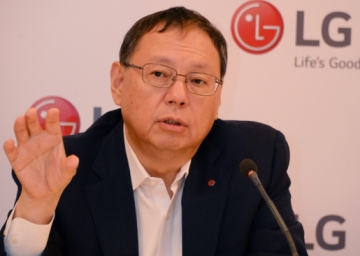
LG Electronics CEO Cho Seong-jin: "Smartization of all home appliances, including IoT"
LG Electronics President and H&A (Home Appliance & Air Solution) Business Division Head Jo Sung-jin held a press conference on the 2nd local time in Berül Linde, Germany, and stated, "Although the business environment is challenging due to decreased demand and intensified competition, we will elevate the status of LG Electronics home appliances based on an advanced business structure and stable profit structure." President Jo Sung-jin emphasized, "In addition to investing in premium brands, we will actively invest in smart home, home robots, and core components to strengthen the business capabilities of home appliances and prepare for the future." LG Electronics' smart home roadmap extends from smart appliances such as washing machines, refrigerators, and air conditioners to home robots capable of deep learning and intelligence. LG Electronics will progressively build the smart home foundation by ▲adding smart functionality to general appliances through SmartThinQ™ Sensor, ▲expanding and launching new smart appliances, and ▲introducing smart home hubs such as SmartThinQ™ Hub and IoT accessories.
2016.09.05by 신윤오 기자
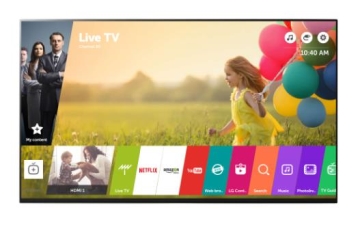
LG Electronics to Equip Smart TVs Launching Next Year with the Advanced 'webOS 3.5'
LG Electronics plans to unveil the more advanced 'webOS 3.5' for the first time at CES 2017 in Las Vegas, Nevada next month, and intends to install it in smart TVs to be launched next year. LG Electronics has incorporated a host of 'fun features' into webOS 3.5 that allow users to properly enjoy smart TVs.
2016.12.19by 홍보라 기자
Ecolab and K-water Discuss Innovation Collaboration in Advanced Industry Water Management
Ecolab and the Korea Water Resources Corporation jointly discussed cooperation directions for maximizing water use efficiency in advanced industries such as semiconductors and data centers and establishing sustainable water circulation. The two companies agreed to gradually develop a long-term cooperation model that combines water resource infrastructure and water management technology to promote water efficiency optimization, water reuse, and carbon reduction.
2026.08.28by 명세환 기자
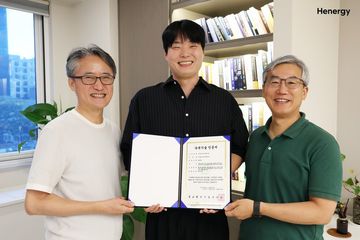
H.Energy Obtains Green Technology Certification…SolarOnCare Operating at 99.82% Uptime
H.Energy has obtained green technology certification from the Small and Medium Business Administration for solar power generation forecasting and I-V curve anomaly diagnosis technology. The AI-based asset management platform SolarOnCare is deployed across more than 3,000 power plants nationwide, achieving a system uptime of 99.82% and a 3.7% improvement in power generation performance. Through real-time data analysis, it protects power generation revenue by detecting and managing minor losses such as module degradation and partial shading early on.
2026.08.25by 명세환 기자











