


[Promising Future Technology ①] Urgent Need to Secure IoT and Industrial Convergence Technology
 Published2017.01.02 11:18
In the future, the market will expand to various industries based on smart homes.
# When Mr. K gets closer to home, the home network devices measure the distance with his smartphone to predict his return time. The smart boiler will start heating and the rice cooker will start cooking when he returns home. The door lock will send a signal to the audio, and the shower will send a signal to the rice cooker while he is washing. That night, when an abnormal sound is detected from the microphone installed at the back door, the home control system immediately switches the house to alert mode. The system uses the function of distinguishing between transmitted voices and voices reflected from the wall to identify the location of the intruder and sends intrusion information to the control center, and switches all home appliances and IoT devices in the house to security mode to prevent any possible information leaks.
The above is a common sight in the Internet of Things (IoT) era. Some are currently being implemented, and the rest are fully possible technologies. The era of the Internet of Things is opening, where all things are connected to the Internet and technologies and services are provided to share information.
It is evolving into a concept that interacts with all information in the real and virtual worlds, as well as objects. The concept of M2M, which enables intelligent communication between people and objects, and objects and objects, using mobile communication networks, is expanding to the Internet, expanding into a concept that interacts with all information in the real and virtual worlds, as well as objects.
The Korean IoT market is expected to grow from KRW 3.8 trillion in 2015 to KRW 13.7 trillion in 2020. The global IoT market is expected to grow by an average of about 26% per year and exceed USD 1 trillion in 2020. In the early stages of the IoT market, terminals accounted for a large portion, but in 2022, it is expected that 50-60% of global and Korean market sales will come from platforms and services.
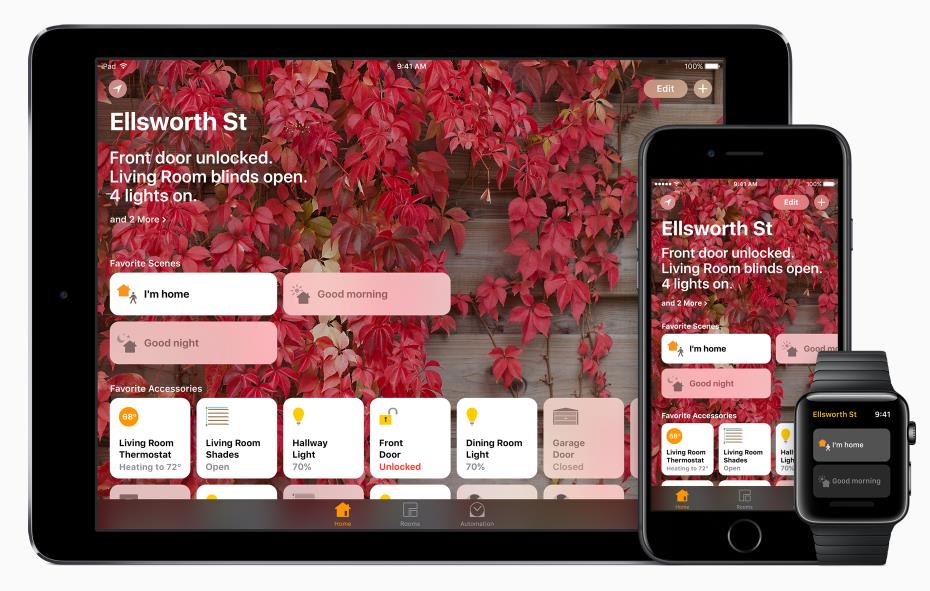
▲ Apple Homekit
Apple is the most influential company in the global Internet of Things market. Google's subsidiary Nest is in second place, and Samsung is in seventh place. Apple is expanding its ecosystem by partnering with home appliance manufacturers or semiconductor companies to make it compatible with the HomeKit API.
Since Google acquired Nest, which has home automation technology, in January 2014, it acquired 'myenergy', which has online energy usage monitoring technology, in May, 'revolv', a home monitoring company, in June, and 'dropcam', a home automation company, in October. Samsung Electronics acquired 'SmartThings', an Internet of Things platform development company, in 2014, established the standards organization OIC with Intel, and recently launched OCF by absorbing the AllSeen Alliance. In particular, it is expanding its ecosystem by releasing the ultra-small Internet of Things module 'ARTIK' last year.
Patent applications in the Internet of Things field showed a high growth rate in the 2000s and have continued to increase since then. The USPTO has been leading throughout the period, while the Korean Patent Office has been leading with a sharp increase in patent applications in 2000, a decline until 2002, and a steady increase since 2003.
Korea increased from 16.4% in the first section of applications (95'~98') to 22.6% in the fifth section, and the US is showing a continuous increase from the first to the fifth sections, but Japan is gradually decreasing. The overall patent application trend was IoT industry convergence, followed by IoT devices, smart homes, IoT platforms, and IoT security, and Korea was registering patents following this trend.
Korea has the highest share of IoT devices among IoT-related technologies
The IoT industry convergence field has been continuously receiving many applications from the past to the present, and among IoT devices, wearable device technology has been continuously increasing since the early 2000s. Among the smart home field, smart home network technology has been receiving increasing patent applications since the mid-2000s. Among the IoT security field, hardware-based IoT security technology and among the IoT platform field, heterogeneous platform federation technology has been receiving increasing patent applications since 2010.
In terms of overall patent share, Korea ranks third after the United States and Japan, and IoT device technology has the highest share among IoT-related technologies. Korea has the lowest number of patent applications for IoT industrial convergence technology.
In terms of overall key market penetration rate, Korea ranked 4th, following the US, Japan, and Germany. IoT device technology showed the highest key market penetration rate in Korea, while IoT industrial convergence technology showed the lowest key market penetration rate in Korea, and the key market penetration rate was also the lowest compared to leading countries.
Patents are more interesting when viewed from the perspective of the number of lawsuits filed. IoT industry convergence technology had the most active litigation activity, exceeding the average number of lawsuits, and from the perspective of NPE litigation, IoT industry convergence technology had the most patents among the litigated patents where the current right holder is an NPE. Many patent lawsuits occurred in patents filed in the early 2000s, and have been decreasing since then. From the perspective of the final year of patent litigation, the most patent lawsuits occurred in 2013, and recently, the number of lawsuits has been decreasing.
When analyzing the Top 10 applicants by section, Hitachi, Samsung Electronics, and IBM continue to maintain the top ranks, and recently, ETRI, Qualcomm, Google, GE, and Intel have been filing many applications.
IoT devices, IoT industry convergence, IoT security are maturing... Smart home technology is growing
In the patent analysis by application area, healthcare IoT is being studied to enable more accurate health status measurement through various devices, moving beyond the current simple measurement of exercise volume, heart rate, etc. It is evolving toward providing information on the probability of future disease occurrence and the medical expenses that may arise due to it through complex and precise health analysis. In the case of agricultural and livestock IoT, technologies that assist agriculture using drones, etc. and technologies that analyze crop growth through sensors are being developed.
In conclusion, IoT devices, IoT industry convergence, and IoT security have entered the maturity stage, and smart home technology is in the growth stage, allowing us to see the future product/service appearance of the Internet of Things. Digital assistants are currently being released as devices and platform products centered on smart homes. As seen in recent patents, service-related technologies that increase user convenience and platform technologies that facilitate connection between devices to achieve hyper-connectivity are being actively developed.
In the future, the Internet of Things is expected to be applied to various industries such as energy, city/safety, health/medical care, etc. based on smart homes, and change the future of various industries. <This article is based on the Korea Intellectual Property Strategy Institute (KISTA)’s Future Promising Product Service Analysis Report.>
관련뉴스
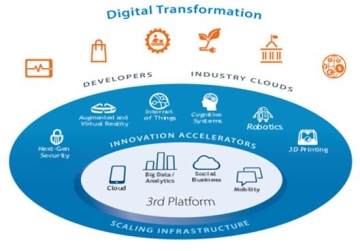
[2017 Outlook] Leading the Way as a Smart Company by Leading IoT and Artificial Intelligence
한국IDC(대표 홍유숙)는 2017년 예상되는 국내 IT 시장의 주요 이슈 및 트렌드, ‘한국IDC가 내다본 2017년 10대 예측’을 소개했다. 한국IDC에서 리서치 그룹을 총괄하고 있는 장순열 상무는 “IT 시장의 저성장 기조가 지속되는 가운데 전통적인 IT 시장은 성장에 어려움을 겪고 있는 반면, 디지털 트랜스포메이션을 이끄는 제3의 플랫폼 기반 기술(클라우드, 모빌리티, 빅데이터 분석, 소셜 등) 시장이 IT 투자를 이끌고 있다”며, 디지털 경제(DX Economy)를 통해 디지털 트랜스포메이션(DX)이 거시경제에 커다란 영향을 미치고 있다고 말했다.
2016.12.05by 김수지 기자
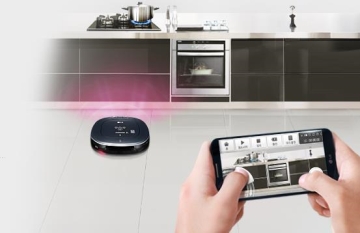
From semiconductors and sensors to artificial intelligence, the counterattack of 'IoT appliances' has begun
스마트홈 혹은 홈 IoT에서 주도적인 역할을 수행하는 지능화된 가전기기 산업이 새해에는 본격적으로 확대될 전망이다. 전 세계 스마트홈 시장은 2015년 600억 달러에서 2020년 1336억 달러로 커질 예상이며, 이중 IoT 가전은 2015년 52억 달러에서 2020년 340억 달러로 연평균 48% 성장할 것으로 보인다. 지난해 국내 스마트홈 시장규모는 10조원으로 추정되며 IoT 가전은 3.3조원을 차지했다.
2016.12.26by 신윤오 기자

2017 will see increased progress in industrial IoT in smart buildings and industrial automation.
자동차 분야, 사물인터넷 (IoT) 및 모터 컨트롤 및 빌딩 자동화와 같은 산업용 애플리케이션에서 상당한 성장이 있었다. 2016년을 정의하는 것들 중 하나는 업체들간의 인수합병이었다. 비교적 평탄했던 반도체 시장에서는 온세미컨덕터의 페어차일드 세미컨덕터 매입을 포함한 여러 회사들의 인수합병의 결과 업계의 큰 회사들이 계속 성장을 유지할 수 있었다. 이를 통해 업계와 소비자들이 필요로 하는 더욱 복잡한 집적 솔루션과 제품들을 실현을 위해 제품 개발에 많은 투자를 하기도 했다.
2016.12.28by 신윤오 기자
Ecolab and K-water Discuss Innovation Collaboration in Advanced Industry Water Management
Ecolab and the Korea Water Resources Corporation jointly discussed cooperation directions for maximizing water use efficiency in advanced industries such as semiconductors and data centers and establishing sustainable water circulation. The two companies agreed to gradually develop a long-term cooperation model that combines water resource infrastructure and water management technology to promote water efficiency optimization, water reuse, and carbon reduction.
2026.08.28by 명세환 기자
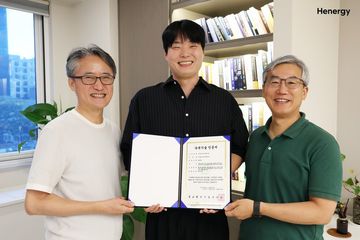
에이치에너지, 녹색기술인증 획득…솔라온케어 가동률 99.82%
에이지에너지가 태양광 발전예측 및 I-V커브 이상진단 기술로 중소벤처기업부 녹색기술인증을 획득했다. AI 기반 자산관리 플랫폼 솔라온케어는 전국 3,000개 이상 발전소에 적용되어 99.82%의 시스템 가동률과 3.7% 발전성능 개선을 달성했다. 실시간 데이터 분석을 통해 모듈 노화와 부분 음영 등 미세한 손실을 조기에 감지하고 관리함으로써 발전 수익을 보호한다.
2026.08.25by 명세환 기자











