

.png)

Intel Announces 5G Modem for Autonomous Driving Connectivity
 Published2017.01.09 17:16
Delivers gigabit-class speeds and ultra-low latency
Intel has announced the addition of a 5G modem to its 5G product portfolio.
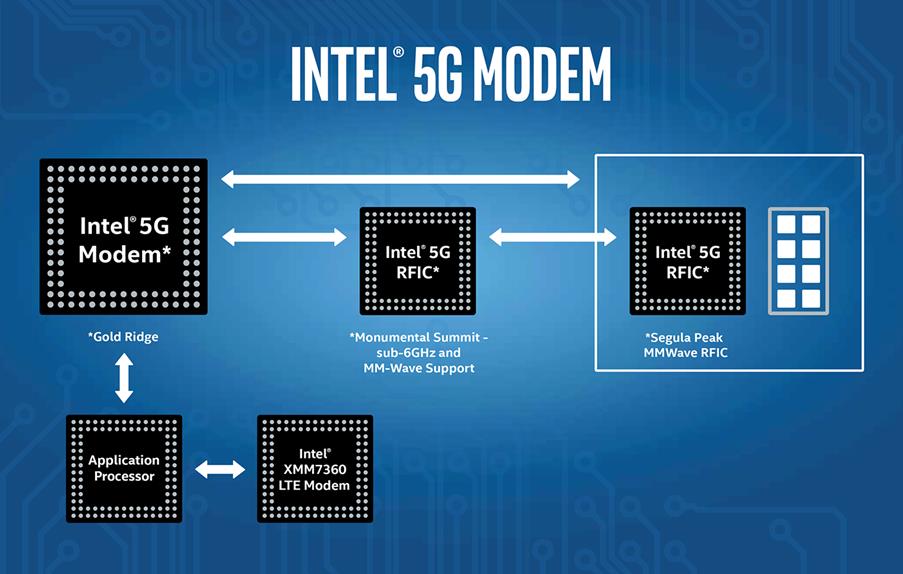
This modem is equipped with a baseband chip that supports both sub-6 GHz spectrum and millimeter wave (mmWave), the high-frequency band, enabling 5G spectrum trial service implementation anywhere in the world. It enables gigabit-class throughput with ultra-wideband operation and ultra-low latency, and combines Intel's sub-6 GHz 5G RFIC (Radio Frequency Integrated Circuit) and 28 GHz 5G RFIC to support all major 5G candidate bands globally.
Intel's new 5G transceiver is a 5G RFIC that supports both sub-6 GHz spectrum and millimeter wave, the high-frequency band. This transceiver works in combination with the 28 GHz RFIC announced at the Mobile World Congress (MWC) in early 2016 as part of Intel's Mobile Trial Platform.
Samples of Intel 5G RFIC are scheduled for release in the first half of 2017, and samples of Intel 5G modem in the second half of 2017.
Fast speeds, ultra-low latency, and vehicle-to-vehicle connectivity enabling autonomous driving
Intel stated that 5G can demonstrate its capabilities in autonomous vehicles, which generate and consume vast amounts of data. It will provide technologies such as fast speeds, low latency, and V2V (vehicle-to-vehicle) connectivity.
Additionally, 5G is expected to deliver gigabyte-class speeds thanks to advances in millimeter wave band and wireless and antenna technologies. Designed to implement computing resources at the network edge within mobile base stations that connect vehicles via wireless signals, it will enable the connectivity necessary for decision-making without the need to transmit or receive data to a server. Intel stated that 5G aims to implement connectivity that allows vehicles to communicate and learn with each other as well as with surrounding environments beyond the line of sight.
To support 5G and autonomous driving, Intel has developed the Intel GO Automotive 5G Platform, an end-to-end system and 5G-enabled platform for autonomous driving.
관련뉴스
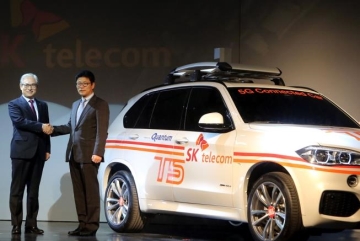
‘커넥티드카-드론-도로교통정보’ 연결하는 5G 커넥티드카 시동
SK텔레콤과 BMW코리아가 영종도 BMW 드라이빙센터에 조성된 세계 최대 규모 5G 시험망에서, ‘커넥티드카-드론-도로교통정보’를 실시간 연결하는 미래주행 기술을 선보였다. 5G 초연결사회의 대표적인 차세대 성장 산업으로 주목 받는 커넥티드카가 5G 통신과 융합돼 대중에 공개된 것은 이번이 세계에서 처음이다.
2016.11.15by 신윤오 기자
Intel CEO Makes Massive Investments in Technology and Developers to Enhance AI Technology
Intel announced a comprehensive strategy including new products, technologies, and investment plans to support the expansion of AI (Artificial Intelligence) adoption and accelerate growth across all domains from devices to data centers. Intel recognizes that AI is fundamentally changing not only how businesses operate but also how people interact with the world, and is developing the broadest set of technology options in the industry to leverage AI technology across all fields ranging from smart factories to drones, sports, fraud detection, and autonomous vehicles.
2016.11.21by 신윤오 기자

SK Telecom Begins Development of 5G Equipment and Terminals Based on 3GPP Standards
SK Telecom (www.sktelecom.com) announced on the 21st that it has begun designing base station equipment and terminal prototypes based on the 5G specifications established by 3GPP*, a global standardization body, together with Qualcomm and Ericsson. SK Telecom, Ericsson, and Qualcomm, as the leading companies in the mobile communications, base station equipment, and chipset sectors respectively, plan to conduct interoperability testing in the second half of 2017, when the initial development of 5G base station equipment and terminal prototypes is completed.
2016.12.22by 신윤오 기자
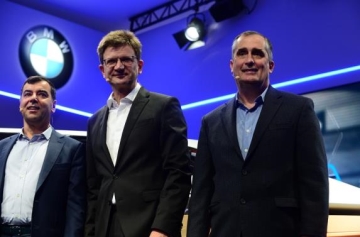
인텔, 올 하반기에 40여대의 자율주행차 실도로에서 시험주행
인텔, BMW, 모빌아이는 2017년 하반기까지 40여대의 자율주행차가 실제 도로에 나타날 것을 발표함으로써 완전한 자율주행을 위해 3사가 이루어 낸 성과를 공개했다. CES의 공동 기자회견에서 진행된 연단 토론을 공개하면서 3사는 미국과 유럽을 시작으로 글로벌 시범 기간을 통해 BMW7 시리즈에 포함된 인텔과 모빌아이의 최첨단 기술을 추가적으로 설명했다.
2017.01.06by 김수지 기자

A single misaligned light means 'defect'… Vehicle interior lighting now guarded by semiconductors and software
Automotive interior lighting is moving beyond its role as 'auxiliary lighting.' As it becomes a core element of user experience (UX) that expresses brand identity through color and animation while reflecting driver preferences, the LED interior ambient lighting market is growing rapidly. In connection with this, we met in advance with Choi Young-jae, Research Director at Dabo Corporation, who will present a technical webinar session on "Intelligent LED Interior Lighting Solutions Illuminating Future Vehicles," to hear about market trends and changes in design requirements.
2026.08.28by 명세환 기자











