

.png)

NXP Develops Automotive Ethernet Transceiver for In-Vehicle Networks
 Published2011.11.10 19:00
NXP Develops Automotive Ethernet Transceiver for In-Vehicle Networks
- NXP, the first automotive semiconductor company to adopt Broadcom's BroadR-Reach
- Establishment of 'OPEN Alliance Special Profit Organization' to promote Ethernet networks in the automotive industry
SAN JOSE, Calif., Nov. 09, 2011 – NXP Semiconductors N.V. (NASDAQ: NXPI) today announced its entry into the automotive Ethernet business as the first automotive semiconductor supplier to deploy Broadcom’s BroadR-Reach® Ethernet technology for in-vehicle networking. NXP’s commitment to be the industry’s first supplier of in-vehicle networking electronics marks a significant milestone in establishing BroadR-Reach as the de facto open standard for in-vehicle Ethernet. In parallel, NXP, Broadcom, Freescale and Harman today announced the formation of the OPEN Alliance Special Interest Group to accelerate the adoption of Ethernet in the automotive industry.
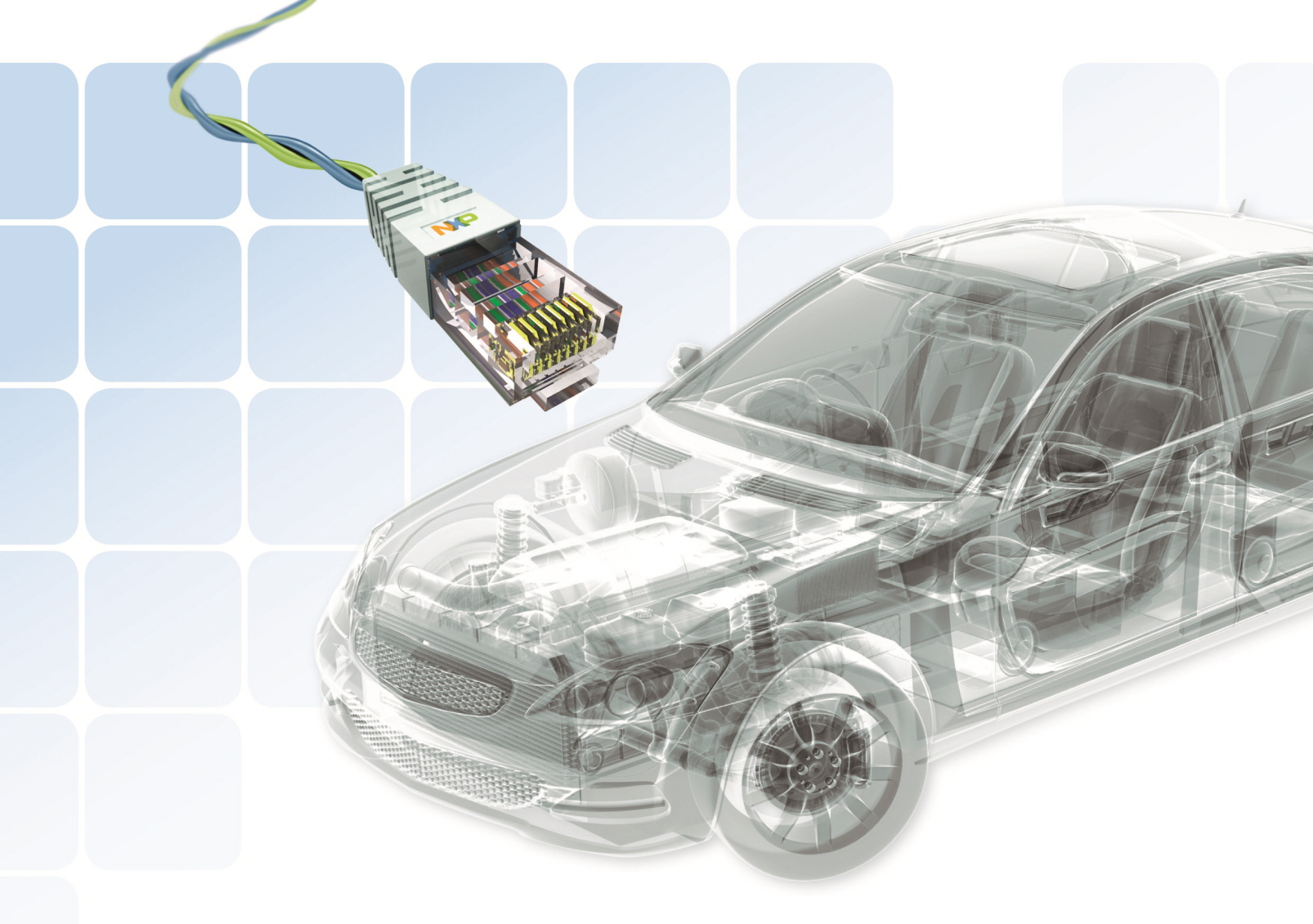
NXP plans to leverage its expertise in automotive electronics, which boasts industry-leading quality and strong application know-how, to develop an automotive-grade portfolio of products for the Ethernet physical layer based on BroadR-Reach®. Major automakers are developing new designs based on Ethernet, a high-bandwidth, low-cost network technology, complementing existing IVN technologies such as CAN, LIN, LVDS, and FlexRay. BMW has been selling Ethernet-enabled vehicles since 2008.
As automotive environments become more complex and evolve into network environments based on power electronics, demand is increasing among OEMs and design engineers for IVN technologies that can handle high-bandwidth applications at low cost. Broadcom BroadR-Reach Ethernet technology has significant cost advantages over other high-bandwidth IVN technologies such as LVDS because it is based on the ability to operate over UTP cable. Single-conductor UTP is not only cheaper and lighter than shielded cables, but is already used in CAN-based and LIN-based control systems, enabling the application of BroadR-Reach to existing in-vehicle networks.
A prime example of a high-bandwidth IVN application is the camera security feature that may become mandatory in new cars in countries such as the United States. Currently, there is a risk of damage to the vehicle or injury to pedestrians in situations where the driver’s view is not fully secured, such as when backing out of a narrow alley or garage. By mounting a few network cameras on the outside of the vehicle, the driver can see a full 360-degree view of the vehicle on the dashboard. Other high-bandwidth applications that can support Ethernet include network infotainment.
Another advantage of Ethernet as an IVN technology is that it is recognized as an international standard that supports IP-based networking. This makes it easy to adapt existing personal and enterprise IP software and applications to automotive applications, thus accelerating the development of future networked vehicles.
“We are delighted that NXP, a leading supplier of innovative IVN technology, has selected BroadR-Reach as a licensee,” said Ali Abaye, senior director of PHY product marketing at Broadcom. “With BroadR-Reach technology available to other semiconductor suppliers, it will help drive widespread adoption of 100Mbps Ethernet as a standard for automotive networking applications,” he said.
“Ethernet is a natural fit for high-bandwidth IVN, and we believe BroadR-Reach is the best technology for this application,” said Rob Hoeben, director of Ethernet marketing and business development, NXP Semiconductors. “Partnering with Broadcom rather than launching another R&D program will help reduce development costs and accelerate adoption of this technology in the automotive industry. We have no doubt that licensing BroadR-Reach will help accelerate the adoption of IVN Ethernet as a true standard, and we plan to develop automotive-grade PHY products based on Broadcom’s BroadR-Reach IP.”
First samples of NXP products are expected to be available in 2013.

관련뉴스

Intel Unveils Next-Generation 'Core Ultra Series 3' and vPro Platform for Enterprise PCs
Intel has officially unveiled the "Intel Core Ultra Series 3" for next-generation enterprise PCs and the latest vPro platform, addressing a wide range of demands from enterprise notebooks to high-performance workstations.
2026.03.26by 배종인 기자

ROHM Launches ESD Protection Diode Compatible with High-Speed Interfaces of 10Gbps or Higher
반도체 전문 기업 로옴(ROHM)이 10Gbps를 넘어서는 차세대 고속 데이터 통신 환경에 대응할 수 있는 ESD(정전기 방전) 보호 다이오드 ‘RESDxVx 시리즈’를 개발하며, 고속 인터페이스에서 요구되는 신호 품질 유지와 IC 보호 성능을 동시에 끌어올렸다.
2026.03.26by 배종인 기자
ST Launches 75V Drive IC Targeting 48V Industrial Motor Driving
ST마이크로일렉트로닉스가 48V급 산업용 구동 시스템 설계에 맞춘 75V 모터 드라이브 IC ‘STSPIN9P’ 시리즈를 공개했다. 새 제품군은 하프 브리지와 풀 브리지 구조로 구성돼 모터 종류와 출력 조건에 따라 설계를 확장할 수 있도록 한 것이 특징이다. 전원 회로와 보호 기능, 전류 감지 회로를 칩에 통합해 시스템 구성을 단순화했으며, 최대 500W급 애플리케이션까지 대응하도록 설계됐다. 회사는 레퍼런스 디자인과 데모 보드도 함께 제공해 산업 자동화, 로보틱스, 펌프, 팬, 조명, 섬유 기계 등에서 개발과 평가를 지원할 계획이다.
2026.03.26by 배종인 기자

Nordic supports security updates for the entire lifecycle of IoT devices at a single fixed cost
Nordic Semiconductor, a global leader in low-power wireless connectivity solutions, has unveiled a single fixed-cost licensing model that delivers FOTA (Firmware Over-the-Air) and device management capabilities throughout the device lifecycle via nRF Cloud, and introduced a new firmware update solution to prepare for the enforcement of the European Union's Cyber Resilience Act (CRA).
2026.03.26by 배종인 기자

Practical Training in Low-Noise, Low-Power Circuit Design All in One Place… Training Fee Support
고감도 아날로그 회로와 센서 기반 시스템 설계 역량을 강화할 수 있는 ‘2026 고급 엔지니어 실무 마스터 클래스’가 오는 4월16일 서울 가산동 e4ds 컨퍼런스 센터에서 열린다. 이번 과정은 온라인이 아닌 오프라인 유료 실습 교육으로 진행되며, 현장 중심의 심화 학습을 원하는 엔지니어를 대상으로 한다. 이번 교육은 텍사스 인스트루먼트(Texas Instruments)가 교육비를 지원해 정가 25만원에서 10만원 할인 된 15만원에 참가할 수 있다.
2026.03.26by 배종인 기자











