


[Reporter's Notebook] The Presidential Election, the Fourth Industrial Revolution, and People
 Published2017.05.01 06:29
This remark, made during a presidential candidate debate on a broadcasting station on the 25th, became a hot topic. This is understandable, as the term "Fourth Industrial Revolution," which is still unfamiliar to many, and the various concepts regarding its meaning were exchanged at the debate table from the mouths of the presidential candidates.
An interesting point of view regarding this upcoming presidential election, which is just around the corner, can also be found in the candidate debates. Unlike previous elections, a diverse range of agendas is emerging in these debates. Of course, there were criticisms that the debates were more entertaining than a comedy show because candidates broke their promises not to engage in negative campaigning, resulting in "negative debates." However, it is undeniably noteworthy that social issues such as homosexuality, the environment, and national security have appeared in the presidential debates.
In particular, it is very encouraging that the topic of the Fourth Industrial Revolution is emerging as a major campaign pledge by the candidates and a key issue in the debates. Let’s briefly quote from the aforementioned debate content further. One candidate (Candidate Ahn Cheol-soo) stated, “The Fourth Industrial Revolution is very different from the First, Second, and Third Industrial Revolutions. The First, Second, and Third Industrial Revolutions were revolutions driven by a single technology, so they could be achieved quickly if the government established a plan, but the Fourth Industrial Revolution is different.” He added, “Because numerous high-tech industries are developing simultaneously and merging in unexpected forms, predicting the future is impossible.” He argued that "if the government takes the lead, it leads to results that are not helpful to the country."
In response, another candidate (Candidate Sim Sang-jung) retorted, “It is true that the Fourth Industrial Revolution is focused on technological convergence, but what is more important is the convergence of technology and society. How will our citizens share the achievements of the Fourth Industrial Revolution, and how will we prepare for a situation where the Fourth Industrial Revolution threatens jobs? Candidate Ahn’s Fourth Industrial Revolution has technology but lacks people.”
I am not trying to say here whether any candidate's remarks are right or wrong. Although it was a symbolic statement, I found it refreshing to see someone aspiring to be president discussing and criticizing the Fourth Industrial Revolution, and I hoped there would be more debates like this in the future.
In fact, the discourse surrounding the Fourth Industrial Revolution in our society has not yet been precisely defined. The Fourth Industrial Revolution, often referred to as the "fourth wave," is represented by the term "Digitalization," and its core lies in transforming the existing knowledge-based society (the Third Industrial Revolution) into an intelligence-based society. Consequently, it is said that the term "Digital Transformation" is preferred in the West. It is a comprehensive concept of digitalization that encompasses service models, socioeconomic structures, laws and policies, and cultural barriers for the transition to the era of the Fourth Industrial Revolution.
In other words, it is said that the Fourth Industrial Revolution is not about suddenly creating something new or suddenly making something new, but rather has a greater purpose of fundamentally changing the way we live and work by integrating and interacting existing industrial infrastructure, socio-economic infrastructure, and cultural mechanisms.
In this regard, listening to the 'Government's Fourth Industrial Revolution Policy' at a recent seminar gave me a chance to reconsider this issue. The government aims to advance the industrial structure by centering on 12 new industries, including the systems industry, energy industry, and materials and components industry; however, these are not entirely new industries, as only some concepts have changed. The problem is that the policy intends to focus on deregulation and market creation based on these new businesses, with the goals of smartification, service-oriented transformation, eco-friendliness, and platformization.
Regarding deregulation, they declared that they would prioritize bold deregulation centered on new industries (as if using familiar words). In addition, they emphasized facilitating rapid product launches, providing performance-oriented intensive support, and establishing convergence platforms (as if using very familiar words). In particular, regarding the plan to expand the supply base for key personnel, they also mentioned measures to attract key foreign talent and top Korean talent in new industrial sectors through bold incentives.
The plan is to establish exceptional, top-tier support models tailored to different skill levels, such as granting visa incentives to foreigners managing startups, providing living expenses for foreign researchers, and supporting Korean overseas scholars, professors, and researchers. While this is not the first time such a proposal has been raised, it offers a glimpse into the deep sense of need for outstanding talent.
In the end, I think it is 'people'. The aforementioned presidential candidate’s emphasis on 'people' in the Fourth Industrial Revolution was, of course, intended to place emphasis on basic minimum wage increases and improvements in labor policies regarding irregular workers, but it would not be different from the idea that leading the fourth wave of the Fourth Industrial Revolution must ultimately be centered on people.
Predictions regarding how many jobs artificial intelligence will take away are emerging one after another, underpinned by factors such as population decline and increased productivity. Therefore, I hope that 'people' will be at the center of the upcoming Fourth Industrial Revolution even more. I hope that presidential candidates do not stop at mere policies, but that whoever becomes the new government, it will implement many policies that value people and place them at the center of technology.
관련뉴스
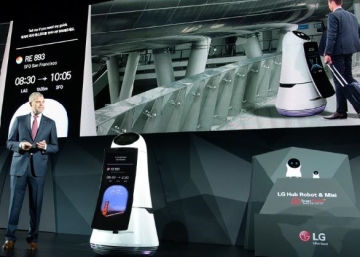
This year's government R&D will focus on investing in AI, IoT, and other areas to prepare for the Fourth Industrial Revolution.
미래부와 산업부가 올해 확정된 R&D 투자 전략을 밝히는 설명회를 가졌다. 미래부는 올해 세계 ICT 시장이 2.9% 성장할 것으로 전망하며 선진국과 신흥국을 중심으로 소프트웨어 및 IT 서비스가 성장할 것으로 내다봤다. 특히 IoT, 클라우드, 빅데이터 등 ICBM 분야는 시장 수요 확대로 2년 연속 높은 성장이 기대된다. 시장 조사기관에 따르면 IoT는 35.1% 증가하고 클라우드는 18.2%, 빅데이터는 32.6%, 모바일은 스마트폰, 태블릿이 각각 6.1%, 3.2% 성장하는 것으로 나타났다.
2017.01.23by 신윤오 기자

[토론 중계]“4차 산업혁명 변혁의 주체는 중소 기업, 디지털 역량과 리더십 역량 갖춰야”
소셜 네트워크, 모바일, 빅데이터, AI 등 새로운 디지털 기술의 발전으로 비즈니스 환경이 바뀌기 시작했다. 이제 기업의 능력은 디지털 기술을 활용하는 능력으로 가늠하기도 한다. 로아컨설팅에서는 '기존의 전통적 제조기업의 비즈니스 방식에서 새로운 가치 획득이 가능한 생태계 중심 플랫폼 비즈니스로 전환되는 현상을 통칭'한다고 정의한 디지털 트랜스포메이션(Digital Transformation)은 4차 산업혁명 시대의 해법으로 제시됐다. 한국정보산업연합회는 지난 24일 코엑스 컨퍼런스룸에서 '제4차 산업혁명, 디지털 트랜스포메이션이 해답이다'라는 주제로 2017년 IT 정책포럼을 개최했다. '디지털 트랜스포메이션 시대에 국내 기업의 역량과 국가의 정책 방향'을 주제로 열린 토론을 지상중계한다.
2017.01.31by 김지혜 기자
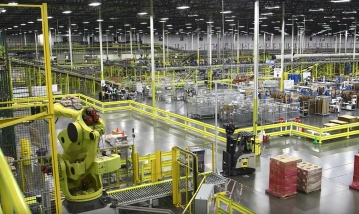
Amazon, a company that will demonstrate the true Fourth Industrial Revolution within the next 2 to 5 years
KT Economic Management Research Institute (DiGEco) released a report on "Analysis of Amazon's Fourth Industrial Revolution Development Direction" (presented by Cha Youn-yong, representative of ASPEC Future Technology Management Research Institute) on the 13th. According to the report, Amazon appears to be focusing on logistics and delivery services using autonomous trucks, robots, and drones, as well as hyperloop and service development. According to the report, the "convergence business model of smart data, AI, autonomous vehicles, robots, and drones" led by Amazon ultimately aims to form a hyperloop dedicated to logistics transportation routes.
2017.02.20by 서아람 기자
Nvidia invests $5 billion in Intel
NVIDIA and Intel, leaders in global AI computing technology, are now forging ahead in providing cutting-edge solutions through NVLink-based architecture integration. NVIDIA and Intel have officially announced a strategic partnership and stated that they will jointly develop customized data center and personal computing products to accelerate diverse applications and workloads ranging from hyperscale to enterprise and consumer markets, thereby laying the foundation for the next generation computing era.
2025.09.22by 배종인 기자
.jpg)
Applied Materials Launches Environmental Protection Campaign to Mark World Cleanup Day
어플라이드 머티어리얼즈 코리아(대표 박광선)가 ‘세계 청소의 날(World Cleanup Day)’을 맞아 동탄 신리천 일대에서 임직원 및 가족과 함께 환경 정화 활동을 펼치며, 기술 혁신을 넘어 지역사회와 함께하는 기업으로 거듭나고 있다.
2025.09.22by 명세환 기자











