



Toyota Equips Autonomous Vehicle System with NVIDIA AI Platform
 Published2017.05.11 10:27
The vehicle anticipates and responds to dynamically changing driving situations
Nvidia partners with Toyota to expand the autonomous vehicle market.
NVIDIA announced a collaboration with automaker Toyota in the autonomous vehicle sector at the NVIDIA GPU Technology Conference being held at the McEnery Convention Center in San Jose, California. The companies' strategy is to enhance the capabilities of autonomous driving systems, which are planned for market introduction within the next few years, using artificial intelligence hardware and software technologies.
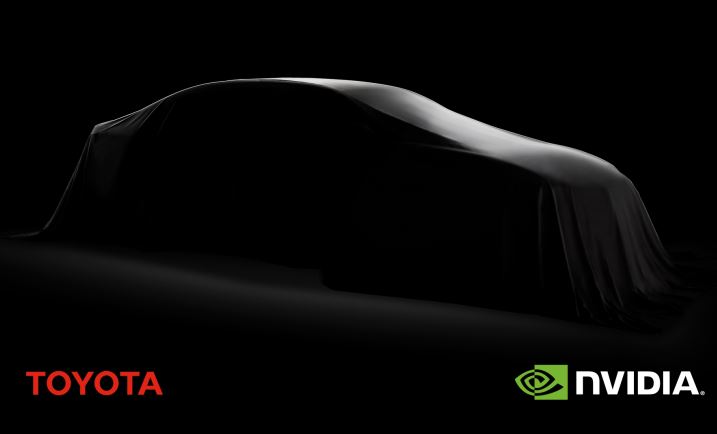
Toyota plans to use the NVIDIA DRIVE PX artificial intelligence vehicle computer platform as a core technology for the advanced autonomous driving system it plans to introduce to the market. Engineering teams from both companies are already developing sophisticated software based on NVIDIA's high-performance AI platform, and through this, they plan to enhance Toyota vehicles to further improve their ability to analyze massive amounts of data generated by in-vehicle sensors and handle a wide range of autonomous driving situations.
NVIDIA founder and CEO Jensen Huang stated, “NVIDIA has developed NVIDIA Drive PX, which will serve as the brain of autonomous vehicles, by combining groundbreaking technologies in artificial intelligence and high-performance computing (HPC),” adding, “The announcement of the collaboration with Toyota proves that the future of autonomous driving will soon become a reality.”
Artificial intelligence, particularly deep learning, is becoming an important tool in the development of autonomous vehicles. This is because the number of possible scenarios on the road is nearly infinite, and deep learning possesses the ability to recognize and process them.
Autonomous vehicles must be equipped with a supercomputer to process and interpret data from all sensors mounted on the vehicle. While many prototype vehicles fill their trunks with computers to handle these complex tasks, the NVIDIA Drive PX platform, equipped with the next-generation Xavier processor, is palm-sized and capable of 30 trillion deep learning operations per second. The Drive PX platform combines data generated from cameras, lidar, radar, and various other sensors.
Comments
Related news

NVIDIA Announces 'PilotNet,' AI That Learns Human Driving Styles
NVIDIA has released documentation on how its neural network, PilotNet, makes driving decisions within autonomous vehicles. Since the range of driving-related variables in real-world driving environments is nearly infinite, it is nearly impossible to program every variable individually to enable autonomous vehicles to drive themselves during autonomous vehicle development. However, by utilizing artificial intelligence to train vehicles on how to drive, it has become possible to identify which elements the vehicle focuses on during the learning process. NVIDIA developed PilotNet, a neural network-based system that learns vehicle driving by observing driver behavior. Furthermore, the company developed a tool that enables visualization of which elements the neural network system prioritizes when making driving decisions. Using this tool, NVIDIA built a system where vehicles learn autonomously and can verify how decisions are being made.
2017.05.10by 김자영 기자
NVIDIA Unveils Intelligent Video Analytics Platform to Implement AI Cities
NVIDIA unveiled the NVIDIA® Metropolis™ intelligent video analytics platform at the NVIDIA GPU Technology Conference (GTC), being held at the McEnery Convention Center in San Jose, California, starting from the 8th local time. The Metropolis platform introduced this time is a platform that supports the creation of safer and smarter city environments by applying deep learning to video streams in applications related to public safety, traffic management, and resource optimization. Currently, more than 50 NVIDIA AI city partner companies are providing various products and applications that leverage GPU-based deep learning, and are showcasing most of the related products and applications at NVIDIA GTC 2017. Deepu Talla, General Manager and Vice President of NVIDIA's Tegra business unit, said, "Deep learning realizes powerful intelligent video analytics that transforms anonymized video into valuable real-time insights, thereby enhancing safety and improving lives. Through the NVIDIA Metropolis platform, customers can apply artificial intelligence to all video streams and create even smarter city environments."
2017.05.10by 김지혜 기자
NVIDIA Announces GPU to Lead High-Performance Computing
At NVIDIA's GPU Technology Conference (GTC) keynote address, NVIDIA announced Volta™, the most powerful GPU computing architecture to lead advances in artificial intelligence and high-performance computing. The keynote also presented the NVIDIA® Tesla® V100 datacenter GPU, the first processor based on Volta architecture. The Tesla V100 datacenter GPU supports excellent speed and scalability required for artificial intelligence inference and training, and accelerates high-performance computing and graphics workloads. Jensen Huang, NVIDIA founder and CEO, stated, "Artificial intelligence will automate intelligence and bring unprecedented social progress since the Industrial Revolution." He further added, "Deep learning, an innovative artificial intelligence approach for building learnable computer software, demands infinite processing power. To meet this demand, thousands of NVIDIA engineers have devoted themselves to Volta development over the past three years."
2017.05.11by 김지혜 기자

[Technical Contribution] Caltera: "Evolution of Precision Sensing, UWB Infrastructure Enhances Parking Safety"
Discussing new possibilities in parking assistance and precision sensing with UWB, Lee Sang-min, Korea Branch Manager at Caltera.
2026.10.23by 편집부
[Technical Contribution] Mouser: "AI Agents Help Accelerate and Standardize Industrial Field Maintenance Operations"
Abhishek Jadhav from Mouser Electronics discusses how to leverage agentic AI for predictive maintenance in industrial automation.
2026.10.23by 편집부











