

.png)

NVIDIA Accelerates Graphics Work Speed with Artificial Intelligence
 Published2017.05.12 15:25
Demonstrating High-Quality Denoising Work with Quadro GPU
NVIDIA announced that it is accelerating graphics work speed by applying artificial intelligence to Ray Tracing.
Jensen Huang, NVIDIA's founder and CEO, demonstrated during the keynote speech at NVIDIA's GPU Technology Conference how applying artificial intelligence to ray tracing advances iterative design processes and enables accurate prediction of final rendering. Ray Tracing is a technology that uses complex mathematics to realistically simulate how lighting interacts with surfaces in a specific space.
While the ray tracing process generates highly realistic images, it is a computationally intensive task that can leave slight noise in the image. The process of removing this noise while maintaining fine edge processing and texture is called Denoising in the industry.
CEO Jensen Huang demonstrated using NVIDIA Iray how NVIDIA combines deep learning prediction algorithms with NVIDIA Quadro GPU based on Pascal architecture to process high-quality denoising work in real time.
This is expected to have a significant impact on graphics-intensive industries such as entertainment, product design, manufacturing, architecture, and engineering. This technology can be applied to various types of ray tracing systems. NVIDIA is already in the process of integrating deep learning technology into its own rendering products, with Iray being the starting point.
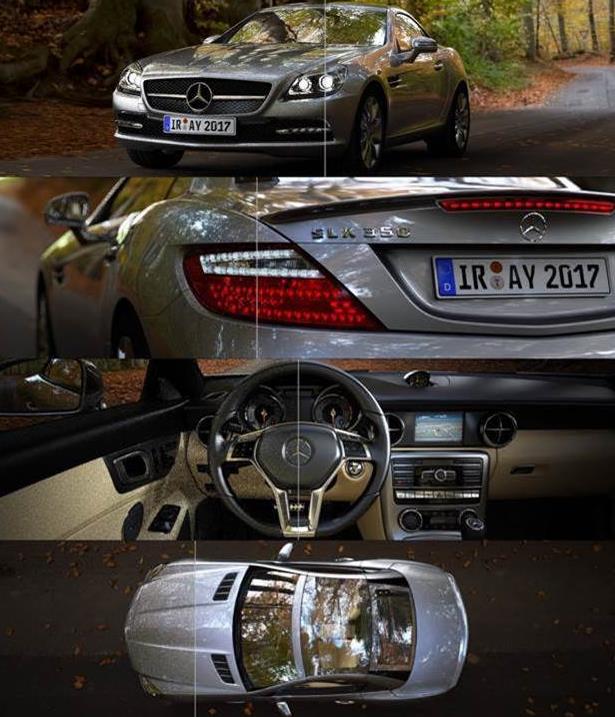
To this end, NVIDIA's research and engineering teams focused on a neural network called an autoencoder. Autoencoders are used for image resolution enhancement, video compression, and various image processing algorithms.
NVIDIA's research team trained the neural network to interpret noisy images as clean reference images using the NVIDIA DGX-1 AI supercomputer. They used 15,000 pairs of images with varying levels of noise across 3,000 different scenes for neural network training, which took less than 24 hours. The trained neural network removed noise from nearly all images in less than one second, and the same applied to images not included in the training set.
The Iray deep learning function will be included in the Iray SDK that NVIDIA provides to software companies and will be unveiled in the Iray plugin product scheduled for release later this year. NVIDIA also plans to add an artificial intelligence mode to NVIDIA Mental Ray. Details on this technology will be unveiled at the ACM SIGGRAPH 2017 computer graphics conference to be held in July.
Related news
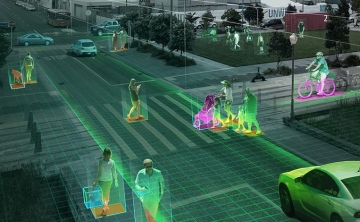
NVIDIA Unveils Intelligent Video Analytics Platform to Implement AI Cities
NVIDIA unveiled the NVIDIA® Metropolis™ intelligent video analytics platform at the NVIDIA GPU Technology Conference (GTC), being held at the McEnery Convention Center in San Jose, California, starting from the 8th local time. The Metropolis platform introduced this time is a platform that supports the creation of safer and smarter city environments by applying deep learning to video streams in applications related to public safety, traffic management, and resource optimization. Currently, more than 50 NVIDIA AI city partner companies are providing various products and applications that leverage GPU-based deep learning, and are showcasing most of the related products and applications at NVIDIA GTC 2017. Deepu Talla, General Manager and Vice President of NVIDIA's Tegra business unit, said, "Deep learning realizes powerful intelligent video analytics that transforms anonymized video into valuable real-time insights, thereby enhancing safety and improving lives. Through the NVIDIA Metropolis platform, customers can apply artificial intelligence to all video streams and create even smarter city environments."
2017.05.10by 김지혜 기자

NVIDIA VRWorks, a software developer kit for applications
NVIDIA announced at the NVIDIA GPU Technology Conference held at the McEnery Convention Center in San Jose, California on the 8th that the NVIDIA VRWorks Software Developer Kit (SDK) has been utilized in new applications from Autodesk, ESI Group, and OPTIS. Enterprise VR is transforming various business areas ranging from engineering and design to manufacturing, operations, and sales. Through VRWorks, which consists of application programming interfaces, libraries, and engines, developers can more easily create VR experiences. Application-specialized development companies are incorporating core VRWorks features to support general enterprises looking to integrate VR into their businesses. VRWorks technologies such as VR SLI, single-pass stereo, and lens matched shading enhance the performance, efficiency, and image quality of VR rendering, while VRWorks 360 video and audio and physics support realistic sound, touch, and physical simulation in VR environments. Additionally, VRWorks includes Quadro platform-exclusive features such as warp and blend, synchronization, GPU affinity, and GPU direct for video.
2017.05.10by 김자영 기자
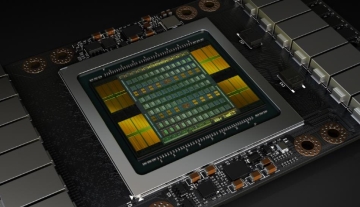
NVIDIA Announces GPU to Lead High-Performance Computing
At NVIDIA's GPU Technology Conference (GTC) keynote address, NVIDIA announced Volta™, the most powerful GPU computing architecture to lead advances in artificial intelligence and high-performance computing. The keynote also presented the NVIDIA® Tesla® V100 datacenter GPU, the first processor based on Volta architecture. The Tesla V100 datacenter GPU supports excellent speed and scalability required for artificial intelligence inference and training, and accelerates high-performance computing and graphics workloads. Jensen Huang, NVIDIA founder and CEO, stated, "Artificial intelligence will automate intelligence and bring unprecedented social progress since the Industrial Revolution." He further added, "Deep learning, an innovative artificial intelligence approach for building learnable computer software, demands infinite processing power. To meet this demand, thousands of NVIDIA engineers have devoted themselves to Volta development over the past three years."
2017.05.11by 김지혜 기자

ST Microelectronics and NUS Establish Joint Research Center 'HELIX' for Edge AI
ST Microelectronics and the National University of Singapore have established the 'HELIX' joint research center aimed at implementing embedded AI in edge environments. Over a four-year period, the center will conduct research across the entire technology stack from algorithms to silicon, focusing on memory-centric architecture leveraging ST's 18nm FD-SOI technology and embedded PCM. The core objective is to implement intelligence directly in physical devices such as robots and drones while minimizing energy consumption.
2026.08.28by 배종인 기자

ams, Enhancing Humanoid Robot Sensing and Communication with Digital Photonics
ams OSRAM has unveiled solutions that leverage digital photonics technology to enhance the sensing and communication capabilities of humanoid robots. The company implements environmental awareness and precision manipulation through dToF sensors, optical force sensors, and structured light emitters, while supporting LED-based non-verbal communication through the EVIYOS and ALIYOS platforms. According to market research, the humanoid robot market is projected to grow from $600 million in 2025 to $51 billion in 2035, with improvements in robot sensing capabilities expected to serve as a key growth driver.
2026.08.27by 배종인 기자











