


Aclara Adopts Cypress Serial Non-Volatile SRAM (nvSRAM) for AMI Module Use!
 Published2011.12.19 11:59
Cypress Semiconductor (CEO Youngdo Lim, www.cypress.com ) announced that Aclara® Technologies has selected Cypress’s serial non-volatile SRAM (nvSRAM) with SPI interface for its new UMT-R residential utility meter.
nvSRAM offers UMT-R with high-speed, fail-safe memory that meets the reliability specifications of Aclara solutions. Cypress announced new I2C and SPI nvSRAMs in March of this year. These new devices, now in mass production in densities ranging from 64 Kbits to 2 Mbits, are popular in metering, industrial, and automotive applications.
These devices operate at frequencies up to 104 MHz for SPI devices (3.4 MHz for I2C devices) and come with an optional integrated real-time clock (RTC) that enables time-stamping of critical data, eliminating the need for battery backup.
Cypress nvSRAM is manufactured using S8™ 0.13-micron SONOS (Silicon Oxide Nitride Oxide Silicon) embedded non-volatile memory technology, which delivers superior reliability and enhanced performance. nvSRAM is an ideal solution for applications that require absolute non-volatile data security, such as electronic smart meters, PLCs, motor drives, electronic data recorders, and in automotive, RAID, SSD, Internet routers/switches, consumer, medical, and data communication systems.
“Cypress’ serial nvSRAM provided the performance and reliability Aclara needed for the UMT-R. “The new SPI interface also simplifies the design process and accelerates time to market,” said Mike Ransick of Aclara. “With this device in volume production, Cypress has been involved in new designs from other industry leaders,” said Youngdo Lim, country manager of Cypress Korea.
The serial nvSRAM family includes 2-Mbit, 1-Mbit, 512-Kbit, 256-Kbit, and 64-Kbit devices in multiple configurations. These devices feature exceptional performance, including an industry-first SPI operating frequency of up to 104MHz, SPI modes 0 and 3, unlimited read/write, and a 20-year data retention recall cycle. Additionally, these devices are available in industry-standard small-footprint 8-SOIC and 16-SOIC packages, and both the wafer and backend components can be manufactured at multiple sites to reduce supply risk. For more information on Cypress's nvSRAM product line, please visit www.cypress.com/go/NVM .
Cypress, a leader in SONOS process technology, is leveraging S8 technology in its next-generation PSoC® mixed-signal arrays, programmable clocks, and other products. SONOS is compatible with standard CMOS technologies and offers many advantages, including high endurance, low power, and radiation hardness. Cypress's S8™ 0.13-micron SONOS technology is qualified for operation in Cypress's internal fabs and at multiple foundry partners. SONOS technology offers a solution that excels in scalability and manufacturability compared to other magnetic or ferroelectric-based non-volatile memory technologies. Cypress has shipped over a billion PSoC products using the same SONOS process technology it uses in its nvSRAM.
Cypress's non-volatile SRAM (nvSRAM)
Cypress nvSRAM utilizes charge stored in an external capacitor instead of a battery, making it compatible with standard PCB assembly processes. Cypress nvSRAM is also ROHS compliant and provides fast, non-volatile data storage, directly replacing SRAM, battery-backed SRAM (BBSRAM), and EEPROM devices. Data transfer from SRAM to the device's non-volatile elements occurs automatically during power down. Upon power up, data is restored from non-volatile memory to SRAM. In metering, industrial, automotive, and RAID applications, nvSRAM provides high-speed data transfer while ensuring data integrity during power outages, without the need for a battery.

관련뉴스

Intel Unveils Next-Generation 'Core Ultra Series 3' and vPro Platform for Enterprise PCs
Intel has officially unveiled the "Intel Core Ultra Series 3" for next-generation enterprise PCs and the latest vPro platform, addressing a wide range of demands from enterprise notebooks to high-performance workstations.
2026.03.26by 배종인 기자
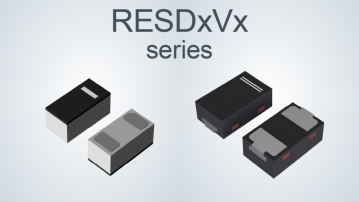
ROHM Launches ESD Protection Diode Compatible with High-Speed Interfaces of 10Gbps or Higher
반도체 전문 기업 로옴(ROHM)이 10Gbps를 넘어서는 차세대 고속 데이터 통신 환경에 대응할 수 있는 ESD(정전기 방전) 보호 다이오드 ‘RESDxVx 시리즈’를 개발하며, 고속 인터페이스에서 요구되는 신호 품질 유지와 IC 보호 성능을 동시에 끌어올렸다.
2026.03.26by 배종인 기자
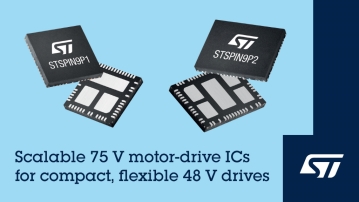
ST Launches 75V Drive IC Targeting 48V Industrial Motor Driving
ST마이크로일렉트로닉스가 48V급 산업용 구동 시스템 설계에 맞춘 75V 모터 드라이브 IC ‘STSPIN9P’ 시리즈를 공개했다. 새 제품군은 하프 브리지와 풀 브리지 구조로 구성돼 모터 종류와 출력 조건에 따라 설계를 확장할 수 있도록 한 것이 특징이다. 전원 회로와 보호 기능, 전류 감지 회로를 칩에 통합해 시스템 구성을 단순화했으며, 최대 500W급 애플리케이션까지 대응하도록 설계됐다. 회사는 레퍼런스 디자인과 데모 보드도 함께 제공해 산업 자동화, 로보틱스, 펌프, 팬, 조명, 섬유 기계 등에서 개발과 평가를 지원할 계획이다.
2026.03.26by 배종인 기자

Nordic supports security updates for the entire lifecycle of IoT devices at a single fixed cost
Nordic Semiconductor, a global leader in low-power wireless connectivity solutions, has unveiled a single fixed-cost licensing model that delivers FOTA (Firmware Over-the-Air) and device management capabilities throughout the device lifecycle via nRF Cloud, and introduced a new firmware update solution to prepare for the enforcement of the European Union's Cyber Resilience Act (CRA).
2026.03.26by 배종인 기자

Practical Training in Low-Noise, Low-Power Circuit Design All in One Place… Training Fee Support
고감도 아날로그 회로와 센서 기반 시스템 설계 역량을 강화할 수 있는 ‘2026 고급 엔지니어 실무 마스터 클래스’가 오는 4월16일 서울 가산동 e4ds 컨퍼런스 센터에서 열린다. 이번 과정은 온라인이 아닌 오프라인 유료 실습 교육으로 진행되며, 현장 중심의 심화 학습을 원하는 엔지니어를 대상으로 한다. 이번 교육은 텍사스 인스트루먼트(Texas Instruments)가 교육비를 지원해 정가 25만원에서 10만원 할인 된 15만원에 참가할 수 있다.
2026.03.26by 배종인 기자











