

.png)

[Discussion] “The Fourth Industrial Revolution is an Era for SMEs, Venture Companies, and Startups to Succeed”
 Published2017.06.08 17:25
Discussion on the Shift in Manufacturing from Mass Production to Customized Production
A forum was held to discuss the direction of the Fourth Industrial Revolution and how to adapt to the changes it will bring. In particular, the focus was on the role of small and medium-sized enterprises (SMEs) and venture companies in the manufacturing sector, as well as the direction of government policy.
The '2017 Global Industrial Innovation Conference' was held at the Korea Chamber of Commerce and Industry in Seoul starting on the 8th, sponsored by the Small and Medium Business Administration and hosted by the Korean Standards Association.
On the first day of the event, a lecture by Local Motors CTO Dan Fox on 'Creative Disruptors of the Sharing Economy: Innovative Product Production by Automotive Startups' was followed by a talk by Small and Medium Business Administration Administrator Joo Young-seop on 'The Role and Policy Direction of Small and Medium Enterprises in the Era of Innovation' and a global roundtable discussion on the beginning of the digital manufacturing revolution.
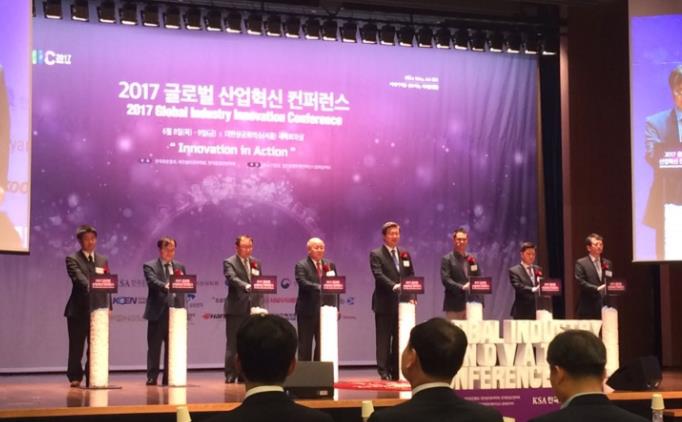
Joo Young-seop, Administrator of the Small and Medium Business Administration, emphasized that the two key keywords of the Fourth Industrial Revolution are 'technological innovation' and 'business innovation,' stating, “Now is the era in which small and medium-sized venture companies and startups succeed.” "We must prepare business models while innovating technology to meet the diverse needs of consumers," he said.
Stating that the employment and economic contributions of large corporations are becoming insignificant and that small and medium-sized enterprises (SMEs) and startups will play a crucial role in job creation and economic revitalization, he stated, “The Small and Medium Business Administration is providing multifaceted support in R&D, marketing, funding, and talent development to help SMEs secure global competitiveness. We will continue to provide support focused on competitiveness rather than simple aid policies,” adding that large corporations must transform into platform companies and grow together with startups.
We should prepare for business innovation rather than technological innovation.
The subsequent roundtable discussion, themed '3D Printing, On-Demand Production, Artificial Intelligence, and the Beginning of the Digital Manufacturing Revolution,' featured Joo Young-sup, Administrator of the Small and Medium Business Administration; Dan Fox, CTO of Local Motors; and Shuris Melkot, former Deputy Director of the National Institute of Standards and Technology (NIST).
In response to a question regarding the policies necessary for SMEs to innovate and what policies exist in the United States, Deputy Director Shuris Melkot replied, “SMEs play a significant role in the manufacturing sector in the U.S. as well. It is important to maintain national competitiveness. Since SMEs often possess talented personnel but lack funding, we are running the STTR program (SME R&D program). We are encouraging industry-academia research support and partnerships.”
In response to the question of what we need to prepare for in the Fourth Industrial Revolution, Commissioner Ju stated, “We must consider how to pursue business innovation. Technological innovation is moving too fast, and no single company can handle it all. The government is focusing on creating an ecosystem that allows us to leverage surrounding resources to compensate for technological shortcomings.” "We must prepare for business model innovation that meets consumer needs with the global market in mind," he said.
In developed countries, there is a movement shifting from mass production to customized production. When asked how to accelerate this transition to customized production given that mass production is central to Korea's manufacturing industry, CTO Dan explained, “It is important to create micro-factories to quickly bring prototypes to market. If a prototype is successful, it can lead to mass production. All that is needed is to understand customer needs and quickly produce small quantities of products.”
Finally, regarding the policies the Ministry of SMEs and Startups is focusing on for the future, Commissioner Joo concluded by saying, “We are preparing for job creation to respond to the New Normal era and technological innovation to respond to the Fourth Industrial Revolution. I believe that startups will lead both of these aspects. It is difficult as the whole world is experiencing a period of low growth. We will help them acquire the competitiveness to grow together as global enterprises by cooperating with companies around the world.”
In addition, the conference will be held over two days with topics including Smart Factory, Japanese Innovation Trends, TPM/Equipment Maintenance Trends, Connectivity, Quality Management in the Era of Convergence, Equipment Management/Equipment Technology Trends, Smart Value Chain, Convergence of Manufacturing and ICT, Preventive/Predictive Maintenance Trends, Innovation & Strategy, Next-Generation Quality Innovation, and Disaster Management/Innovation Culture Trends.
관련뉴스
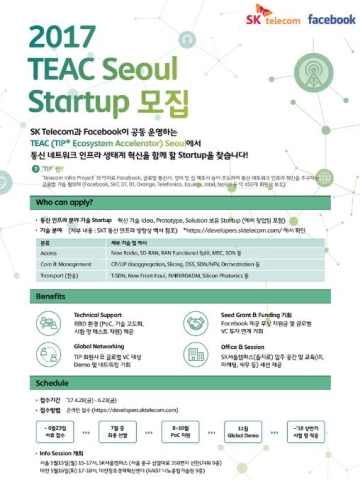
SK텔레콤, 페이스북과 함께 통신 분야 스타트업 육성한다
SK텔레콤과 페이스북은 통신 인프라 분야 스타트업 육성을 위한 프로그램 ‘TEAC(TIP* Ecosystem Accelerator) 서울’을 만들고, 참가 기업을 모집한다고 밝혔다. 머신러닝 기반 네트워크 관리 기술, 초저지연/초대용량 데이터 전송 기술 등 통신 인프라 분야의 혁신적인 아이디어나 솔루션을 보유한 스타트업이라면 참가할 수 있다. ‘TEAC 서울’에 최종 선발된 스타트업은 오는 11월 미국 실리콘밸리에서 열리는 ‘TIP 서밋’에 참가할 수 있는 기회를 얻어 전세계 주요 통신사, 장비업체 등을 대상으로 자사의 혁신 기술을 소개할 수 있다.
2017.04.27by 김지혜 기자
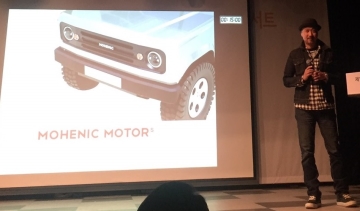
[Going to the IR site] I looked into which startups were receiving investment.
Six companies stood before sharp angel investors, accelerators, and individual investors. These were companies that had succeeded in fundraising after beating out some 40 competing firms. The industries these companies operated in were diverse as well. They showcased their appeal across various sectors ranging from fintech to handcrafted automobiles and wave power generation. And the figures were substantial. "We need 2 billion won." "Apple and Google started this way too. Is there any law that says Apple shouldn't emerge in South Korea?" Without exception, these companies were filled with confidence in success, but at the same time, they harbored desperate hopes for investment. We met promising companies standing before the 'valley of death'—the investment hurdle that must be crossed for companies to grow.
2017.05.01by 김자영 기자
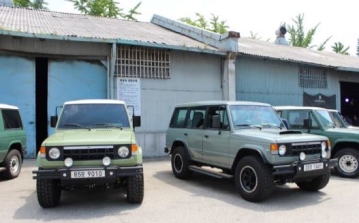
Mohenic, a daring car startup that builds homemade electric cars
7080세대에 핫한 차로 사랑받던 갤로퍼의 재구성했다. 차량 내부는 나무로 디자인했다. 2013년, 현대와 기아차가 ‘독식’하고 있는 자동차 시장에 뛰어든 스타트업은 5년이 지나 2017년의 마지막 날 수제 전기차의 제작 발표회를 열었다. “한국에서 자동차를 3번째로 많이 만드는 회사, 모헤닉게라지스입니다.” 스타트업으로 차를 만드다는 것 자동차를 생산하는데 제도적 어려움이 많았다. 기존 차의 형체를 가져와야 허가를 받을 수 있어 리빌드 형태로 모헤닉G 1세대와 2세대를 만들었다. 이 때문에 ‘현대의 중고차가 다시 태어나 8천만 원가량에 팔린다’며 CNN의 관심을 끌어 STYLE의 한 페이지를 장식하기도 했다. 올해부터는 법이 개정되어 디자이너와 협력한 모헤닉 M시리즈를 개발하고 있다.
2017.06.05by 김자영 기자
Nvidia invests $5 billion in Intel
NVIDIA and Intel, leaders in global AI computing technology, are now forging ahead in providing cutting-edge solutions through NVLink-based architecture integration. NVIDIA and Intel have officially announced a strategic partnership and stated that they will jointly develop customized data center and personal computing products to accelerate diverse applications and workloads ranging from hyperscale to enterprise and consumer markets, thereby laying the foundation for the next generation computing era.
2025.09.22by 배종인 기자
.jpg)
Applied Materials Launches Environmental Protection Campaign to Mark World Cleanup Day
어플라이드 머티어리얼즈 코리아(대표 박광선)가 ‘세계 청소의 날(World Cleanup Day)’을 맞아 동탄 신리천 일대에서 임직원 및 가족과 함께 환경 정화 활동을 펼치며, 기술 혁신을 넘어 지역사회와 함께하는 기업으로 거듭나고 있다.
2025.09.22by 명세환 기자











