

.png)

[Reporter's Notebook] Things Not to Overlook in the Fourth Industrial Revolution
 Published2017.06.12 14:59
At the Global Industry Innovation Conference held last week, smart factories and the Fourth Industrial Revolution were also addressed as core issues. Observing this event, I was reminded once again that "people" and "collaboration" lie at the center of the Fourth Industrial Revolution. In the era of the Fourth Industrial Revolution, led by "intelligence" represented by artificial intelligence and software, and "information" comprising big data, IoT, and cloud technology, people are ultimately both the starting point and the completion.
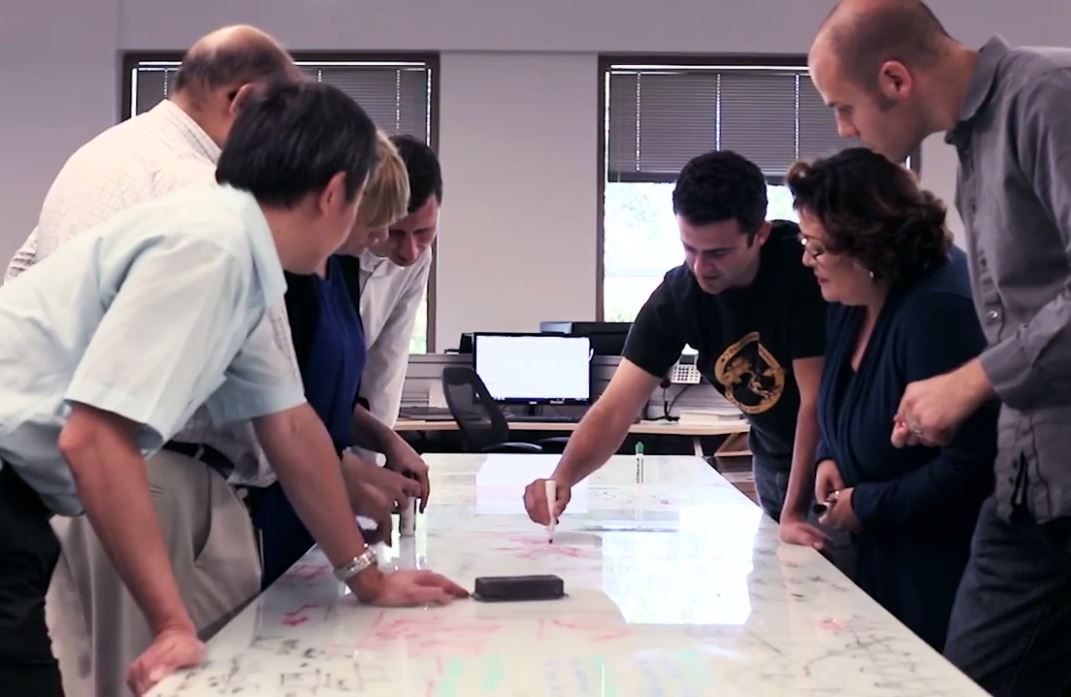
Frank Seipelt, CEO of Bosch Korea, also made clear in his keynote address that "people are at the center of the Fourth Industrial Revolution." He went on to say, "Technology exists not to replace people, but to assist people. People will ultimately serve as decision-makers," and stated that "Industry 4.0 is ultimately the work of people." He emphasized that collaboration among all these participants is necessary for the success of Industry 4.0. This means that to create a business ecosystem, different industries must connect and collaborate as if performing an "orchestral performance."
Regarding such collaboration, Shriris Melkote, former Deputy Director of the U.S. National Institute of Standards and Technology (NIST), who participated in a special lecture, provided concrete examples. He noted that the reasons for the revival of U.S. manufacturing, which had suffered from trade deficits after losing leadership in advanced products in the 2000s, could be found in organic collaboration among government, industry, and academia. Manufacturing innovation centers jointly proposed and created by government, industry, and academia focused on narrowing the gap from basic research to commercialization stages.
The strategic objectives of the centers are to enhance competitiveness, promote innovative technology development, and support sustainable businesses. The significant role played by manufacturing innovation centers, which served as a hub for manufacturing development—encompassing not only R&D but also workforce training—contributed greatly to the revival of manufacturing. Since these centers also assist startups in addition to existing manufacturers, one can appreciate how well the collaborative relationships have been structured.
Collaboration Effects Among Sectors Show Five-Fold Increase
These centers do not stop at investment alone. They evaluate how well projects have progressed, assess results and manufacturing impact. Extensive research and evaluation take place. These research institutes create regional economic clusters, and such partnerships serve as important factors in Industry 4.0.
Former Deputy Director Shriris Melkote stated that he believes in the "power of connection" achieved through such collaboration. "There are reports that collaboration effects among these sectors increase five-fold," he said, and continued, "U.S. manufacturing revived because it promoted R&D innovation and created an ecosystem. Additionally, the federal government made efforts in workforce development through education while creating sustainable enterprises through investment."
Industry 4.0 may not be something distant. As CEO Seipelt said, it might be as close as "an object on a shelf within reach." The issue is that it must be a people-centric industry and must be rebuilt upon collaboration between people. This is what the new administration, which has stepped forward understanding the importance of the Fourth Industrial Revolution and pledging to create its foundation, must pay closest attention to.
Related news
Amazon, a company that will demonstrate the true Fourth Industrial Revolution within the next 2 to 5 years
KT Economic Management Research Institute (DiGEco) released a report on "Analysis of Amazon's Fourth Industrial Revolution Development Direction" (presented by Cha Youn-yong, representative of ASPEC Future Technology Management Research Institute) on the 13th. According to the report, Amazon appears to be focusing on logistics and delivery services using autonomous trucks, robots, and drones, as well as hyperloop and service development. According to the report, the "convergence business model of smart data, AI, autonomous vehicles, robots, and drones" led by Amazon ultimately aims to form a hyperloop dedicated to logistics transportation routes.
2017.02.20by 서아람 기자
“Job Concerns in the Fourth Industrial Revolution Era: We Must Prepare for Changes in the Form of Work, Not Just Jobs”
As artificial intelligence advances, concerns about job loss continue to mount. However, analysts argue that Fourth Industrial Revolution jobs represent a shift in the nature of work rather than occupations themselves, and propose that startups reflecting this change should be activated. At the 'Global ICT Outlook Conference' held on the 25th at the COEX Conference Room, experts from key sectors driving the Fourth Industrial Revolution—artificial intelligence (AI), 5G, IoT/wearables, and fintech—gathered for discussions under the overarching theme of 'Imagine Next World.' Opinions were exchanged on the current state of the global ICT industry and what governments should prepare for in each sector. The session was moderated by Kim Jung-eon, Director of the ICT Strategy Research Division at the Electronics and Telecommunications Research Institute, with participation from Professor Kim Yong-jin of Sogang University Graduate School of Business, Professor David Hogg from LEEDS University, an AI expert, Professor Ari Pouttu from Oulu University, specializing in wireless communications and 5G, and Scott Amyx, CEO of Amyx+Mckinsey.
2017.05.29by 김지혜 기자
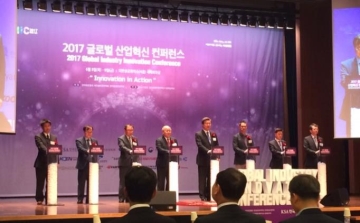
[Discussion] “The Fourth Industrial Revolution is an Era for SMEs, Venture Companies, and Startups to Succeed”
A platform has been established to discuss how to adapt to the direction of the Fourth Industrial Revolution and the changes it will bring. In particular, the focus was placed on the role of small and medium-sized/venture enterprises in the manufacturing sector and the direction government policy should take. Sponsored by the Small and Medium Business Administration and hosted by the Korean Standards Association, the '2017 Global Industry Innovation Conference' was held at the Korea Chamber of Commerce and Industry in Seoul starting on the 8th. On the first day of the event, a lecture by Dan Fox, CTO of Local Motors, on 'Creative Disruptors of the Sharing Economy: Innovative Product Manufacturing by Automotive Startups' was followed by remarks by Ju Young-seop, Commissioner of the Small and Medium Business Administration, on 'The Role of SMEs and Policy Direction in the Era of Innovation,' and a global roundtable discussion on the beginning of the digital manufacturing revolution.
2017.06.08by 김지혜 기자

Ecolab and K-water Discuss Innovation Collaboration in Advanced Industry Water Management
Ecolab and the Korea Water Resources Corporation jointly discussed cooperation directions for maximizing water use efficiency in advanced industries such as semiconductors and data centers and establishing sustainable water circulation. The two companies agreed to gradually develop a long-term cooperation model that combines water resource infrastructure and water management technology to promote water efficiency optimization, water reuse, and carbon reduction.
2026.08.28by 명세환 기자
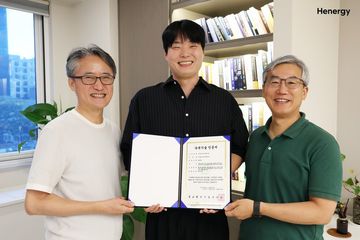
H.Energy Obtains Green Technology Certification…SolarOnCare Operating at 99.82% Uptime
H.Energy has obtained green technology certification from the Small and Medium Business Administration for solar power generation forecasting and I-V curve anomaly diagnosis technology. The AI-based asset management platform SolarOnCare is deployed across more than 3,000 power plants nationwide, achieving a system uptime of 99.82% and a 3.7% improvement in power generation performance. Through real-time data analysis, it protects power generation revenue by detecting and managing minor losses such as module degradation and partial shading early on.
2026.08.25by 명세환 기자











