


Artificial intelligence technology is moving in the direction of resolving life's inconveniences
 Published2017.07.11 17:46
Focus on popularization of artificial intelligence technology accessible to everyone
How will artificial intelligence technology truly change the direction of our lives? As artificial intelligence draws closer than expected, an opportunity has been created to discuss how it is being utilized and how it will transform our daily lives.
Under the auspices of the Information and Communications Technology Promotion Center (IITP), the seminar was held on the 11th at the Korea Chamber of Commerce and Industry International Conference Hall with attendance of approximately 900 people from government, academia, and industry.
"Microsoft's artificial intelligence philosophy is the democratization of intelligence," said Lee Dong-beom, architect at Microsoft, adding that the company aims for artificial intelligence created by anyone, not just data scientists. Microsoft revealed that since last year, it has integrated reporting organizations and consolidated AI scientists into one organization to achieve organizational integration for AI democratization.
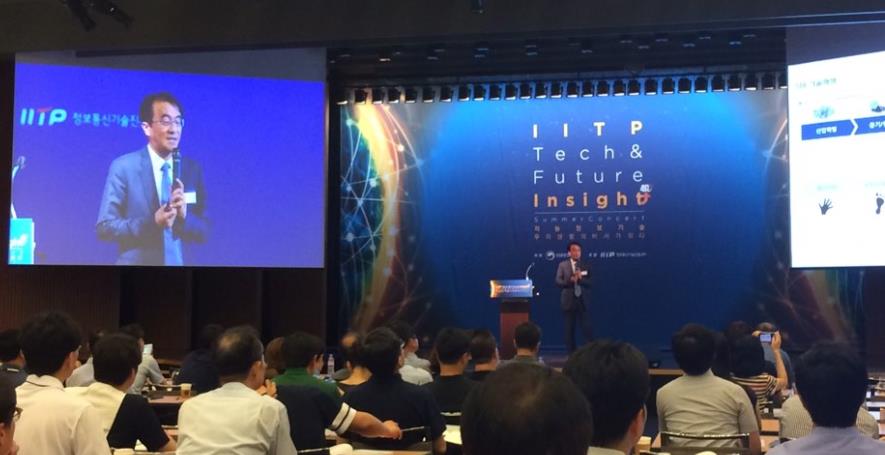
Following this, he introduced real-life cases utilizing Cognitive services. The service consists of six components: vision, speech, language, knowledge, search, and lab. A person with visual impairment recognizes the speaker's gender, age, and emotion through smart glasses and outputs the results through voice. Additionally, facial recognition cameras in subway stations are used to predict customer numbers and adjust train intervals by detecting where and when crowds gather. The technology used in these cases is machine learning and artificial intelligence, specifically cognitive services.
Architect Lee Dong-beom stated, "The goal is to prevent artificial intelligence from being monopolized by data scientists and enable everyone to use it, allowing cognitive services to be utilized in various types of businesses."
Na Seung-joo, director at Intel Korea, said, "Intel's role in artificial intelligence, which is reshaping industries, is to lead AI adoption, popularize it, and guide it in the right direction," while pointing out the difficulty of using artificial intelligence, which has significant ripple effects on people's lives. To solve this problem, Intel is investing in acquiring various companies and incorporating the technology and products. Additionally, he explained that Intel plans to develop platforms that help developers and provide education on how to use them.
Jeong Seong-il, executive director at Deloitte, said, "The technological revolution is occurring in the direction of resolving human inconveniences. For artificial intelligence to become the sixth technological revolution, cognitive technology must develop, and for cognitive technology to advance, IoT must be liberated. For IoT to succeed, it comes down to how well big data is utilized," emphasizing that artificial intelligence is an aggregate of cognitive technologies and requires considerable time to develop.
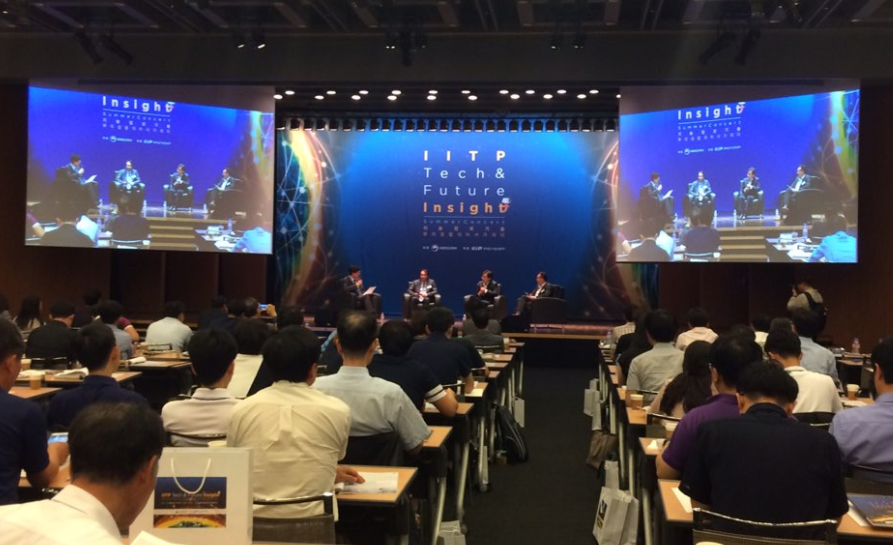
He continued, "Converting specific occupations through automation requires a certain amount of time," adding, "As new business models emerge, the occupations people engage in will change. This will depend on how we deliberate and research how changes will occur, and it seems there is insufficient deliberation on this matter," emphasizing the need to strengthen data processing capabilities in preparation for the artificial intelligence era.
When asked how Microsoft is preparing philosophically regarding artificial intelligence ethics, Architect Lee Dong-beom responded, "Since Tay, we have internally included psychologists and sociologists and are conducting base training on ethical aspects including historical, cultural, and sexual taboos. We conduct pre-training with machine learning, but it is difficult to predict what results will occur."
When asked which business sectors would be effective for investment in an era of coexistence with artificial intelligence and robots, Executive Director Jeong Seong-il answered, "Ultimately, technology will develop in the direction of resolving life's inconveniences." Architect Lee Dong-beom added, "While it seems robots will replace simple tasks, in my personal opinion, I believe they will replace emotional labor and knowledge labor involving vast amounts of data."
Related news
[Survey Results] Finance and Autonomous Vehicles Rank 2nd and 3rd in AI Trust… 1st is 'This'
If we have to accept decisions made by artificial intelligence (AI), it has been found that people show the most trust in the medical field, while on the other hand expressing considerable concerns about 'safety' that judges humans as animals or enemies. According to a recent artificial intelligence survey conducted by this publication (What Do You Think About AI, Which One Called Forth), when asked in which case they could place the most trust if they had to accept AI decisions, 36.8% of respondents concentrated on the medical field (disease diagnosis and prescription). This was followed by investment-related stock finance at 22.8%, autonomous vehicles at 21%, and legal court rulings at 19.3%.
2017.06.26by 신윤오 기자
[Foreign Press Briefing] AI-powered autonomous hospital vehicles that visit patients directly
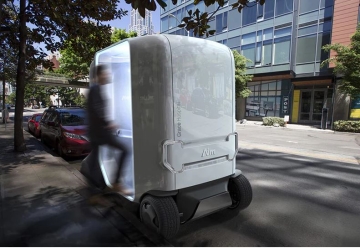
Google Stops Gmail Scanning/ iPhone 8 is Different from Previous iPhones/ What if HoloLens is Introduced to Cosmetic Surgery?/ A Brief History of the Many Ways Uber Has Failed/ Hospitals with Autonomous Vehicles that Visit Patients Directly
2017.06.26by 김자영 기자
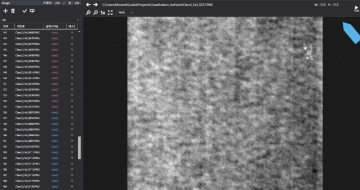
SUA Lab Overcomes Machine Vision Limitations with AI
SUALAB, an AI-based smart factory solution provider, has officially launched SuaKIT, a deep learning-based machine vision inspection software. SuaKIT is based on image interpretation technology and has significantly improved inspection accuracy and speed in various domains where conventional machine vision technology was difficult to apply. Traditionally, engineers had to manually define defects in images one by one and set defect characteristic values by hand. As a result, machine vision technology could only be utilized in fields with standardized surface shapes, such as semiconductors and LCDs. Conversely, in fields with non-standardized surface shapes, such as textiles and natural leather, it was difficult to manually set defect characteristic values, so most operations relied on visual inspection.
2017.07.05by 김지혜 기자
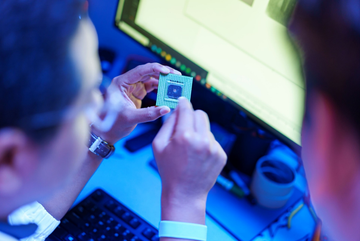
ST Microelectronics and NUS Establish Joint Research Center 'HELIX' for Edge AI
ST Microelectronics and the National University of Singapore have established the 'HELIX' joint research center aimed at implementing embedded AI in edge environments. Over a four-year period, the center will conduct research across the entire technology stack from algorithms to silicon, focusing on memory-centric architecture leveraging ST's 18nm FD-SOI technology and embedded PCM. The core objective is to implement intelligence directly in physical devices such as robots and drones while minimizing energy consumption.
2026.08.28by 배종인 기자
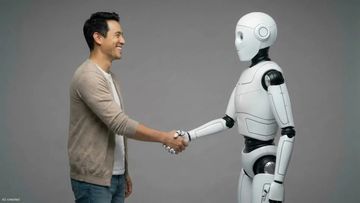
ams, Enhancing Humanoid Robot Sensing and Communication with Digital Photonics
ams OSRAM has unveiled solutions that leverage digital photonics technology to enhance the sensing and communication capabilities of humanoid robots. The company implements environmental awareness and precision manipulation through dToF sensors, optical force sensors, and structured light emitters, while supporting LED-based non-verbal communication through the EVIYOS and ALIYOS platforms. According to market research, the humanoid robot market is projected to grow from $600 million in 2025 to $51 billion in 2035, with improvements in robot sensing capabilities expected to serve as a key growth driver.
2026.08.27by 배종인 기자











