

.png)

The PC Market in a Slump for 5 Years: Is There No Way Out?
 Published2017.07.17 09:47
Is there a way out for the PC market, which has been in a slump for five years?
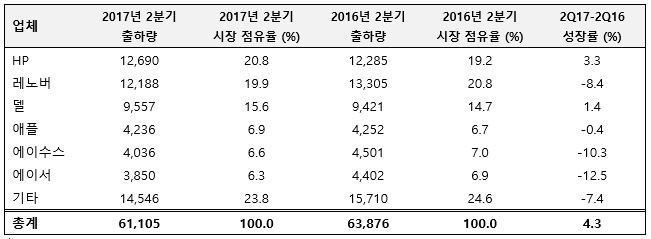
Gartner tentatively announced that global PC shipments in the second quarter of 2017 totaled 61.1 million units, down 4.3% from the same period last year. This marks the 11th consecutive quarter of decline. Since data collection began in 2007, the second quarter of 2017 recorded the lowest quarterly PC shipment volume on record.
Mikako Kitagawa, a senior researcher at Gartner, stated, “Rising PC prices due to shortages of DRAM, SSDs, and LCD panels had a tremendous negative impact on PC demand in the second quarter of 2017,” adding, “How companies cope with increased component costs varies by vendor.” "Some companies decided to handle the increase in component prices without raising the final consumer price, while others passed those costs on to consumers," he explained.
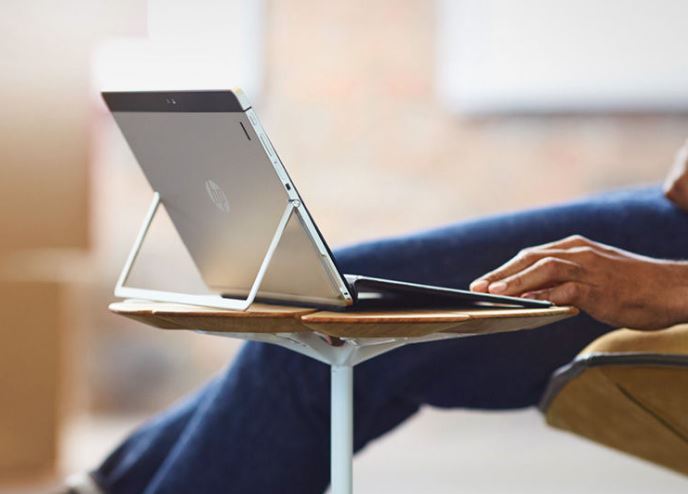
This means that large corporations cannot hastily raise prices because prices are fixed due to contracts that are renewed on a quarterly or even annual basis, and many consumers will postpone purchasing PCs until the price burden is alleviated.
Amidst this, HP reclaimed the top spot in the global PC market in the second quarter of 2017, displacing Lenovo. HP recorded year-over-year growth for five consecutive quarters. It saw increased shipments in most regions and performed particularly well in the U.S. market, recording significantly higher shipment volumes compared to the average of other regional markets.
Lenovo failed to sustain the growth momentum seen in the fourth quarter of last year and the first quarter of this year, with global shipments falling 8.4% in the second quarter of 2017. Shipments declined year-over-year in all major regions. Analyst Mikako Kitagawa stated that the second-quarter results reflect a shift in Lenovo's strategy from increasing market share per unit to protecting profits. Balancing market share and profitability is a challenging task for all PC manufacturers.
Dell, which focuses on PCs as a strategic business, recorded year-over-year growth for the fifth consecutive quarter with global shipments increasing by 1.4% in the second quarter of 2017. Among the top three companies, Dell is the only one capable of providing integrated IT services to companies using its technology.
US market on a downward trend as consumer PC demand declines
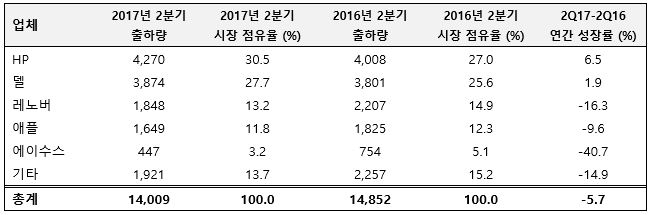
By region, U.S. PC shipments in the second quarter of 2017 totaled 14 million units, a 5.7% decrease compared to the second quarter of 2016. Declining demand for consumer PCs was the primary reason for the downturn in the U.S. market. The business market continues to grow steadily, and as the second quarter is typically a season for active PC purchasing, spending in the public sector is also showing steady movement in line with seasonal trends, as evidenced by previous indicators. However, the education market is struggling due to high demand for Chromebooks.
The Chromebook market has shown significantly faster growth than the overall PC market. Although Gartner did not include Chromebooks in the overall PC market, their impact on the PC market is quite substantial. While the overall PC market declined by 6%, Chromebook shipments increased by 38% in 2016.
PC shipments in Europe during the second quarter of 2017 totaled 17 million units, a 3.5% decrease compared to the same period of the previous year. Results varied by country. In the UK, some domestic companies are postponing PC purchases due to uncertainty surrounding the general election, a trend particularly pronounced in the public sector. In France, while consumer sentiment rebounded more than expected following the election of President Emmanuel Macron, PC consumption remains sluggish. In Germany, PC shipments increased as companies invested in new Windows 10-based hardware, while in Russia, the PC market continues to improve as the economy stabilizes.
PC shipments in the Asia-Pacific region in the second quarter of 2017 exceeded 21.5 million units, down 5.1% from the same period of the previous year. The Asia-Pacific PC market is significantly influenced primarily by market conditions in India and China. In India, the overall market slump was caused by a combination of factors, including sluggish demand as currency reforms stabilized somewhat after the first quarter, the lack of large-scale transactions compared to a year ago, and rising PC prices.
Meanwhile, the Chinese market took a significant hit as PC prices rose due to component shortages that began in late 2016, and inventory from the first quarter carried over to the consumer market in the second quarter of 2017. Further PC price adjustments were necessary to address the component shortages in the second quarter. Foreign brands also struggled considerably due to the depreciation of the yuan against the dollar. As PC purchases by major clients slowed due to price hikes, it also impacted overall shipments in the second quarter. Mature markets, however, maintained stable growth through PC refreshes.
관련뉴스
All-in-one PC optimized for VR with Ryzen
델이 대만 타이베이에서 개최되는 ‘컴퓨텍스 2017(Computex 2017)’에서 게이밍과 VR(가상현실)에 최적화된 ‘인스피론(Inspiron)’ 시리즈 신제품 2종을 공개했다. 실용적 기능과 합리적 가격대를 내세운 델의 인스피론 시리즈에 새롭게 추가된 이번 신제품은 ‘인스피론 게이밍 데스크톱(Inspiron Gaming Desktop)’과 올인원(all-in-one) PC인 ‘인스피론 27 7000 올인원(Inspiron 27 7000 AIO)’으로, AMD의 차세대 멀티코어 프로세서인 ‘라이젠(Ryzen)’을 탑재했다. 이번 신제품에 탑재된 AMD 라이젠 프로세서의 ‘센스MI(SenseMI)’ 기술은 인공지능을 활용해, 온도, 주파수, 전압 등을 센서로 모니터링하고 CPU 소비전력을 조절하기 때문에, 게이밍, VR, 비디오 스트리밍 등 차세대 PC 사용에 최적화된 환경을 구현할 수 있다. 또한 오큘러스 리프트, HTC 바이브 등 VR용 고성능 HMD(헤드마운트디스플레이)를 지원해 탁월한 가상현실 경험을 제공한다.
2017.05.31by 김지혜 기자
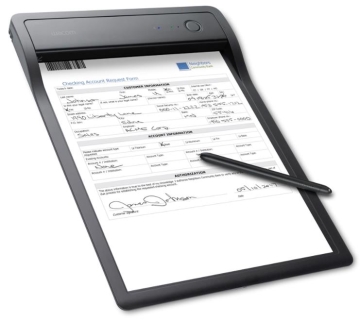
Wacom Launches Smartpad That Converts Ink-Signed Documents to Digital
와콤(Wacom)은 일반 종이와 잉크를 활용해 서명한 문서들을 디지털로 실시간 변환해주는 스마트패드 PTH-111 Wacom Clipboard(와콤 클립보드)를 발표했다. 이 제품은 와콤의 서명 솔루션 제품군 중 하나로, 생체 인식 기반의 수기 서명도 캡처 및 파일로 첨부할 수 있는 기능을 포함하고 있다. 디지털 문서들은 로컬 PC에 저장되며, 서버 및 클라우드 서비스에 즉시 업로드 돼 손 쉽게 문서를 관리할 수 있도록 해준다. Wacom Clipboard는 현업에서 활용되는 종이 기반의 업무 환경을 바꾸지 않고, 문서를 전자화해 쉽고 안전하게 저장할 수 있는 방법을 제공해 준다. 특히 이 제품은 기존의 종이 양식을 그대로 유지하되, 이를 디지털 방식으로 보관하기를 원하는 서비스, 의료, 보험 산업 및 공공분야 분야에 적합한 솔루션이다.
2017.06.08by 김지혜 기자
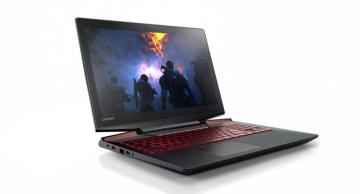
Lenovo partners with World of Warcraft to target gaming PC market.
Lenovo Korea has partnered with Blizzard Entertainment's massively multiplayer online role-playing game (MMORPG) World of Warcraft to strategically target the domestic gaming PC market. Lenovo Korea is conducting a joint promotion with World of Warcraft's latest expansion pack, World of Warcraft: Legion, to commemorate the successful launch of its new gaming notebook brand, Lenovo Legion. As part of this collaboration, both companies plan to jointly carry out promotions and events related to the Lenovo Legion series. In this connection, Lenovo Korea operated a World of Warcraft: Legion experience zone utilizing the Legion series at the World of Warcraft Smuggler's Run event held on May 20th (Saturday) at the Lotte World Tower lawn plaza in Jamsil, receiving significant positive response. Through this collaboration, Lenovo Korea plans to focus on strengthening its gaming PC competitiveness and enhance customer-tailored marketing. The Lenovo Legion series models Y720 and Y520 have been enjoying steady popularity in the domestic market since their launch. The flagship model Y720 is a premium gaming notebook equipped with Intel's latest Kaby Lake CPU, the Core i7-7700HQ processor, and NVIDIA GeForce GTX 1060 with 6GB GDDR5 memory. It features a Full HD (1920x1080) IPS anti-glare display and delivers powerful sound through stereo speakers with Dolby Atmos applied and a JBL 3W subwoofer speaker. Additionally, it has obtained NVIDIA VR READY certification, enabling virtual reality gaming, and supports an integrated Xbox One wireless receiver option. The Legion Y520 boasts powerful gaming performance with an Intel 7th generation Core i7-7700HQ processor, 4GB GDDR5 memory, and NVIDIA GeForce GTX 1050Ti GPU. It implements an optimal gaming environment through a 15.6-inch Full HD (1920x1080) IPS display, a Harman-certified 2W stereo speaker, an intense red backlit keyboard, and an efficient cooling system. Meanwhile, Legion is the sixth expansion pack for Blizzard's flagship game World of Warcraft, adding diverse new content including a new hero class: Demon Hunter, new content: Artifact Weapons, Class Halls, and a new player-versus-player honor system. Kang Yong-nam, representative director of Lenovo Korea, stated, "Through this collaboration, we will raise awareness of Lenovo's product excellence among domestic gamers and
2017.06.16by 김자영 기자
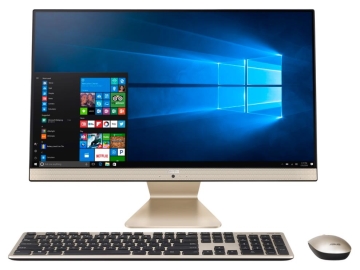
ASUS Launches All-in-One PC Optimized for Multimedia
ASUS는 신제품 올인원 PC Vivo AiO V241을 출시했다. Vivo AiO V241 모델은 23.8인치 나노 엣지 디스플레이와 얇은 베젤 디자인을 채택하여 넓은 화면 비율과 Full HD 해상도가 특징인 올인원 PC다. 멀티 터치 제스처를 통해 손쉬운 사용자 환경은 물론이고 100% sRGB를 지원하여 한층 선명한 화질과 생생한 색감을 자랑한다. 자체 디스플레이 기술인 에이수스 ‘트루2라이프(Tru2Life)’를 채택해 동영상 실행 시 다음 프레임을 예측해 보정함으로써 선명한 화면을 끊김 없이 부드럽게 감상할 수 있고, 빛의 차이를 감지해 또렷한 화면을 볼 수 있다.
2017.06.20by 김지혜 기자
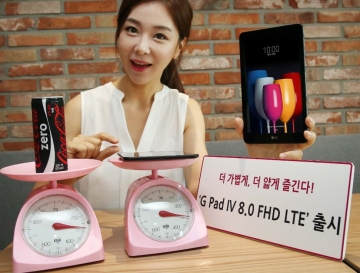
LG Electronics Launches Tablet PC that Fits in a Suit Pocket
LG전자가 가벼운 무게와 얇은 디자인에도 탁월한 성능을 갖춘 태블릿PC를 출시한다. LG유플러스 전용으로 출시되는 ‘G Pad IV 8.0 FHD LTE’는 무게가 290g에 불과해 휴대하기 편하다. 8인치 화면에도 가로, 세로, 두께는 각각 216.2mm, 127.0mm, 6.9mm이다. 화면 비율은 16:10으로 풀HD의 고해상도로 작은 글씨도 선명하게 읽을 수 있을 뿐 아니라 색이 자연스럽고 시야각이 넓은 IPS디스플레이를 채용해 사용자가 좌우 어떤 방향에서도 뛰어난 화질을 즐길 수 있다.
2017.07.03by 김지혜 기자











